So, you’re thinking about slapping some solar panels on your electric van, eh? It sounds like a brilliant idea, doesn’t it? Free power from the sun, topping up your van while you’re parked. But is it actually worth the hassle and the cost? We’ve been looking into whether a solar panel van is a realistic option for most people, especially here in the UK where the sun can be a bit shy. Let’s get into it.
Key Takeaways
- Putting solar panels on an electric van can add a small amount of range, maybe 2-5 miles a day in summer, but don’t expect it to fully charge your van.
- The amount of power generated by rooftop solar panels on a typical van is quite low compared to what an electric van actually needs to charge.
- While charging an electric van directly from its own roof panels isn’t practical yet, solar panels are still a great addition for powering the van’s internal systems and accessories.
.
Assessing The Viability Of Solar Panel Vans

Right then, let’s get down to brass tacks about sticking solar panels on electric vans. It sounds like a cracking idea, doesn’t it? Free power from the sun to keep your wheels turning. But is it actually a goer, or just a bit of a pipe dream?
The Practicalities Of Charging An Electric Van With Solar
So, you’ve got your electric van, and you’re thinking, ‘Why not slap some solar panels on the roof?’ It’s not quite as simple as plugging a kettle into the mains, unfortunately. For starters, the amount of power you can generate from a van-sized roof is pretty limited. We’re talking about a few hundred watts on a good day, maybe a kilowatt if you’re lucky and the sun’s really beaming down. Now, compare that to what an electric van actually needs to charge up. Even a basic home charger is putting out several kilowatts. To get a meaningful charge into your van’s battery using just the panels on the roof, you’d need a truly enormous array, far bigger than any van could realistically carry. Plus, you’ve got to convert that solar power (which is DC) into a form your van can use (also DC, but usually via an AC charger and then back to DC), and every conversion step loses a bit of energy. It’s a bit like trying to fill a swimming pool with a teaspoon – technically possible, but it’ll take an age.
Understanding The Limitations For Solar Panel Vans
It’s easy to get excited about the idea, but the reality is that the power generated by roof-top solar panels on a van is unlikely to significantly charge the main drive battery. Think of it more as a trickle charge, perhaps enough to run some of the van’s internal systems or a small auxiliary battery for things like lights or a radio. Even then, you’re looking at needing a substantial battery bank to store that solar energy. Trying to directly charge the van’s main battery from these small panels would add mere miles, if any, to your range over many, many hours. It’s a bit like hoping a single candle will light up a whole room – it just doesn’t have the oomph.
The biggest hurdle is the sheer difference in power output. Solar panels on a van are great for topping up small devices or keeping a secondary battery healthy, but they’re just not powerful enough to make a dent in the massive energy requirements of propelling an electric vehicle.
Here’s a rough idea of what we’re talking about:
| Component | Typical Output/Requirement | Notes |
|---|---|---|
| Van Roof Solar Array | 300W – 1kW | Highly dependent on weather and angle. |
| Home Charger (120V) | 3.8kW | Minimum output for charging a van. |
| Van Drive Battery | 50kWh – 100kWh+ | Needs a significant amount of energy to move the vehicle. |
| Range per kWh | ~3-4 miles | Varies greatly with van type, speed, and load. |
So, while the idea of solar-powered vans is appealing, the current technology means it’s more of a supplementary power source for accessories rather than a primary method for keeping the van moving.
Real-World Performance Of Solar Integration
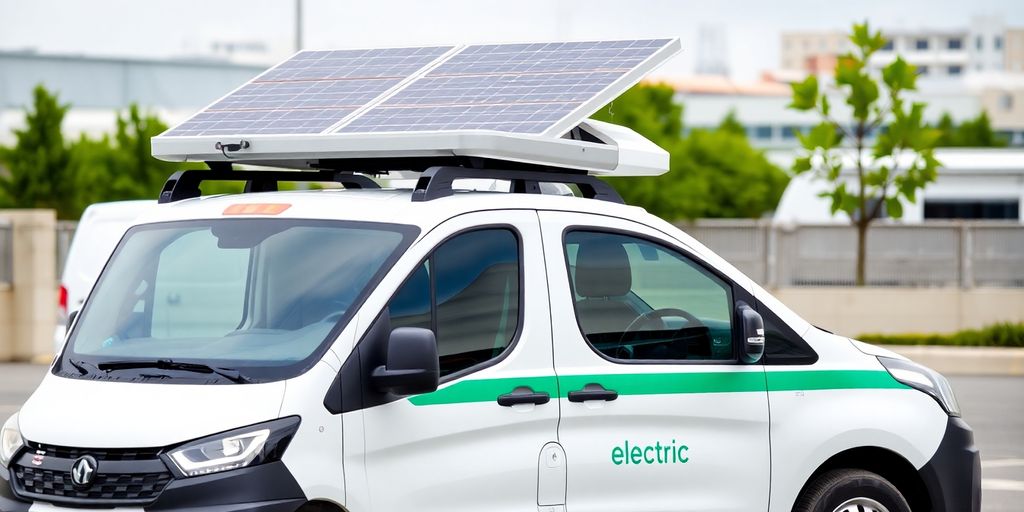
So, we’ve talked about the theory, but what about how these solar-panelled vans actually perform, especially here in the UK? It’s easy to get excited by the idea of free solar miles, but the reality can be a bit more… cloudy.
Solar Panel Van Range Extension In The UK
Let’s be straight: don’t expect your van to magically gain hundreds of miles of range each week from the sun alone. In the UK, our sunshine isn’t exactly California-level. On a good summer day, you might see an extra 2-5 miles added to your range. Come winter, that drops to maybe 0.5-1 mile on a clear day. It’s more of a trickle charge than a flood.
Think of it like this:
- Summer: A few extra miles here and there, enough to maybe cover a short local trip without dipping into the main battery.
- Autumn/Spring: You’ll still get some charge, but it’ll be less consistent. Good for topping up if you’re parked in the sun.
- Winter: Honestly, it’s pretty minimal. You’ll be lucky to see a noticeable difference unless you have a particularly sunny spell.
.
While some manufacturers boast impressive annual figures (like 1,000 extra miles a year), that averages out to less than 20 miles a week. It’s a nice bonus, but it won’t replace your main charging routine.
The Role Of Solar In Reducing Running Costs
This is where solar panels on vans start to make more sense. While they might not drastically extend your range, they can definitely help chip away at your running costs. If you’re charging your van using electricity from the grid, even on an EV-friendly tariff, you’re still paying for it. Solar power generated by your van’s panels, however, is essentially free electricity.
Here’s a rough idea of how it stacks up:
| Charging Method | Cost per mile (UK average) | Annual Cost (10,000 miles) | Notes |
|---|---|---|---|
| Grid (Standard Rate) | 7-9p | £700-£900 | Based on 28p/kWh electricity price |
| Grid (EV Tariff) | 4-6p | £400-£600 | Cheaper overnight charging |
| Solar & Grid Mix | 3-5p | £300-£500 | Utilising solar where possible |
| Solar Only (Excl. System) | 0-1p | £0-£100 | If you could charge purely from sun |
So, even if the solar contribution is small, it’s directly offsetting electricity you would otherwise have to buy. Over the lifespan of the van, these small savings can add up, especially when you factor in the reduced VAT on solar installations and potential export tariffs for any excess power you might feed back to the grid.
While the range extension might not be a game-changer for daily driving in the UK, the ability of solar panels to reduce the amount of grid electricity you consume for charging is a tangible benefit. It’s about making your EV charging cheaper, not necessarily making your van go further on sunshine alone.
When we look at how solar power actually works in real life, it’s pretty impressive. Many people are finding that using solar energy is a smart move for their homes and businesses. It’s a clean way to get power, and it can save you money over time. Want to learn more about how solar can benefit you? Visit our website to see how we can help you switch to solar energy today!
So, what’s the verdict?
Right then, after all that, it’s pretty clear that slapping some solar panels on your electric van isn’t going to magically charge it up enough to drive across the country for free. The maths just doesn’t add up for directly powering the van itself, especially not in the UK with our famously sunny weather. You’d need a frankly enormous setup. However, for keeping your lights on, running your fridge, or even charging up your e-bike for a weekend adventure, adding solar to your van’s roof is still a really good shout. It’s more about topping up your auxiliary systems and making life a bit easier off-grid, rather than replacing the main charge from the plug. So, while it’s not the EV-charging silver bullet some might hope for, it’s definitely worth considering for the smaller power needs on your travels.
Eco-Friendly Driving Habits: How To Reduce Your Carbon While Leasing
Frequently Asked Questions
Can I actually charge my electric van using solar panels on its roof?
While it sounds pretty cool, sticking solar panels on the roof of your electric van probably won’t give it enough juice to make a big difference to how far it can go. Think of it this way: the amount of power you get from those panels is tiny compared to what an electric van needs to move. You’d need a massive number of panels, and even then, it would take ages to charge up enough for a decent journey. It’s more likely to just top up the van’s battery a little bit, not give it a full charge.
How much extra range can I expect from solar panels on my van in the UK?
In the UK, we don’t get as much sunshine as some other places, so the power you’d get from roof-top solar panels on a van would be pretty limited. It might add a few miles here and there, especially in summer, but it’s not going to be enough to drastically cut your charging bills or make a huge difference to your van’s range. It’s more of a little bonus than a main power source.
Can I use the solar panels on my van to charge other things, like an e-bike?
You might be able to charge things like an e-bike battery using the power stored in your van’s leisure battery, which is charged by the solar panels. However, you’ll need an inverter to convert the power, and this uses up energy. Plus, charging your e-bike will drain your van’s battery quite quickly, possibly faster than the solar panels can recharge it. So, while possible, it can really limit what else you can power with your van’s battery.