Right then, let’s have a look at the Ford E-Transit Courier. Ford’s smallest electric van has landed, and it’s aiming to be the go-to for tradespeople zipping around town. It’s built on the Puma SUV platform, so it should feel pretty car-like to drive. We’re checking out if this little electric workhorse can really cut it in the busy urban jungle for your everyday jobs.
Key Takeaways
- The E-Transit Courier offers a decent 181-mile range from its 43kWh battery, which Ford reckons is enough for most urban users, and it charges up reasonably quickly.
- It’s surprisingly good to drive, with nippy acceleration thanks to instant torque and a comfortable, quiet ride that makes city driving less of a chore.
- With a competitive price, generous standard kit including lots of safety tech, and a practical load space, it’s a strong contender for businesses looking to go electric for their urban needs.
.
Battery, Motor And Performance
So, let’s talk about what makes the E-Transit Courier tick. Under the bonnet, you’ve got a 134bhp electric motor, which is pretty standard for this sort of van. It’s powered by a 43kWh battery pack, giving it a WLTP range of up to 181 miles. Now, that’s a bit less than some of the Stellantis vans, like the e-Berlingo or Combo Electric, which can nudge over 200 miles. But, Ford reckons that 86% of people who buy these compact vans won’t actually need more than 181 miles for their daily runs. If you’re in that other 14%, maybe an EV isn’t quite the right fit for your business just yet.
Charging
Charging seems pretty straightforward. With an 11kW onboard charger, you’re looking at about 5 hours and 40 minutes for a full charge if you’ve got three-phase power, which you might have at a depot. If you’re just using a regular home charger, it’ll take a bit over seven hours. For those times you need a quick top-up, there’s a 100kW DC option. This can get you from 10% to 80% charge in under 25 minutes, which should give you around 125 miles of range. Handy if you’re caught short.
Performance and Drive
When you’re actually driving it, the E-Transit Courier feels quite lively. That instant electric torque means you can easily nip through traffic, and the regenerative braking, which you can crank up using the ‘L’ setting on the gear selector stalk, lets you do a lot of your driving with just one pedal. It’s also surprisingly quiet and comfortable inside, which is a nice bonus.
It’s not quite as fun to drive as a Ford Puma, but you can definitely feel some car-like DNA in how it handles. It darts around town nicely, and the steering is light enough for city driving but still gives you a decent amount of feedback when you’re out on the open road. Performance is good, with that instant acceleration helping you get into gaps or overtake when you need to.
Rivals
When you’re looking at vans like this, you’ve got to consider what else is out there. The main competition really comes from the Stellantis group – think the Citroen e-Berlingo, Fiat e-Doblo, Peugeot E-Partner, and Vauxhall Combo Electric. They often offer a bit more range, but the E-Transit Courier has its own strengths, especially if you’re already in the Ford ecosystem.
Battery, Motor And Performance
Here’s a quick rundown of the key specs:
| Component | Specification |
|---|---|
| Motor | 134bhp Electric Motor |
| Battery | 43kWh |
| Max Range (WLTP) | Up to 181 miles |
| AC Charging (11kW) | Approx. 5h 40m (0-100%) |
| DC Fast Charging (100kW) | Approx. 23m (10-80%) |
While the range might not be class-leading, Ford seems confident it’s enough for most users. The real test will be how it holds up in real-world conditions, especially with a load in the back.
Payload And Practicality
When you’re looking at a van for work, the bits that really matter are how much stuff you can shove in the back and how easy it is to get it in and out. Ford’s done a decent job here with the E-Transit Courier, making it more useful than the old model.
Load Space
You get 2.9 cubic metres of space to play with, which is pretty good for a van this size. The maximum load length is 1,803mm. If you opt for the load-through bulkhead, which is a clever bit of kit, you can extend that length to a whopping 2,661mm. This is brilliant if you need to carry long things like pipes or planks. Even without that extra bit, you can just about squeeze in a couple of Euro pallets, though you might need to get creative with how you stack them.
Payload Capacity
This is where the E-Transit Courier really holds its own. The Trend spec can carry up to 698kg, and the Limited version is just behind at 682kg. That’s actually more than you get in the petrol or diesel versions of the same van, which is a bit of a surprise. It can also tow up to 750kg with a braked trailer, which is handy if you need to pull a small trailer.
Storage and Access
There’s a handy 44-litre storage area at the front, which is perfect for keeping your charging cables tidy or stashing a first-aid kit. Access to the back is via a single sliding side door and split rear doors that open up to 180 degrees, or even 270 degrees if you need a wider opening. You can also get a tailgate as an optional extra if that’s more your style. It’s all pretty straightforward, but it works well.
It’s worth noting that while the load space is good, it’s not quite as big as some of the slightly larger vans from other manufacturers, like the Vauxhall Combo Electric. However, for most urban trades, this van should offer more than enough room.
Price And Specification
Right then, let’s talk brass tacks. The E-Transit Courier kicks off at £27,000 before you add on the usual extras like VAT and delivery charges. That’s for the Trend model, and if you fancy stepping up to the Limited trim, you’re looking at £28,000. Now, it’s not exactly the cheapest small electric van out there, but it does manage to undercut the Vauxhall Combo Electric, and you get a decent amount of kit for your money, which is always a bonus.
Ford has kept things simple with just two trim levels: Trend and Limited. Even the entry-level Trend is pretty well-equipped. You get automatic climate control as standard, which is nice, and a touchscreen infotainment system that plays nicely with both Android Auto and Apple CarPlay. If you splash out the extra £1,000 for the Limited model, you’ll get heated seats, a heated steering wheel, and a heated windscreen. Honestly, come winter, you’ll probably think that extra grand was money well spent.
Trims and Pricing
- Trend: Starts at £27,000 (ex. VAT)
- Limited: Starts at £28,000 (ex. VAT)
.
Key Specifications
| Feature | Specification |
|---|---|
| Battery | 43kWh |
| Power | 134bhp |
| Torque | 214lb ft |
| Top Speed | 90 mph |
| Range (WLTP) | Up to 181 miles |
| Payload | Up to 682kg |
| Load Volume | 2.9m³ |
| Charging (Max) | 100kW DC |
| Service Intervals | 2 years / Unlimited miles |
| Warranty | 3 years / 60,000 miles |
Ford’s warranty isn’t the longest in the business, clocking in at three years or 60,000 miles. Some rivals offer much longer cover, which might be a consideration if you plan to keep the van for a good while or cover a lot of miles.
Standard Safety Features
Ford has packed in a good amount of safety tech as standard, which is great to see. You get:
- Lane Keeping System
- Adaptive Cruise Control
- Pre-Collision Assist
- Electronic Stability Control
- Roll Stability Control
.
It’s reassuring to know that even the basic model comes with these features, making it a safe bet for urban driving.
Interior And Equipment
The E-Transit Courier’s cabin feels surprisingly modern and well-equipped for a van of its size. You get a decent 12-inch touchscreen running Ford’s SYNC 4 software as standard, which is generally pretty straightforward to use. Alongside this is a 12-inch digital instrument cluster, giving you all your key driving info at a glance. It’s a setup that makes the van feel quite car-like inside.
However, not everything is perfect. Some of the climate controls are tucked away in the touchscreen menus, which can be a bit fiddly when you’re actually driving. Honestly, I’d prefer a few physical buttons for that. The steering wheel is also a bit of an odd shape – a sort of squared-off circle. Ford says it’s to give you more legroom and a better view of the dash, but it feels a bit strange to hold.
Cabin Layout and Storage
It’s a two-seater, which means it doesn’t feel cramped at all. Ford has moved the gear selector to a stalk behind the steering wheel, which frees up a good amount of space in the middle for storage. There are plenty of little cubbies dotted around, though a few more with lids would be nice for keeping things tidy.
Comfort and Driving Position
Most drivers should find a comfortable spot behind the wheel without too much hassle. The seats are supportive, which is good for longer journeys. Taller drivers might wish the seat could slide back a bit further, but for most people, it’s perfectly adequate.
Technology and Infotainment
The standard 12-inch touchscreen with SYNC 4 is a highlight, offering a clear and accurate sat-nav system that’s better than some rivals. You also get features like automatic climate control, heated seats, and a heated steering wheel on higher trims, which are welcome additions for comfort, especially during colder months. The heated windscreen is also a godsend on frosty mornings.
Practical Touches
Ford has included some clever touches, like the load-through bulkhead option, which extends the load length significantly if you need to carry longer items. There’s also a handy 44-litre front storage compartment, perfect for stashing charging cables or other bits and bobs.
Performance And Drive
Right then, let’s talk about actually driving this thing. Ford’s gone and plonked a 134bhp electric motor in the E-Transit Courier, and honestly, it feels pretty nippy. You get that instant electric torque, which is brilliant for darting through town traffic or pulling away from the lights. It’s not going to set any land speed records, but for getting around urban areas and making quick deliveries, it does the job nicely. Overtaking on the odd A-road jaunt is also surprisingly swift.
Handling and Ride
What surprised me most is how car-like it feels. It shares some bits with the Puma SUV, and you can tell. The steering is light and easy in the city, making tight manoeuvres a doddle. Out on the open road, it firms up a bit and gives you a decent amount of feedback, which is always a good sign. The ride quality is also pretty decent. It soaks up bumps and uneven surfaces without too much fuss, and you don’t get bombarded with wind noise, which is a big plus for longer drives. The seats are comfy too, so you shouldn’t be aching after a full day’s work.
Regenerative Braking and Driving Modes
There’s a handy ‘L’ setting on the gear selector stalk that really ramps up the regenerative braking. This means you can do a lot of your city driving using just one pedal, which is not only efficient but also makes for a smoother experience. You can also switch between Eco, Normal, and Sport driving modes via the touchscreen. While this does alter the van’s response and display, fiddling with the screen while driving isn’t ideal. A physical button or a steering wheel control would have been much better here.
The Steering Wheel Conundrum
Now, about that steering wheel. Ford’s gone for a rather odd, squircle shape. They reckon it gives you more legroom and a better view of the digital dash, but I’m not entirely convinced. It feels a bit strange to hold, and I suspect it might even detract slightly from the otherwise sharp handling. It’s a bit of a compromise, I suppose, but I’d personally prefer a more conventional, round wheel.
Performance Figures
- Motor Power: 134bhp
- Torque: 290Nm
- 0-62mph: Not officially stated, but feels brisk.
- Top Speed: Limited to preserve range.
.
Overall, the E-Transit Courier offers a surprisingly pleasant driving experience for a van. It’s comfortable, quiet, and agile enough for city life, with enough poke to make progress on faster roads. The quirky steering wheel is a minor annoyance, but it doesn’t ruin the overall package.
Design, Interior, And Technology
Right then, let’s talk about what it’s like inside the E-Transit Courier. Ford’s gone for a pretty modern look here, and honestly, it feels quite smart for a van. You get a 12-inch digital driver display and a 12-inch touchscreen for the infotainment, both as standard. It’s all pretty straightforward to get the hang of, though I’m not the biggest fan of having the climate controls buried in the touchscreen menus. Seriously, Ford, bring back physical buttons for that stuff – it’s just easier when you’re actually driving.
Interior Layout and Comfort
The cab itself is a two-seater, which is a good move. It means it doesn’t feel like they’ve crammed an extra seat in where it’s not really needed. Ford’s shifted the gear selector to a stalk behind the steering wheel, which is clever because it frees up a decent amount of space in the middle for storage. There are plenty of little nooks and crannies to stash your bits and bobs, though a few more with lids wouldn’t go amiss.
The Steering Wheel Conundrum
Now, about that steering wheel. It’s a bit of an odd, squarish shape, apparently to give drivers more legroom and a better view of the dash. While it might do that, I found it a bit distracting when you’re trying to chuck the van around a bit. It’s a shame because the steering itself is actually pretty good – light and easy in town, but it firms up nicely on faster roads.
Tech and Infotainment
Ford’s SYNC 4 software is generally decent, and the sat-nav we tried was clear and accurate. You get Apple CarPlay and Android Auto, which is always a plus. The driver can easily see the battery level on the digital cluster, which is handy. There’s also a neat ‘L’ button on the gear stalk that maximises regenerative braking, allowing for one-pedal driving in the city, which is a nice touch for stop-start traffic. You can switch between Eco, Normal, and Sport driving modes, but you have to do it via the touchscreen, which isn’t ideal when you’re on the move. A button on the wheel would have been much better.
Storage Solutions
A clever bit of design is the front storage compartment, offering an extra 44 litres. It’s perfect for stashing charging cables, safety gear, or just your lunch, keeping the main cab a bit tidier.
Charging
When it comes to keeping the E-Transit Courier topped up, Ford Pro Charging has you covered with advice for home, depot, and public charging. It’s all about making life easier for van operators, especially those new to electric vehicles.
The good news is that charging is pretty straightforward. You’ve got a couple of main options:
- AC Charging: For overnight or depot charging, a 7.4kW wallbox will get you from 10% to 100% in about seven hours and eight minutes. If you’ve got access to a three-phase supply at a depot, the 11kW onboard charger can do the same job a bit quicker, taking around five hours and forty minutes.
- DC Fast Charging: Need a quick boost on the go? The E-Transit Courier can handle up to 100kW DC charging. This means you can get from 10% to 80% charge in just over 23 minutes. Ford reckons that’s enough to add about 64 miles of range in just 10 minutes, which is handy if you’re in a hurry.
.
Charging Speeds
| Charger Type | Charge Time (10%-100%) | Charge Time (10%-80%) | Notes |
|---|---|---|---|
| 7.4kW AC | Approx. 7 hours 8 minutes | N/A | Suitable for overnight charging |
| 11kW AC | Approx. 5 hours 40 minutes | N/A | Faster AC charging, often at depots |
| 100kW DC | N/A | Approx. 23 minutes | Rapid charging for on-the-go top-ups |
Ford estimates that 86% of compact van users will find the E-Transit Courier’s range sufficient for their daily needs, which suggests the charging infrastructure should align well with typical usage patterns for urban trades.
Safety Features
Ford’s always been pretty good at kitting out their vans with safety gear, and the E-Transit Courier is no different. It’s actually managed to bag a Platinum rating from Euro NCAP, which is a pretty solid endorsement.
Standard Safety Kit
What’s really good is that Ford chucks in a whole load of safety tech as standard across all models. This means you get stuff like:
- Lane Keeping System: Helps you stay in your lane, which is handy on longer runs or when you’re a bit tired.
- Adaptive Cruise Control: Takes some of the effort out of motorway driving by keeping a set distance from the car in front.
- Pre-Collision Assist 1.5: This system is designed to warn you if it thinks you’re about to hit something – be it another vehicle, a pedestrian, or even a cyclist. If you don’t react, it’ll even apply the brakes for you.
.
Advanced Aids
On top of that, you’ve got other bits and bobs like electronic stability control, roll stability control, and traction control to keep things steady. Hill launch assist is there to stop you rolling backwards on inclines, and there’s even a ‘wrong way alert’ and ‘intersection assist’. The latter is particularly clever, as it can actually apply the brakes if you’re turning right and there’s oncoming traffic you might not have seen.
It’s reassuring to know that Ford has put so much thought into the safety of the E-Transit Courier, especially for those who might be making the switch to electric for the first time. The standard kit is particularly impressive.
Warranty And Servicing
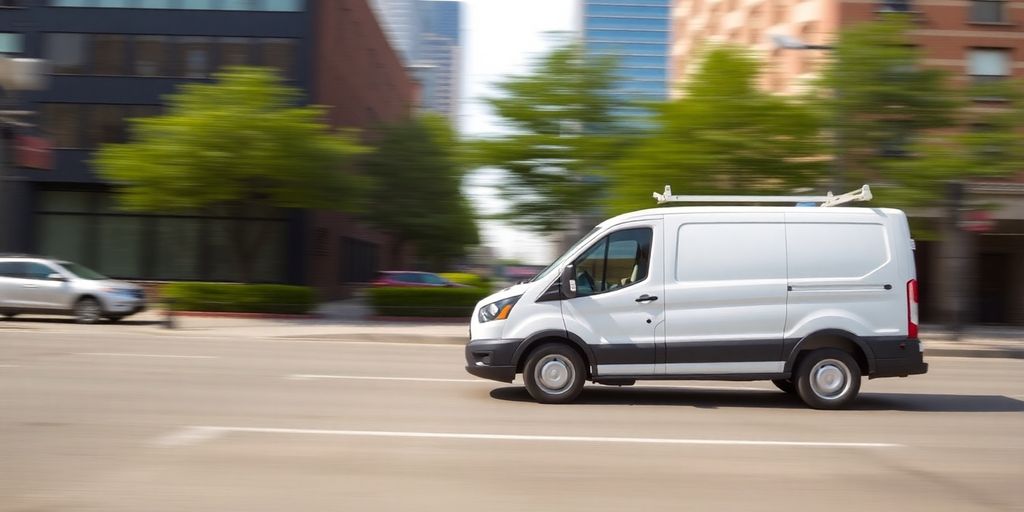
When it comes to keeping your E-Transit Courier shipshape, Ford’s approach is pretty straightforward. You’re looking at service intervals of every two years, and thankfully, there’s no mileage limit attached to that. This should mean less time off the road and, hopefully, lower maintenance bills over the van’s life.
However, where Ford’s warranty is a bit less generous is in its standard cover. It’s a three-year or 60,000-mile deal. Now, compared to some rivals who are offering up to ten years of cover, this feels a bit stingy. It means many vans could be out of warranty before they’ve even been replaced or sold on.
Battery Warranty
The battery itself is covered for eight years or up to 160,000 kilometres (which is about 100,000 miles), whichever comes first. That’s a decent chunk of peace of mind for the most expensive component in your electric van.
Servicing Costs
Ford reckons that non-scheduled maintenance costs for the electric Transit Courier will be around 35% lower than for its petrol-powered siblings. That’s a pretty significant saving, and combined with the two-year service intervals, it paints a picture of a van that’s designed to be cost-effective to run.
Rivals
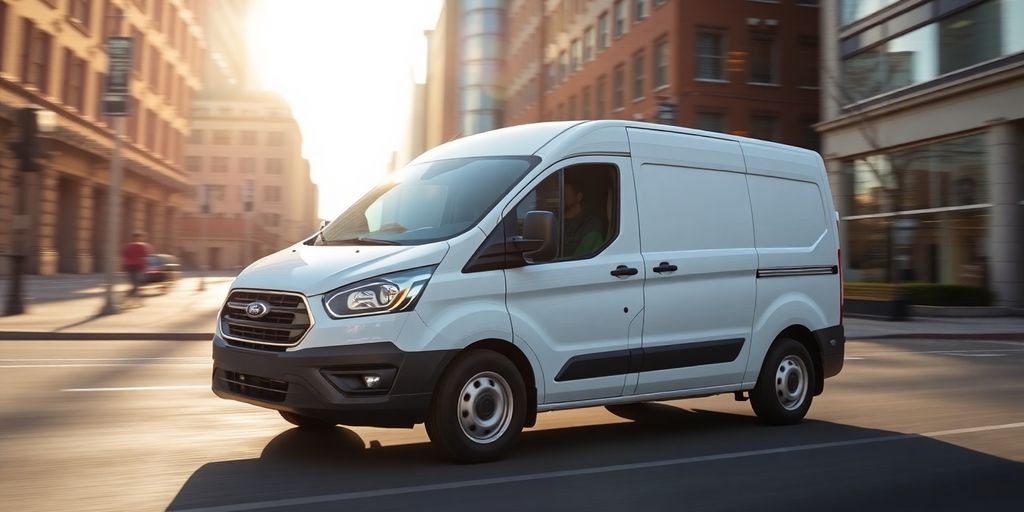
So, how does the Ford E-Transit Courier stack up against the competition? It’s a busy market out there for small electric vans, and Ford’s new contender has some serious rivals to contend with. Let’s have a look at a few key players.
Vauxhall Combo Electric
Often seen as a direct competitor, the Combo Electric shares a platform with other Stellantis vans. It’s known for its decent load space and a comfortable ride. However, the E-Transit Courier often edges it out on technology and that car-like driving feel Ford seems to nail.
Renault Kangoo E-Tech
Renault has a strong heritage in electric vehicles, and the Kangoo E-Tech is a solid offering. It boasts a good range and a practical interior. Some might find the Ford’s infotainment system a bit more intuitive, though.
Toyota Proace City Electric
Toyota brings its reputation for reliability to the electric van segment with the Proace City Electric. It offers a good warranty, which is a big plus for many businesses. When it comes to the driving experience and the tech inside, the E-Transit Courier might feel a bit more modern and engaging.
Ultimately, the E-Transit Courier makes a strong case for itself by blending practicality with a surprisingly refined driving experience, making it a very compelling option for urban tradespeople. It might not have the longest range in its class, but for city-based work, it’s more than adequate. Plus, that standard kit list is pretty generous for the price.
While the E-Transit Courier is a strong contender, it’s always worth checking out the latest deals and comparing specifications directly. What suits one business might not suit another, so a bit of research goes a long way.
When it comes to finding the best car rental deals, it’s always smart to see what others are saying. Our rivals offer some great options, but we think you’ll find our service stands out. Why not check out our latest offers and see for yourself? Visit our website today to discover fantastic deals on car hire.
So, is the E-Transit Courier the one?
Right then, after all that, where does that leave the Ford E-Transit Courier? Well, it’s a pretty solid effort, really. It drives nicely, feels modern inside, and it’s got enough space for most tradespeople doing their daily rounds in the city. The range is okay, not amazing, but probably fine for most folk who aren’t doing mega miles. It’s also got some decent safety kit as standard, which is always a plus. It’s not the cheapest option out there, and some rivals might offer a bit more range or a longer warranty, but it’s definitely worth a look if you’re after a compact electric van that’s easy to get around town. It’s a good first electric van for many businesses, that’s for sure.
https://www.firstflexilease.com/plug-in-van-grant-savings-when-you-lease-through-first-flexi-lease
Frequently Asked Questions
How far can the E-Transit Courier go on a charge, and how long does it take to charge?
Right then, the E-Transit Courier has a 43kWh battery, which should get you about 181 miles on a full charge according to the official tests. It’s powered by a 134bhp electric motor, giving it a decent bit of oomph for nipping around town. You can charge it up at home using a regular charger, which takes a bit over seven hours, or if you’ve got a faster charger at a depot, it’ll take around five and a half hours. There’s also a super-quick option if you’re out and about, getting you a decent chunk of range in under 25 minutes.
What sort of extras and safety features come with the E-Transit Courier?
You get a good amount of kit even on the basic Trend model, like climate control and a touchscreen that works with your phone for music and maps. If you go for the posher Limited version, you also get heated seats, a heated steering wheel, and a heated windscreen, which sounds pretty brilliant for those chilly mornings! It’s also packed with safety stuff as standard, like keeping you in your lane and helping you avoid crashing into things.
How much stuff can the E-Transit Courier actually carry?
It’s got a good amount of space for your gear, with 2.9 cubic metres of room. You can fit two standard Euro pallets in the back, and if you get the special bulkhead that lets you load through it, you can fit really long stuff like pipes or planks. It can carry quite a bit too, up to 698kg, which is pretty handy for tradespeople. Plus, there’s a handy little storage spot under the bonnet for your charging cables or maybe a first-aid kit.