
What Do the Audi Engine Names Mean?
An Audi name usually combines several layers of information. The model letter and number place the car within the range, while the badge after it describes the powertrain and approximate output. Reading those parts separately is the…
How Audi engine names are structured
An Audi name usually combines several layers of information. The model letter and number place the car within the range, while the badge after it describes the powertrain and approximate output. Reading those parts separately is the simplest way to understand the audi engine names meaning without treating the whole badge as one code.
The difference between engine technology and model badges
A badge such as 40 TFSI is not the complete identity of the car. The model name may be A3, A6, Q3 or Q7, and the badge then adds information about the engine type and power category. Trim, body style and drivetrain can still change the specification, so the badge is a useful guide rather than a full technical description.
What the TFSI and TDI labels indicate
TFSI is associated with petrol power, while TDI is associated with diesel power. Both terms refer to direct fuel injection and turbocharged engine technology, although the exact hardware and calibration depend on the engine generation. A useful Audi naming guide gives the wider context around model letters, numbers and performance designations.
How engine names have changed over time
Older Audi badges often made engine capacity more obvious, with names such as 1.6 or 2.0 appearing alongside fuel and trim information. More recent naming uses power categories instead, allowing the same style of badge to cover engines with different capacities. Electrification has added terms such as TFSI e and e-tron, making the full vehicle specification more important than ever.
Why the same engine name can appear in different Audi models
The same 35 TFSI or 40 TDI badge can appear across more than one model because it describes a power range, not a unique engine fitted to one body. Weight, software, transmission and emissions equipment may vary between applications. Always check the model year and detailed specification before assuming two cars with the same badge are mechanically identical.
What TFSI means on an Audi
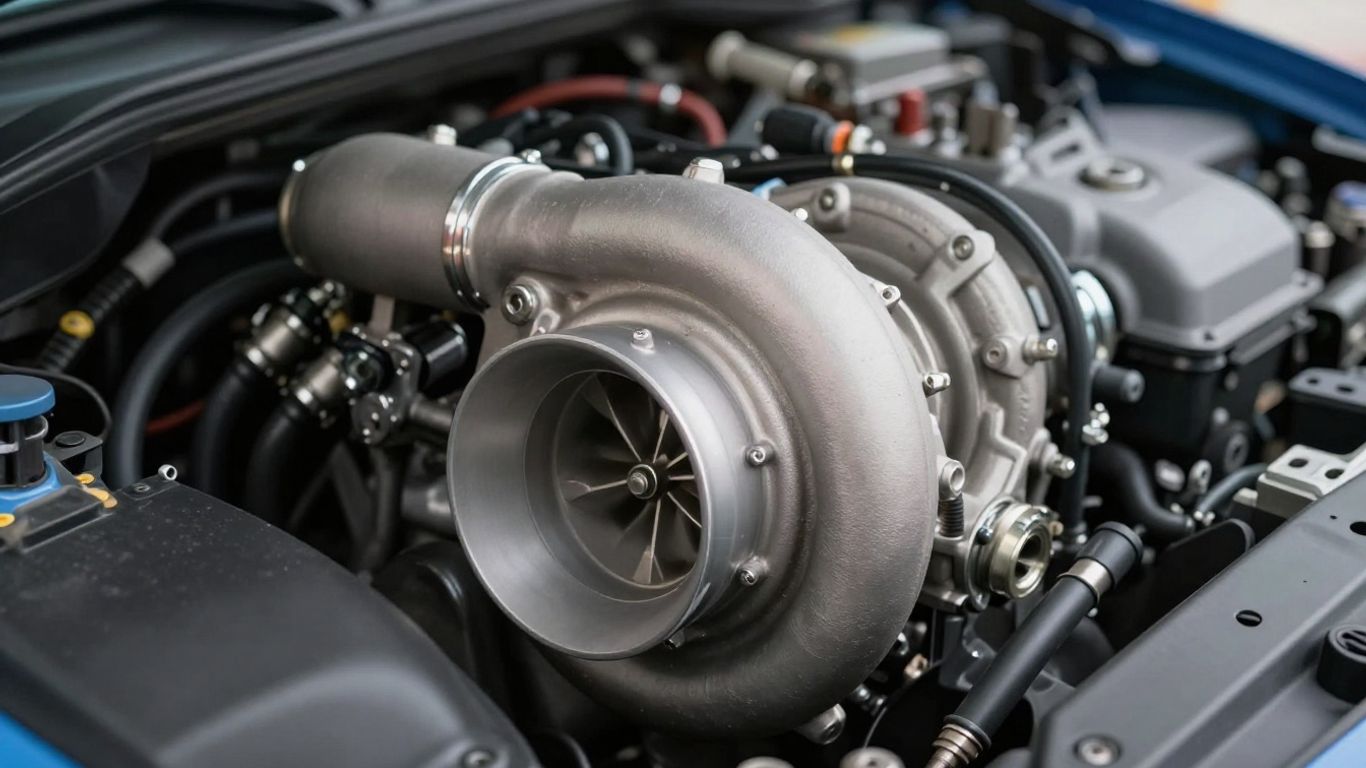
TFSI is Audi’s familiar label for turbocharged petrol engines using direct injection. The name points to the underlying approach, but it does not by itself tell you the engine’s exact capacity, power output or generation. Those details need to be read from the full vehicle specification.
The meaning of turbocharged fuel stratified injection
TFSI is commonly expanded as Turbo Fuel Stratified Injection. In plain terms, it combines a turbocharger with petrol injected directly into the combustion chamber. The wording comes from the technology’s earlier ability to use stratified mixtures under suitable conditions, although the badge now covers a broader family of modern petrol engines.
How petrol direct injection works
With direct injection, petrol is delivered into the combustion chamber rather than only into the intake port. This gives the engine management system close control over the timing and quantity of fuel. Turbocharging then uses exhaust energy to force more air into the engine, supporting useful power from relatively compact units.
Why modern TFSI engines are not always operating in stratified-charge mode
The name should not be read as a promise that every TFSI engine is running a stratified-charge mixture at every moment. Combustion strategy changes with load, temperature, speed and emissions requirements. In everyday driving, the important practical distinction is that TFSI identifies a turbocharged, direct-injection petrol powertrain rather than a single operating mode.
Common TFSI engine sizes and applications
TFSI engines have been used in a wide range of Audi cars and SUVs, from compact models to larger performance-focused vehicles. Capacity can vary considerably while the TFSI label remains familiar, which is why the badge alone cannot answer questions about running costs or performance. For wider context on compact turbocharged units, this guide to small turbo engines offers a useful comparison point without replacing the vehicle’s own specification sheet.
What TDI means on an Audi
TDI is the label associated with Audi’s turbocharged diesel engines and has appeared across many generations. It describes the engine’s broad combustion and injection approach, not one fixed design. A TDI badge therefore needs to be read alongside the power number, capacity, emissions equipment and model year.
The meaning of turbocharged direct injection
TDI is generally understood as Turbocharged Direct Injection. Diesel fuel is injected directly into the combustion chamber, while a turbocharger increases the amount of air available to support combustion. The result is a diesel powertrain concept that has been adapted through several generations of injection, turbocharging and emissions technology.
How diesel combustion differs from petrol combustion
A diesel engine normally compresses air to a much higher pressure and temperature before fuel is injected. The fuel then ignites from the heat of that compressed air, rather than relying on a spark in the way a petrol engine does. This difference affects the engine’s sound, response, efficiency characteristics and the type of emissions equipment it needs.
The role of turbochargers, common-rail injection and emissions systems
Modern diesel systems use carefully controlled injection, turbocharging and exhaust treatment as a connected package. Common-rail systems can deliver fuel at high pressure and adjust injection events precisely, while emissions equipment helps manage pollutants produced during combustion. The exact arrangement varies by engine family and generation, so a TDI badge is only the starting point for technical research.
Why TDI availability varies across Audi model ranges
Diesel availability has changed between models, generations and markets. Customer demand, emissions rules, vehicle size and the growth of electrified powertrains all influence which engines are offered. Two similar-looking Audis may therefore have very different petrol, diesel or hybrid choices depending on when and where they were sold.
Understanding Audi power numbers
The two-digit number before TFSI, TDI or an electrified designation is Audi’s way of grouping vehicles by approximate power output. It is not a direct reference to engine capacity and should not be treated as an exact horsepower figure. Think of it as a quick comparison label within a broad range.
What the 30, 35, 40, 45, 50 and 55 badges mean
Numbers from 30 through 55 generally move from lower to higher output bands, although the precise boundaries can vary. A 30 badge indicates a lower power category than a 55 badge, but the badge alone does not reveal the engine’s exact output, cylinder count or fuel type. The letters that follow remain essential: 40 TDI and 40 TFSI are not the same kind of powertrain.
How the number relates to power output in kW
Audi’s power categories are linked broadly to kilowatt output. They are designed to make comparison across a range easier, rather than to publish the exact kW figure in the badge. The official specification, registration documents or a reliable vehicle listing should be used when the precise number matters.
The following simplified view explains the direction of the system without pretending that every model generation uses identical limits:
| Badge | General position | What it does not confirm |
|---|---|---|
| 30 | Lower output band | Engine capacity or fuel type |
| 35 | Lower-to-mid output band | Exact kW figure |
| 40 | Mid output band | Transmission or drivetrain |
| 45 | Upper-mid output band | Model generation |
| 50/55 | Higher output bands | Whether the car is electrified |
The table is best used as a guide to relative positioning. A detailed listing still matters, particularly when comparing used cars from different years or checking insurance and taxation information.
Why the badge does not directly state engine size
A smaller turbocharged engine can sit in a similar power category to a larger naturally aspirated or differently tuned engine. Capacity is only one factor among turbocharging, software, injection, cooling and emissions requirements. That is why a 35 badge should never be read as “a 3.5-litre engine”.
How power bands can differ between model generations
Audi can revise its engines and the boundaries of its naming system over time. The same number may therefore cover different kW outputs in different generations, even when the driving experience feels broadly comparable. When comparing vehicles, note the registration year, engine code and published power rather than relying on the number alone.
For anyone weighing up vehicles before arranging access, First Flexi Lease provides fixed monthly rentals and transparent terms, which can make the wider cost comparison easier to organise. Its flexible vehicle leasing service covers cars and vans, with contracts ranging from 6 to 48 months.
What Audi electrified engine names mean
Electrified Audi names add another layer to the familiar petrol and diesel labels. They can describe a fully electric vehicle or a car that combines an electric motor with a combustion engine. The badge gives the broad powertrain idea, but battery size, charging details and electric range still need separate checks.
The difference between e-tron, TFSI e and fully electric models
e-tron has been used for Audi electrified vehicles, including fully electric models, while TFSI e identifies a plug-in hybrid combination of petrol and electric power. A fully electric Audi does not use a petrol or diesel engine, whereas a TFSI e model retains a combustion engine alongside its electric system. The naming distinction is therefore important when considering charging and refuelling habits.
How plug-in hybrid Audi models combine petrol and electric power
A plug-in hybrid can use its electric motor for some journeys and its petrol engine for longer or higher-load driving. The two systems may work separately or together, depending on the selected mode and driving conditions. Combined output figures can also be presented differently from the output of either individual motor, so published specifications deserve close attention.
What battery, charging and electric range information the badge does not reveal
The name does not normally tell you the usable battery capacity, charging speed or realistic electric range. Those figures can affect daily convenience more than the badge itself. Check whether the vehicle supports the charging routine available at home, work or public charge points, and consider how temperature and driving style may affect range.
Why quattro and electric motor layouts can vary
quattro identifies Audi all-wheel drive, but the hardware can differ between combustion, hybrid and fully electric vehicles. An electric model may use a different motor arrangement from a petrol-powered car, and not every electrified Audi has the same drivetrain layout. The full technical description is needed to understand how power reaches the wheels.
What other Audi letters and terms mean
The rest of an Audi badge often describes drivetrain, performance intent or body style rather than the engine’s basic fuel technology. These terms can be useful, but they are not interchangeable. In particular, a styling or trim label should not be mistaken for a higher-output powertrain.
What quattro says about the drivetrain
quattro indicates an all-wheel-drive system. It can improve traction in suitable conditions, but the precise system and its behaviour depend on the vehicle and generation. It does not tell you whether the car has a TFSI, TDI, hybrid or electric powertrain.
What S and RS indicate about performance models
S models are positioned as sportier versions, while RS models represent Audi’s higher-performance variants. Their differences can involve the engine, suspension, brakes, transmission, bodywork and interior, rather than simply a different badge. The exact specification varies from one model family to another.
What Ultra, Sportback and Avant describe
Ultra has been used to describe efficiency-focused versions or technology, depending on the model and period. Sportback generally refers to a sleeker body shape, often with a sloping rear roofline, while Avant is Audi’s term for an estate body style. These words describe different aspects of the vehicle and do not automatically indicate engine output.
How S line differs from an S or RS powertrain
S line is principally a trim and styling designation. It may bring sportier-looking exterior details, seats or suspension, but it does not necessarily mean the car has the engine and mechanical specification of an S model. RS is a performance model designation, so checking the full specification prevents an attractive trim badge from being confused with a different powertrain.
Engine codes versus Audi engine names
Audi’s public-facing badge is intended to be readable at a glance. The engine code is a more precise technical identifier used to distinguish engine families and particular applications. If the question involves parts, servicing or compatibility, the code is usually more useful than a badge such as 40 TFSI.
What an engine code identifies
An engine code identifies a particular engine family or variant. It can help distinguish capacity, generation, fuel system, emissions equipment and calibration where the public badge cannot. A comprehensive Audi engine codes database can be a useful reference, but the vehicle’s own documents remain the safest starting point.
Where to find the engine code on an Audi
The code may appear in service documentation, vehicle records or information supplied by a dealer or specialist. It can also be associated with identification labels on the vehicle, although the exact location varies by model and year. If you are unsure, provide the registration or vehicle identification number to a parts or servicing professional rather than guessing.
Why one engine code can have different power outputs
An engine family can be adapted for different vehicles and output levels. Software calibration, turbocharger specification, emissions equipment, transmission pairing and market requirements may all play a part. This is why even a matching-looking engine code should be checked against the complete application before a replacement part is ordered.
How to check compatibility when buying parts or servicing an Audi
Start with the registration, VIN, model year, engine code and gearbox details. Then compare the part number and technical specification, not just the badge or engine capacity. A careful check can prevent problems caused by revisions within the same engine family, especially on used cars with incomplete service histories.
Conclusion
Audi engine names are a shorthand, not a complete specification. Read the model, fuel technology, power category, electrification terms and drivetrain separately, then confirm the engine code when accuracy matters. For drivers who want a vehicle without building a long contract from scratch, First Flexi Lease offers fixed monthly rentals, transparent terms and flexible car and van leasing; get a quote when you are ready to compare your options.
Frequently asked questions
What does TFSI mean on an Audi?
What does TDI mean on an Audi?
Do Audi numbers such as 40 mean engine size?
Is a 40 TFSI the same as a 40 TDI?
What is the difference between TFSI e and e-tron?
Does quattro always mean the same all-wheel-drive system?
Where can I find an Audi engine code?
Reviewed by
Billy Lang, Director
FCA Registration No: 835008
Keep reading
Related guides
Vehicle guides
Are 1.0-litre turbo engines any good?
How three-cylinder 1.0 turbo engines manage the pace of a bigger engine on small-car running costs, where they struggle, and which ones have proven themselves.
Read guideVehicle guides
Audi A1: Perfect First Car
The Audi A1 can make a polished, manageable first car, but the right example matters more than the badge. Think carefully about insurance, servicing, space and the condition of any used model before committing. Compact dimensions make the A1 comfortable in town and easier to park. The premium cabin and technology are appealing,…
Read guideVehicle guides
Are Alfa Romeo Cars Reliable?
Whether Alfa Romeo cars are reliable depends less on the badge alone and more on the model, engine, age and care it has received. Newer Alfa Romeo models can be enjoyable and dependable when serviced correctly. Electrical warnings, battery issues and wear to suspension components are common ownership concerns. A complete service history…
Read guideReady when you are
Put the reading into practice.
A soft credit check via Creditsafe takes minutes. It does not normally affect your credit score the same way as a full lending application — and you get an honest answer either way.
Request a Flexi Quote
Quick form. Tell us which flexi stock you are interested in and we'll call you back the same day.
