
Top Ten Most Expensive Cars
The Rolls-Royce La Rose Noire Droptail belongs to the rarest end of the luxury-car market, where the boundary between automobile and commission-made artwork becomes difficult to see. Its name draws attention to the black Baccara rose,…
1. Rolls-Royce La Rose Noire Droptail
The Rolls-Royce La Rose Noire Droptail belongs to the rarest end of the luxury-car market, where the boundary between automobile and commission-made artwork becomes difficult to see. Its name draws attention to the black Baccara rose, while the design uses a dark, dramatic interpretation of that inspiration. It is a car intended to feel personal before it is even driven.
Its appeal lies in the care given to surfaces, materials and proportion. The long bonnet, open cabin and flowing rear body create the atmosphere of a modern roadster, but the details are closer to those found in a private interior or a high-end piece of furniture. Every visible element has to work at a very small production scale, making the finished object feel unusually deliberate.
That is why it deserves a place among the most expensive cars. The price reflects not only machinery, but also the time spent creating a singular specification. For a collector, the meaningful distinction is not simply speed; it is the sense that the car has been made for one particular taste and cannot be casually replicated.
2. Rolls-Royce Boat Tail
The Rolls-Royce Boat Tail takes the traditional luxury grand tourer and gives it an unusually theatrical silhouette. Its rear deck recalls the shape of a boat, while the open-air design makes the car feel suited to slow journeys along a coastline rather than hurried laps around a circuit. It is grand without needing to appear aggressive.
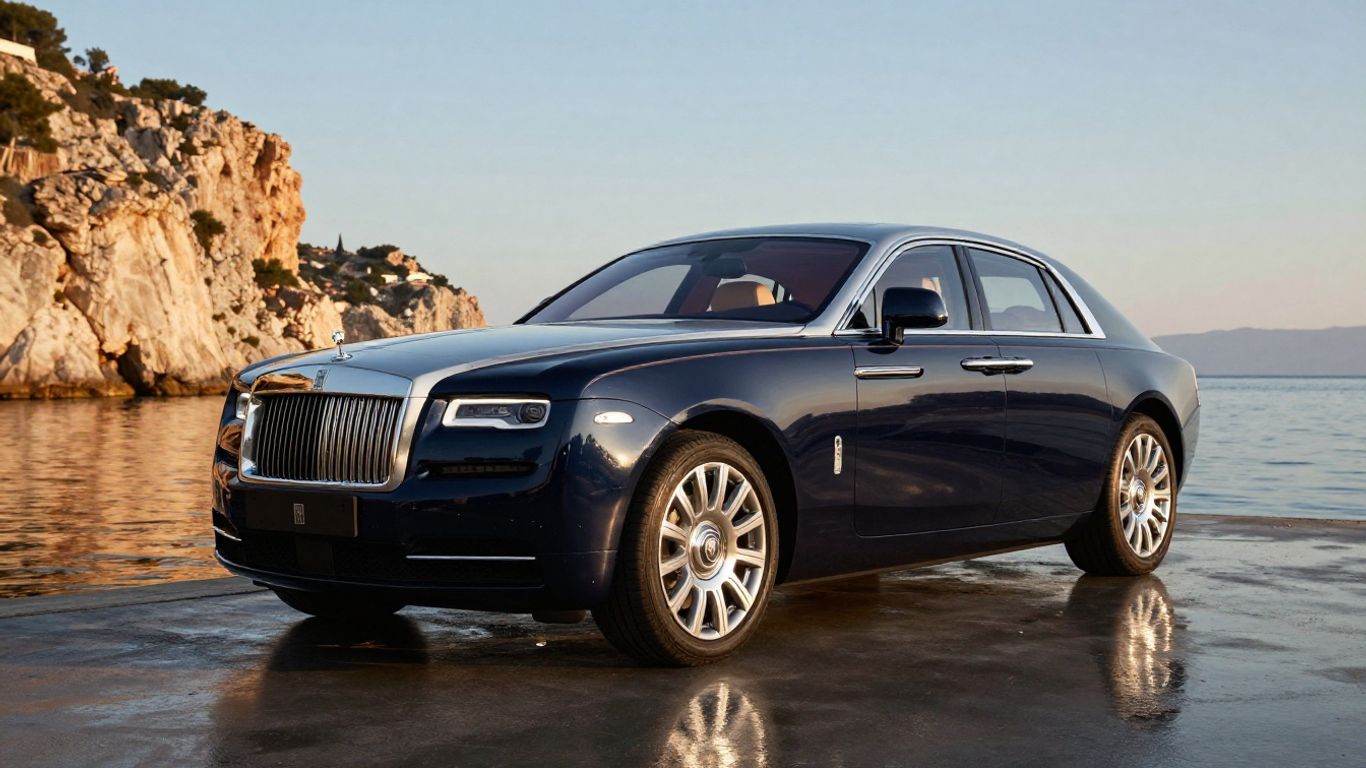
The important point is how many different forms of luxury come together in a car like this. Hand-finished detailing, a carefully commissioned interior and a body designed around a small number of owners all contribute to the experience. Personalisation becomes the central luxury rather than a final layer added to an existing mass-produced model.
A simple comparison helps explain why these cars sit so far above ordinary performance vehicles. The factors below are not a universal pricing formula, but they show the elements collectors tend to weigh when considering a bespoke commission.
| Value factor | What it can add to a car | Why it matters to collectors |
|---|---|---|
| Rarity | Very limited availability | Fewer examples can strengthen exclusivity |
| Craftsmanship | More time spent on materials and finishing | Detail is visible at close range |
| Provenance | A clear story or notable ownership history | The car gains cultural context |
| Design | A distinctive shape or commissioned specification | The vehicle feels less interchangeable |
The table also shows why a direct comparison with a normal luxury model can be misleading. A Boat Tail is not being judged only as transport; it is being valued as a commissioned object with a very small audience and an unusually complete design story.
3. Bugatti La Voiture Noire
Bugatti La Voiture Noire is one of the most recognisable modern examples of a car built around drama. Its long, dark body and uninterrupted visual theme give it a presence that is closer to a sculpture than a conventional supercar. The name itself, meaning “the black car”, is deliberately simple and leaves the shape to do most of the talking.
The car’s design is linked to the mythology of Bugatti’s historic Type 57 SC Atlantic, although the modern interpretation is not a recreation. Instead, it borrows the idea of a secretive, highly individual grand tourer and turns it into a contemporary statement. The result is elegant from a distance and full of small details when viewed up close.
Its place in this list comes from the combination of exceptional exclusivity and a strong design identity. Many fast cars can deliver startling acceleration, but far fewer have a silhouette that can be recognised immediately in a photograph. That visual confidence is a major part of the appeal for collectors who want their cars to carry a story as well as a specification.
4. Pagani Zonda HP Barchetta
The Pagani Zonda HP Barchetta is a particularly expressive take on the Zonda formula. Its low windscreen, open character and compact proportions give it the feel of a road-going racing machine, while the exposed carbon fibre and carefully shaped bodywork reveal the engineering beneath the surface. It is not designed to blend into traffic.
The model is associated with Horacio Pagani, whose influence can be felt in the way mechanical components and decorative materials are allowed to share the same stage. Carbon fibre, metalwork and leather are not treated as separate worlds. They sit together in a cabin and body that feel assembled with the patience of a watchmaker.
That approach helps explain the Zonda HP Barchetta’s extraordinary position in the market. It combines low-volume production with a vivid personality, and those qualities are difficult to reproduce once a model has become part of a marque’s mythology. The car is valuable because it feels like a final, highly personal expression of an already celebrated design.
5. Rolls-Royce Sweptail
The Rolls-Royce Sweptail is a reminder that a luxury car can be defined by restraint as much as by spectacle. Its sweeping roofline draws on the proportions of classic coachbuilt cars and private yachts, creating a shape that looks elongated, calm and expensive without relying on sharp aerodynamic drama. It has the visual quietness of something designed to last.
Inside, the emphasis is on space, finish and continuity. The cabin is designed to feel like a private environment, with details chosen to suit the commissioning owner rather than a broad market. That kind of work requires an understanding of how materials, light and proportion behave together, not just a list of optional equipment.
The Sweptail also illustrates the difference between a luxury car with many options and a genuinely bespoke vehicle. In the first case, the customer chooses from an established menu. In the second, the shape and atmosphere of the car may be developed around an individual brief, making the finished result more difficult to compare with anything else on the road.
6. Bugatti Centodieci
The Bugatti Centodieci takes a different route to extreme pricing. It is a limited-run hypercar whose design pays tribute to the EB110, bringing a more angular and compact visual language to the modern Bugatti family. The result is sharper than the rounded form of the Chiron, with an emphasis on distinctive openings, strong lines and a more technical appearance.
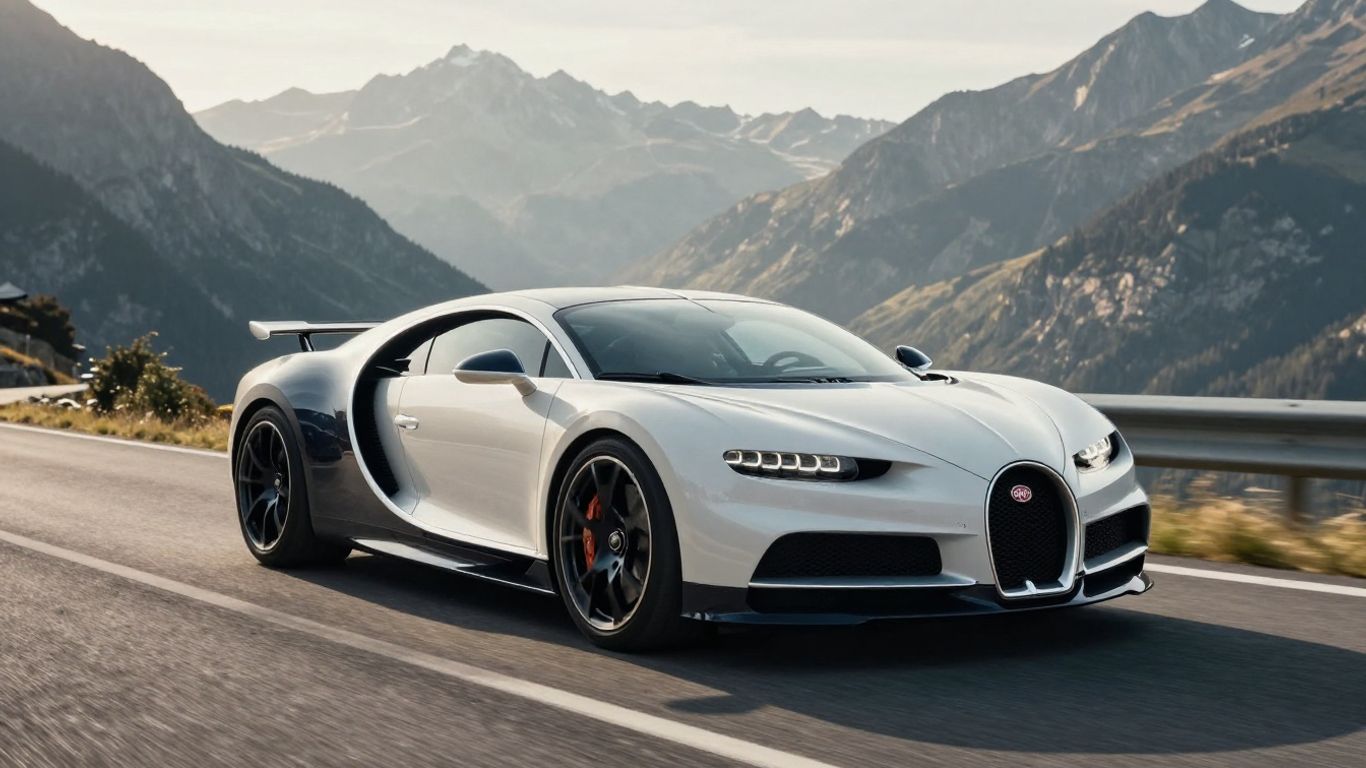
This kind of car appeals to collectors who value a clear connection to marque history. Its design is not intended to be timeless in the same quiet way as a grand tourer; it is meant to make the reference visible. That gives the Centodieci a particular role in a collection, especially for someone interested in the evolution of high-performance road cars.
The following features help explain the character of a limited hypercar without reducing it to a single headline figure:
- A design language connected to an earlier model.
- A very small production run compared with ordinary performance cars.
- Bodywork shaped to create a stronger visual identity.
- Engineering intended for exceptional road performance.
Those points matter because rarity only works when it is paired with a reason to care. The Centodieci has that reason in its historical reference, its unusual styling and its place within a highly exclusive family of cars.
7. Mercedes-Maybach Exelero
The Mercedes-Maybach Exelero has a different sort of presence from the smaller, more overtly sporting cars in this list. Its long, imposing body and formal proportions make it look like a high-speed luxury coupé, with the visual weight of a large saloon and the roofline of a grand tourer. It is imposing rather than delicate.
Part of its appeal comes from the tension between comfort and performance. The car looks capable of covering great distances at speed, yet its proportions leave room for the sense of occasion associated with an ultra-luxurious automobile. It does not need bright colours or exaggerated wings to communicate that it is unusual.
The Exelero is also a useful example of how a one-off or highly exclusive car can become valuable through identity. Its shape is instantly distinguishable, and its rarity gives it a presence in automotive culture that ordinary production numbers cannot create. For collectors, that distinctiveness may be as important as measurable performance.
8. Bugatti Divo
The Bugatti Divo is built around a more focused interpretation of the modern hypercar. Where some expensive cars place their greatest emphasis on elegance or bespoke comfort, the Divo presents itself as more purposeful, with a body shaped to suggest aerodynamic work and fast cornering. Its name refers to Albert Divo, the French racing driver associated with Bugatti’s historic competition success.
The styling is full of visual tension. Air channels, cut-outs and carefully controlled surfaces make the car appear as though it is moving even when parked. That effect is supported by a cabin that remains luxurious but feels secondary to the exterior’s performance-led character.
Its value comes from that clear brief. The Divo is not simply a more decorated version of an existing car; it occupies a distinct place for buyers who want a limited, track-influenced interpretation. It shows how the most expensive cars can appeal to very different tastes, even when they share a similar level of exclusivity.
9. Bugatti Mistral
The Bugatti Mistral brings an open-top format to a modern hypercar lineage better known for enclosed bodies. Removing the roof changes more than the appearance: it changes how the occupants experience the engine, the air and the surrounding landscape. The Mistral therefore has a more immediate character than a closed grand tourer.
Its name comes from the strong, cold wind that moves through the Rhône Valley and towards the Mediterranean. That reference suits a car intended to feel fast and elemental, although the design still carries the polished surfaces and carefully resolved details expected at this level. The open cockpit is dramatic without appearing unfinished.
The Mistral demonstrates the lasting attraction of an exceptional car with a roofless layout. Convertible supercars are not automatically more valuable, but a limited model with a strong design direction can become highly desirable. In this case, the appeal is the combination of open-air theatre, serious performance intent and extreme scarcity.
10. Pagani Huayra Codalunga
The Pagani Huayra Codalunga takes its inspiration from the long-tailed racing cars of the past. Its stretched rear section gives the body a smooth, flowing profile, while the low roof and exposed mechanical details keep it rooted in the world of high-performance machines. It is a design that rewards patience rather than a quick glance.
The name means “long tail”, and that description captures the central idea without explaining away all of the detail. The rear bodywork changes the car’s proportions, making it appear lighter and more purposeful. At the same time, the interior retains the intricate mixture of metal, leather and carbon fibre associated with Pagani’s most individual creations.
The Codalunga sits among the most expensive cars because it combines a limited concept with a coherent visual story. It is not merely scarce; it is recognisable, carefully finished and based on an idea that has been carried through the entire body. That completeness is what makes a special commission feel genuinely special.
Explore Flexible Driving
The price of a collector car is only one part of the wider motoring picture. For a more practical route into driving a newer vehicle, browse flexible leasing with fixed monthly payments, road tax and breakdown cover included in the package described by the provider.
Conclusion
The most expensive cars sit at the meeting point of engineering, design, scarcity and personal taste. Some are built for speed, some for grand touring and others almost as private works of art, but all gain value from being difficult to replace. For most drivers, the more useful lesson is that the right vehicle should fit both the budget and the way it will actually be used.
Frequently asked questions
What makes a car one of the most expensive cars in the world?
Are these cars sold through public auctions?
Does a higher price always mean better performance?
Why are one-off cars so valuable?
Are classic cars included in lists of the most expensive cars?
What costs should buyers consider beyond the purchase price?
Can an ordinary driver experience luxury without buying a collector car?
Reviewed by
Billy Lang, Director
FCA Registration No: 835008
Keep reading
Related guides
Vehicle guides
Are 1.0-litre turbo engines any good?
How three-cylinder 1.0 turbo engines manage the pace of a bigger engine on small-car running costs, where they struggle, and which ones have proven themselves.
Read guideVehicle guides
Audi A1: Perfect First Car
The Audi A1 can make a polished, manageable first car, but the right example matters more than the badge. Think carefully about insurance, servicing, space and the condition of any used model before committing. Compact dimensions make the A1 comfortable in town and easier to park. The premium cabin and technology are appealing,…
Read guideVehicle guides
Are Alfa Romeo Cars Reliable?
Whether Alfa Romeo cars are reliable depends less on the badge alone and more on the model, engine, age and care it has received. Newer Alfa Romeo models can be enjoyable and dependable when serviced correctly. Electrical warnings, battery issues and wear to suspension components are common ownership concerns. A complete service history…
Read guideReady when you are
Put the reading into practice.
A soft credit check via Creditsafe takes minutes. It does not normally affect your credit score the same way as a full lending application — and you get an honest answer either way.
Request a Flexi Quote
Quick form. Tell us which flexi stock you are interested in and we'll call you back the same day.
