
Petrol Station Precautions
A safe visit begins before the vehicle reaches the pumps. Petrol stations combine moving traffic, pedestrians, fuel deliveries and flammable substances in a relatively small space. Arriving calmly and paying attention gives you more time…
Prepare before entering the petrol station
A safe visit begins before the vehicle reaches the pumps. Petrol stations combine moving traffic, pedestrians, fuel deliveries and flammable substances in a relatively small space. Arriving calmly and paying attention gives you more time to respond to what is happening around you.
Choose a safe route and reduce distractions
Approach slowly and avoid making phone calls, changing music or searching for items while driving into the forecourt. Look for the entrance and exit, check the position of pumps and leave enough room for other vehicles to manoeuvre. If you are choosing a vehicle for regular work journeys, flexible vehicle leasing can help you consider the term and mileage that suit your driving pattern before you set off.
Keep children and vulnerable passengers supervised
Children should remain properly supervised while the vehicle is moving and while fuel is being dispensed. Do not allow anyone to run between pumps or approach another vehicle without an adult. Passengers who need extra assistance should be helped in a safe place away from traffic lanes and the nozzle.
Follow site signs, markings and staff instructions
Every site has its own layout, traffic flow and operating instructions. Follow arrows, barriers, marked walkways, speed limits and any directions given by staff, even if a different route appears quicker. Clear guidance is especially useful during deliveries, maintenance work or a busy period.
Avoid entering during visible spills, leaks or other hazards
Do not drive through a visible fuel spill, leaking area or cordoned-off section. Stop at a safe distance and tell staff what you have seen rather than trying to inspect it yourself. Fuel vapour, damaged equipment and slippery surfaces can affect more than the pump immediately beside the problem.
Use the forecourt safely
The pump area calls for quiet concentration. Petrol and its vapour must be kept away from ignition sources, and ordinary distractions can make a small mistake more likely. These petrol station safety precautions are straightforward, but they work best when followed consistently.
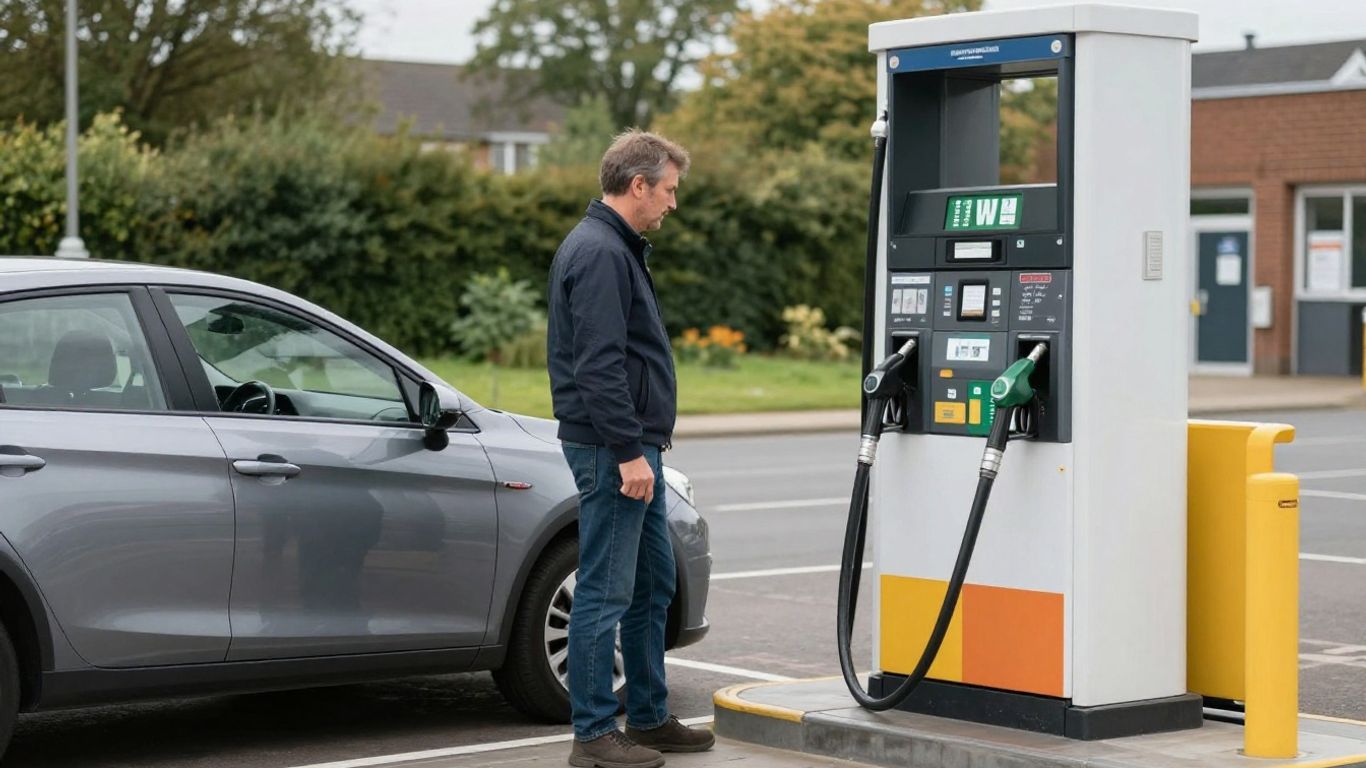
Switch off the engine before refuelling
Put the vehicle in park or neutral as appropriate, apply the handbrake and switch off the engine before opening the fuel flap. Do not restart until the nozzle has been replaced and the fuel cap or flap is secure. Turning the engine off also prevents the vehicle from moving unexpectedly while you are beside it.
Do not smoke, vape or use naked flames
Never smoke, vape, light a match or use a lighter near a pump. Keep candles, burners and other naked flames away from the forecourt too. A small ignition source can create a serious risk where fuel vapour is present, so do not treat the rule as applying only while fuel is flowing.
Avoid using mobile phones while handling fuel
Put your phone away while choosing the pump, opening the filler and dispensing fuel. A conversation or notification can take your attention from the nozzle, an approaching vehicle or a spill. If you need to make a call, finish refuelling, replace the nozzle and move to a safe area first.
Keep fuel containers approved, secure and correctly positioned
Use only a suitable, approved fuel container and follow its instructions. Place it securely on the ground where required, keep it upright and do not hold it in your vehicle while filling. Do not use makeshift bottles or containers that could leak, collapse or build up static charge.
Prevent static electricity and unsafe clothing contact
Avoid repeatedly getting in and out of the vehicle while fuel is dispensing. If you do need to enter it, touch a clean metal part away from the filler before touching the nozzle again. Keep loose clothing, scarves and other items away from the filler and dispensing equipment.
Refuel without spills or ignition risks
Refuelling should be an unhurried, attended task. Check what you are doing before pressing the handle, keep the nozzle controlled and stop as soon as the automatic cut-off operates. A calm final check is often enough to prevent drips, a wrong-fuel incident or a loose cap.
Select the correct fuel for the vehicle
Check the vehicle handbook, filler flap marking or other reliable vehicle information before selecting a grade. If you are unsure, ask staff before dispensing anything. Never rely on the colour of a nozzle alone, since layouts and colour conventions can vary between sites.
A quick check of the vehicle, pump and container can be useful before fuel starts flowing:
- Confirm the fuel type and grade.
- Check that the vehicle is stationary with the engine off.
- Make sure the nozzle is fully inside the filler opening.
- Keep the handle under your control throughout dispensing.
Once these points are clear, refuelling can proceed without unnecessary handling. If you realise that the wrong fuel has been selected, stop immediately and ask staff what to do; do not start the engine.
Stay beside the nozzle while dispensing fuel
Remain at the pump while fuel is flowing and keep your eyes on the nozzle and filler. Do not wedge the handle open with an object or walk away to shop. Staying close means you can stop quickly if the cut-off fails, the nozzle shifts or fuel begins to escape.
Do not overfill the tank or force the pump to continue
Stop when the nozzle automatically clicks off. Do not keep adding fuel to squeeze in a little more, as liquid can spill or expand into parts of the system that need room. Allow the pump to finish its cycle before removing the nozzle.
Clean up drips and report spills immediately
If fuel drips onto the vehicle or ground, stop and alert staff straight away. Do not drive across a larger spill or try to wash it away yourself. Staff can isolate the area and use the site’s spill response arrangements, reducing the chance of slips, vapour exposure and ignition.
Replace the nozzle and fuel cap safely
Return the nozzle fully to its holder and make sure it is stable before moving away. Tighten the fuel cap until it is secure, or close the filler flap properly if the vehicle uses a capless system. Check the ground and the side of the vehicle for drips, then take your receipt and leave without rushing.
Protect people from common forecourt hazards
Fuel safety is only one part of a safe forecourt. Vehicles may be turning, reversing or leaving from unexpected directions while customers walk between pumps and the shop. Good visibility, low speed and patience protect people who may not have seen you.
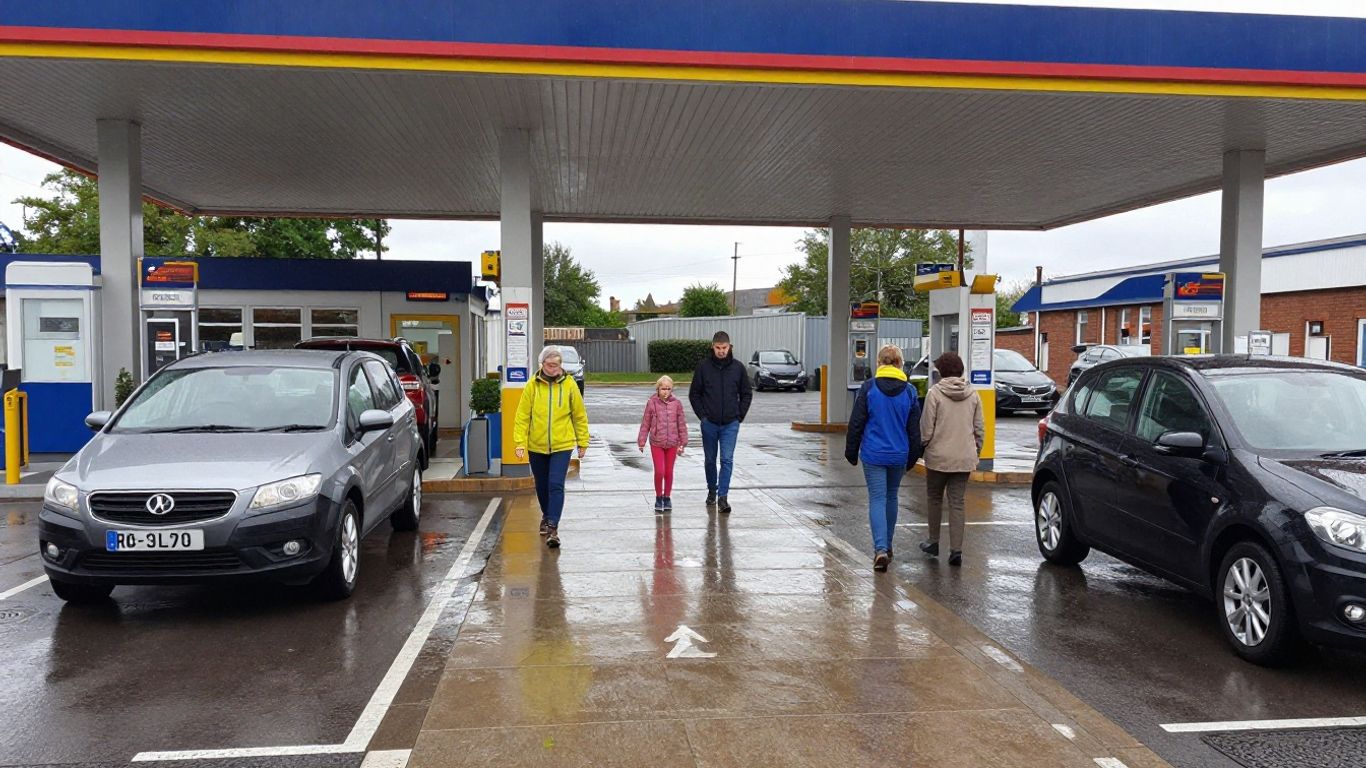
Keep clear of moving vehicles and reversing areas
Give moving vehicles plenty of space and never stand behind a reversing car or van. Watch for drivers who may be focused on finding a pump rather than on pedestrians. If you are driving, check mirrors carefully and move at walking pace around pumps and corners.
Use pedestrian walkways and designated crossing points
Use marked paths and crossing points wherever they are provided. Do not cut diagonally between pumps or walk through a vehicle’s turning space to save a few seconds. Hold children’s hands where appropriate and make sure everyone has crossed before moving the vehicle.
Take extra care in poor weather or low visibility
Rain, ice, glare and darkness make painted markings and people harder to see. Reduce speed, use lights as appropriate and leave more room for stopping. Wet footwear can also reduce grip, so step carefully when getting out and keep your attention on the ground as well as surrounding traffic.
Recognise slip, trip and collision risks
Look for wet patches, hoses, kerbs, raised covers, dropped objects and poorly positioned bins. Keep bags and personal items inside the vehicle or in a secure place rather than leaving them in a traffic route. If you spot a hazard, warn people nearby only if it is safe to do so and report it to staff.
Use suitable precautions for motorcycles and electric vehicles
Motorcyclists should stabilise the bike securely and take care when mounting or dismounting near the pump. Electric vehicles should follow the station’s instructions and should not be connected to charging equipment unless the area and equipment are intended for that use. In either case, keep cables, stands and personal belongings out of pedestrian routes.
Respond to fires, spills and emergencies
A quick, measured response matters when something goes wrong. Do not try to finish refuelling, retrieve belongings or investigate a leak if there is fire, heavy vapour or an immediate danger. Petrol station staff should be told at once so they can use the site’s emergency arrangements.
Know when to stop refuelling and alert staff
Stop dispensing fuel if the nozzle, hose or filler behaves unusually, if fuel is escaping, or if you smell a strong and unexpected vapour. If there is smoke or a flame, stop only if doing so is immediately safe, then warn staff and move away. Do not restart the engine or attempt to drive through a spill.
Move away from fuel vapours and affected areas
Move upwind and away from the spill, smoke or vapour without walking through the affected area. Keep other people back if you can do so without putting yourself at risk. Do not operate electrical devices or create an ignition source near a suspected vapour cloud.
Use emergency stop controls only when appropriate
Emergency stop controls are intended for a serious immediate incident, such as uncontrolled fuel release or fire, and their location should be known to trained staff. Use one only when you can reach it without entering danger and the situation warrants it. After activation, leave the area and follow staff instructions rather than resetting equipment yourself.
In a serious incident, the safest sequence is simple and deliberate:
- 1Stop the activity if it is safe to do so.
- 2Warn staff and people close to the hazard.
- 3Move to the designated safe area.
- 4Call the emergency services when required.
This approach avoids crowding around the pump and gives responders clearer access. If you are unsure what to do, follow the site’s evacuation instructions and do not take unnecessary risks.
Follow evacuation procedures and contact the emergency services
Leave by the route directed by staff and move well away from pumps, vehicles and fuel-storage areas. Do not return for a phone, bag or receipt. Call 999 when there is fire, serious injury or a continuing threat, giving the operator the station’s location and a clear description of what happened.
Give first aid for fuel contact or inhalation
For fuel on skin, move away from the source and wash the affected area with plenty of water, removing contaminated clothing where practical. If fuel enters the eyes, rinse them with clean water and seek medical advice. Anyone who feels unwell after inhaling vapour should be moved into fresh air without entering danger; seek urgent help for breathing difficulty, collapse or persistent symptoms.
Maintain safe petrol station operations
Operators need systems that protect customers as well as staff. Regular checks, clear housekeeping and sensible supervision reduce the chance that a small defect becomes a fire, spill or collision. Guidance on forecourt maintenance checks can sit alongside the site’s own risk assessments, instructions and legal duties.
Inspect pumps, hoses, nozzles and emergency equipment
Inspect dispensing equipment for visible damage, worn hoses, loose fittings and nozzle problems. Check that emergency stops, fire-fighting equipment, spill materials and communication methods are accessible and maintained. Any equipment that cannot be used safely should be isolated and reported under the station’s procedure.
Control leaks, vapours and fuel-storage risks
Investigate signs of leakage, unusual odours, damaged seals or persistent vapour without exposing people to the source. Storage and delivery areas should be controlled, protected from vehicle impact and managed according to the site’s documented arrangements. Staff should know how to isolate an affected area and who must be contacted.
Keep the forecourt clean, illuminated and unobstructed
Remove rubbish and obstructions promptly, keep walkways usable and deal with spills through the approved response process. Lighting should support safe movement around pumps, entrances and crossing points, especially during darker hours. Clear sightlines help drivers notice pedestrians, staff and hazards earlier.
Train staff in handling fuel and responding to incidents
Training should cover dispensing equipment, approved containers, ignition control, spill response, emergency stops, evacuation and first aid arrangements. New staff need site-specific instruction, while existing staff benefit from refreshers and practice. Responsibilities should be clear during deliveries, busy periods and lone-working situations.
Record inspections, defects and near misses
Write down checks, faults, repairs, spills, injuries and near misses promptly. Records help managers identify repeated problems, confirm that action has been taken and improve procedures over time. They also provide a useful handover between shifts, so unresolved hazards are not forgotten.
Conclusion
Petrol station precautions work best as ordinary habits: slow down, stay alert, keep ignition sources away, refuel carefully and report anything unsafe. A little patience protects everyone sharing the forecourt, from customers and passengers to staff managing the site.
Explore Flexible Vehicle Options
If you are considering a replacement car or van, request a quote from First Flexi Lease for a straightforward leasing conversation suited to your needs.
Frequently asked questions
Should I switch off the engine before refuelling?
Can I use my mobile phone at a petrol pump?
What should I do if I spill petrol?
Is it safe to top up after the nozzle clicks off?
What should children do while a vehicle is being refuelled?
What should I do if a fire starts at the pump?
How can drivers reduce collision risks on a forecourt?
Reviewed by
Billy Lang, Director
FCA Registration No: 835008
Keep reading
Related guides
Driving life
Brake Checking
Brake checking is deliberate, unnecessary braking intended to unsettle or endanger a following driver. It is different from braking normally for traffic, hazards or road conditions. Brake checking can cause a serious rear-end collision. A rear driver is not automatically solely responsible for every crash. Deliberate braking, tailgating and road rage may all…
Read guideDriving life
Road Trip Tips for Drivers with Leased Vehicles
A leased car can be a practical choice for a long drive, provided you understand the agreement and prepare properly. Check mileage, travel-area and overseas rules before departure. Calculate the whole journey, including detours and normal driving. Confirm insurance, breakdown assistance and permitted drivers. Prepare the car and protect it from avoidable damage.…
Read guideDriving life
Iconic WWI Vehicles
WWI vehicles changed warfare by bringing engines, armour and industrial production into a conflict still dependent on horses and railways. Tanks were developed to cross trenches, cut through wire and support infantry. Armoured cars worked best on firm roads and open ground. Aircraft became essential for reconnaissance, interception and bombing. Ships, submarines and…
Read guideReady when you are
Put the reading into practice.
A soft credit check via Creditsafe takes minutes. It does not normally affect your credit score the same way as a full lending application — and you get an honest answer either way.
Request a Flexi Quote
Quick form. Tell us which flexi stock you are interested in and we'll call you back the same day.
