
How to Lease a Van with Bad Credit: Steps to Improve Your Chances
When you try to lease a van with bad credit, a lender is assessing more than a single number. Your payment history, current commitments, income and the details of the vehicle all help form a picture of risk. A poor record can make approval…
Understand how bad credit affects van leasing
When you try to lease a van with bad credit, a lender is assessing more than a single number. Your payment history, current commitments, income and the details of the vehicle all help form a picture of risk. A poor record can make approval harder or change the price and structure of an offer, but it is not automatically the end of the conversation.
The most useful approach is to understand what may concern a lender, then address the practical points you can control. That means being honest about previous problems and realistic about what you can afford now.
What lenders consider to be bad credit
“Bad credit” is a broad phrase rather than one universal category. Lenders may look at missed payments, defaults, county court judgements, insolvency records, high borrowing, frequent applications or a limited history of using credit. The age, seriousness and current status of each entry can matter too.
One lender may assess the same file differently from another because their policies and risk appetite vary. You should therefore avoid assuming that an online score gives a final answer. It is better treated as an indication that helps you prepare.
How missed payments, defaults and CCJs affect applications
Missed payments can suggest that previous commitments were not maintained, while a default indicates a more serious breakdown in an account. A CCJ may raise further questions about how debts were handled. Recent entries are often more concerning than older problems, particularly if they remain unpaid.
That does not mean you should hide them. Explain what happened briefly, confirm whether the issue has been settled, and provide evidence of more recent stability where you have it. A clear account is usually more helpful than an incomplete application that later produces surprises.
Why affordability can matter more than your credit score
A credit score cannot show the whole of your present situation. A lender may also consider income, regular outgoings, existing debt and whether the proposed monthly rental fits comfortably after essential expenses. Affordability is the foundation of a sustainable lease, whatever your score says.
For a business, current contracts, invoices and bank statements may help explain trading activity. First Flexi Lease says its assessment can look beyond the numbers at those forms of evidence, alongside a soft check via Creditsafe and an honest “yes, no, or yes-but” indication. That is an assessment approach, not a promise of approval.
The difference between bad credit and having no credit history
Someone with adverse entries has a record that shows difficulties; someone with no credit history gives a lender much less information to assess. A thin file may apply to a new borrower, a recent UK arrival or a new business. It is not necessarily evidence of poor financial behaviour, but it can still make an application harder to judge.
This distinction is worth explaining on an application. Keep evidence of income, address and trading activity ready, and do not take unnecessary credit simply to create a history. A guide to van leasing with bad credit can also help you understand the difference between a poor record and limited evidence.
Check your credit file before applying
Before approaching a lender, obtain your credit files and read them carefully. Do not rely only on a score shown in an app, because the underlying entries and personal details are what need checking. Reviewing the file early gives you time to challenge errors and avoid applying with information you do not recognise.
This step is administrative rather than glamorous, but it can prevent avoidable confusion. It also helps you explain any genuine problems calmly and consistently.

Review your records with UK credit reference agencies
In the UK, credit reference agencies hold information that may be used when assessing applications. Check your records with the main agencies and look for accounts, addresses, payment markers and public record information that appear unfamiliar or incomplete.
Make a note of the dates and status of adverse entries. You can then distinguish an old, settled issue from a current commitment and give accurate information if a lender asks about it.
Correct inaccurate information and outdated financial details
Errors can include an account that is not yours, an incorrect payment status, an old address or a debt shown as outstanding after it has been settled. Contact the organisation that supplied the information and the relevant agency, keeping copies of your correspondence and supporting documents.
Allow time for corrections to be investigated and updated. If a mistake cannot be resolved before you need the van, explain it rather than submitting several applications in the hope that nobody notices it.
Check for financial associations with former partners
A former partner may remain linked to you on a credit file through a joint loan, mortgage or bank account. The relationship ending does not necessarily remove the financial association automatically. If there are no longer any shared financial commitments, ask the agencies about the process for filing a disassociation.
This is separate from your personal relationship status. The point is whether your finances are still connected, so gather evidence showing that joint accounts or borrowing have ended where appropriate.
Understand how multiple applications can affect your credit profile
Full applications can leave hard searches on your file, and several searches close together may make you appear financially pressured. That is why it is sensible to establish likely eligibility before giving permission for a full credit application.
Keep enquiries targeted and ask what type of search will be used. A quote or initial assessment may be based on a soft search, but you should confirm the position rather than assume every provider follows the same process.
Improve your application before approaching a lender
A stronger application is not about disguising a difficult history. It is about making your current circumstances easy to understand and demonstrating that the proposed rental has been considered properly. Gather the information first, then approach providers whose requirements broadly fit your situation.
This preparation can also reveal that a cheaper van or different term is more sensible. It is better to adjust the plan before a search than after an unaffordable agreement has been offered.
Demonstrate stable income and regular employment
Regular employment, consistent self-employed earnings or a trading history can help show how the monthly payments would be met. Use recent payslips, accounts, invoices or bank statements that reflect your actual position rather than relying on an optimistic forecast.
If your income varies, explain the pattern and use a cautious average. For a new business, include evidence of contracts or work already secured, while avoiding claims about income that has not yet been received.
Reduce existing debts and avoid new credit applications
Existing borrowing affects the money left after essential costs, even when every payment has been made on time. Reducing balances where practical may improve affordability, but do not use emergency savings or take another loan simply to make an application look better.
Pause unnecessary credit applications while you compare options. Concentrating on one realistic vehicle and a manageable payment is usually more useful than applying widely for increasingly expensive alternatives.
Prepare proof of identity, address and earnings
Having documents ready makes the process clearer and can prevent delays. The exact requirements vary, but most applicants should expect to provide evidence that confirms identity, address and income or trading activity.
A simple preparation list might include:
- Photo identification that is current and readable.
- Proof of address covering the period requested.
- Recent payslips, bank statements or business accounts.
- Details of existing commitments and regular household costs.
Keep the documents consistent: names and addresses should match wherever possible. If something differs, explain why before the provider has to query it.
Build a realistic budget for the monthly lease cost
Start with take-home income or reliable business drawings, then subtract rent or mortgage payments, utilities, food, insurance, fuel, tax, debt repayments and other regular costs. Leave room for irregular expenses and quieter trading periods. The remaining amount is not automatically available for a lease.
A vehicle budget should include more than the advertised monthly figure. Consider the initial rental, insurance, fuel, maintenance arrangements and possible mileage charges before deciding what payment feels comfortable.
Choose a van lease option that suits your circumstances
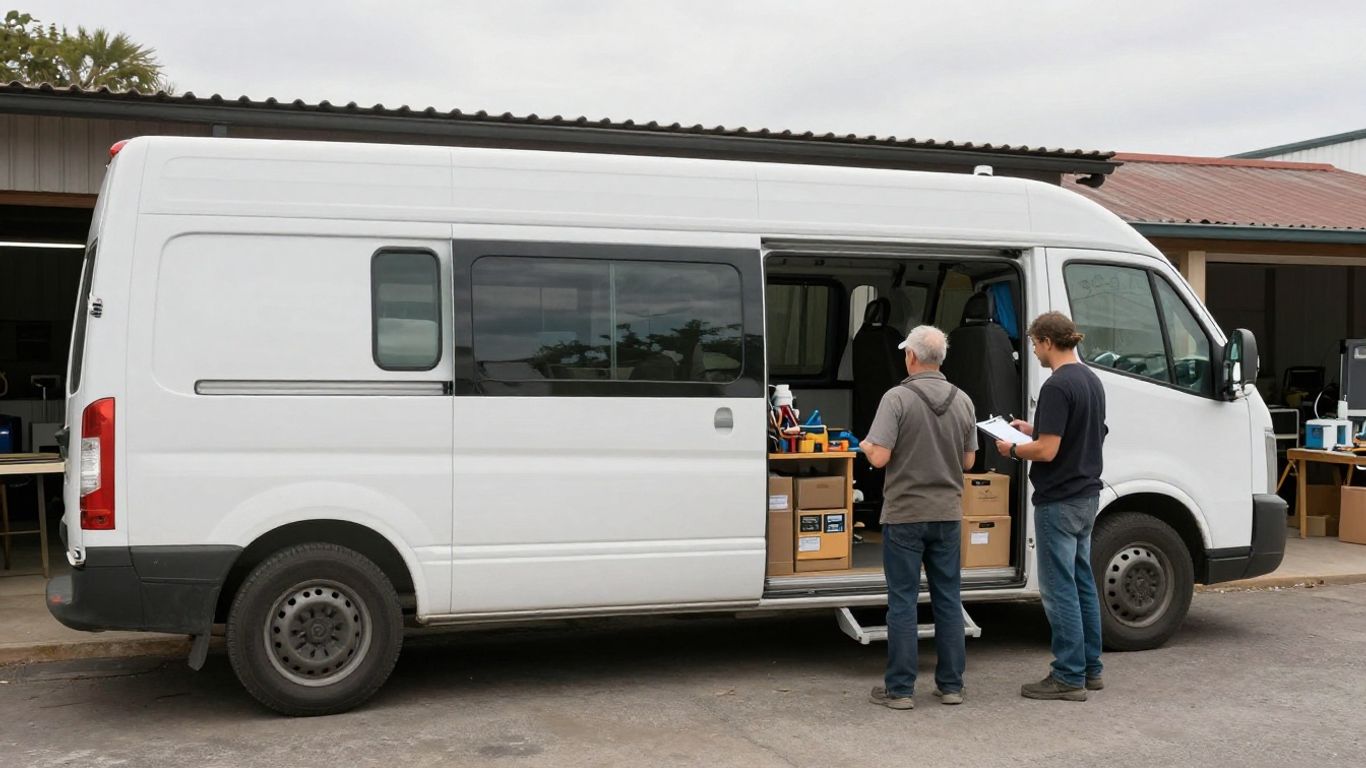
The cheapest-looking monthly rental is not always the most suitable answer. Personal and business use can involve different evidence and tax considerations, while a new venture may need flexibility that a conventional long contract does not provide. Compare the whole arrangement with your work pattern, cash flow and likely mileage in mind.
Do not choose a van simply because it is available. Capacity, running costs and the length of time you genuinely expect to need it all affect whether the agreement remains sensible.
Compare personal and business van leasing
Personal leasing may be relevant when the van is primarily for private use, while business leasing may suit a sole trader or limited company using it for work. The appropriate route can affect the documents requested, how payments are treated and whether tax advice is needed.
If you are unsure, describe how the van will actually be used rather than selecting an option based on assumptions. A sole trader should also take independent accounting advice before relying on any tax treatment.
Consider specialist bad-credit and start-up finance providers
Specialist providers may be more accustomed to reviewing unusual circumstances, thin files or young businesses. That does not mean approval is guaranteed, and specialist finance can carry different pricing, deposits or conditions.
Ask what evidence is required, how the credit search works and what happens if the initial indication changes after a full review. A transparent explanation is more valuable than a confident-sounding promise.
Decide whether a larger initial rental could help
A larger initial rental can reduce the amount spread across later monthly payments, depending on the agreement. It may also affect how an application is assessed, but it does not remove the need to demonstrate affordability or make adverse credit disappear.
Only offer money that you can spare without compromising rent, bills, tax or working capital. Compare the total payable, not just the lower monthly figure, and check whether the initial rental is refundable or simply an advance payment.
Assess used vans, shorter terms and lower-value models
A used or lower-value van may create a more manageable rental than a newer, larger model. A shorter term can provide flexibility, although it may produce higher monthly payments, while a longer term can reduce them but keep you committed for longer.
First Flexi Lease describes flexible fixed-term car and van agreements, typically from 6 to 48 months, with clear monthly rentals and options at the end of the term. Those documented features may suit someone who values flexibility, but the right term still depends on the specific offer and your budget.
Strengthen your chances of approval
Once your finances and vehicle choice are realistic, concentrate on reducing uncertainty for the lender. Supply accurate information, answer questions directly and avoid presenting a payment that only works in your best month. Small decisions around the applicant, deposit, vehicle and mileage can all affect the overall picture.
There is no reliable shortcut around affordability. The strongest application is usually the one that remains workable after fuel, insurance and ordinary household costs are included.
Use a guarantor or joint applicant where appropriate
A guarantor or joint applicant may provide additional reassurance, depending on the provider’s rules. This person takes on serious financial responsibility if payments are not made, so they need to understand the agreement fully rather than signing as a favour.
Discuss the arrangement openly and check how both people’s credit files and incomes will be considered. Never pressure someone into joining an application without explaining the possible consequences.
Offer a deposit without putting your finances under strain
A deposit or larger initial rental may change the payment structure, but it should come from available funds rather than another form of expensive borrowing. Keep enough cash for emergencies, insurance, repairs outside the agreement and periods when work is quieter.
Ask how the upfront amount affects the total cost and what happens if the lease ends early. A smaller initial payment with a slightly higher monthly rental may be safer for your cash flow.
Explain past credit problems honestly
A short, factual explanation can put a credit entry into context. Say what happened, when it happened, whether the account was settled and what has changed since. Avoid blaming others or making promises about future income that you cannot support.
Recent evidence matters most: consistent payments, stable work and controlled borrowing can show that your circumstances have moved on. The lender will make its own decision, but accurate context gives it a fairer basis for doing so.
Select a van and mileage allowance you can comfortably afford
The van should match the work, but it should also match the budget. A smaller model may be enough for local tools and deliveries, while a larger van could be necessary for bulky loads; either way, selecting more capacity than you use can raise the cost without adding value.
Estimate annual mileage from journeys, not guesses. If you are a courier or owner-driver, setting the allowance accurately is especially important because an artificially low limit can lead to excess mileage charges later.
Compare the full cost of leasing a van
Monthly rental is only one part of the financial commitment. A fair comparison includes the upfront payment, contract length, mileage, servicing, insurance and charges that may arise if circumstances change. Read the offer in pounds and pence rather than judging it by the headline figure.
Write down the costs for each suitable van so that differences are visible. This is particularly useful when an offer with a lower monthly rental has a larger initial rental or a longer commitment.
Check the initial rental, monthly payments and contract length
Confirm how many monthly payments are due and whether the initial rental is equivalent to one, three, six or another number of monthly rentals. Then check the contract length and the total amount payable across the term.
For example, an offer with a low monthly figure may still cost more overall if it requires a substantial upfront payment. Ask for a written quotation and keep it beside the agreement when checking the final figures.
Review mileage limits and excess mileage charges
Mileage allowances should reflect how you actually expect to use the van. Read the charge for every mile above the allowance and ask whether the rate includes VAT. If your work changes during the term, find out whether the allowance can be amended and at what cost.
Do not knowingly understate mileage to obtain a lower payment. An accurate allowance can look more expensive at the start but may be cheaper than paying a large end-of-term bill.
Understand maintenance, servicing and insurance responsibilities
Check exactly what is included in the package and what remains your responsibility. Road tax, breakdown cover, servicing or maintenance may be included in some arrangements, while insurance, fuel, tyres or damage beyond fair wear may sit elsewhere.
First Flexi Lease describes fixed monthly packages that include road tax and can include maintenance, with transparent terms and no hidden administration fees. Confirm the actual inclusions for the van and quote you are considering, because package details can differ.
Look for administration fees, early termination costs and end-of-term charges
Read the sections covering administration, damage, missed payments, early termination and return conditions. Ask what counts as fair wear and tear, whether collection fees apply and how any outstanding charges are calculated.
A lease is a binding financial agreement, not a month-to-month promise unless its terms specifically say so. Understanding the exit position before signing is one of the simplest ways to avoid an unpleasant surprise later.
Apply for a van lease responsibly
After checking your file, preparing evidence and comparing the full cost, you can apply with a clearer idea of what is suitable. Keep a record of the providers contacted, the type of search used and the terms discussed. Do not let urgency push you into accepting a payment that does not work in practice.
A responsible application may take a little longer, particularly where a business has a short trading history or previous credit difficulties. That patience can protect both your credit profile and your working finances.
Use eligibility checks before submitting a full application
Ask whether the first stage uses a soft or hard search and whether it gives an indication rather than a formal decision. A soft check may help you compare initial suitability without having the same effect as a full application, but the provider should explain its process clearly.
First Flexi Lease says its soft check at the quote stage uses Creditsafe and typically does not affect the credit score. If you want to check your eligibility, confirm what information will be needed and when a full application might follow.
Compare representative quotes from several suitable providers
Compare a small number of providers whose criteria and vehicle options fit your circumstances, rather than submitting applications everywhere. Look at the initial rental, monthly cost, term, mileage and included services together.
A representative quote is not a guarantee that your final offer will be identical. Credit assessment, vehicle availability and verification of your documents can all affect the final terms.
Read the lease agreement and credit terms carefully
Before signing, check the named parties, vehicle details, mileage allowance, payment dates, maintenance obligations, insurance requirements and return standards. Make sure verbal assurances appear in writing, and ask about anything you do not understand.
Pay particular attention to missed-payment consequences and early termination. If the agreement is regulated, the credit documentation should explain your rights and obligations in plain enough terms for you to make an informed decision.
Know what to do if your application is declined
A decline is not a reason to immediately submit another full application. Ask whether the provider can explain the decision, review your credit files again and check whether any information was incomplete or incorrect.
Consider whether the van, deposit, term or mileage can be adjusted without making the agreement unaffordable. If the only available option requires emergency funds or expensive additional borrowing, waiting and improving your position may be the more responsible choice.
Conclusion
Leasing a van with bad credit is best approached as a careful affordability exercise rather than a search for a guaranteed approval. Check your records, prepare honest evidence, compare the full agreement and choose a van that leaves room for ordinary life and uneven trading. A clear, realistic application gives a lender the information needed to assess your circumstances fairly.
Frequently asked questions
Can I lease a van with bad credit?
Does a CCJ automatically prevent van leasing?
Will checking my credit file lower my credit score?
Can a guarantor improve my chances of leasing a van?
Is a larger initial rental useful for bad-credit leasing?
What documents are usually needed for a van lease application?
What should I do if my van lease application is declined?
Reviewed by
Billy Lang, Director
FCA Registration No: 835008
Keep reading
Related guides
Leasing explained
Can you lease a car with a bad credit history?
Whether you can lease a car with a bad credit history, what lenders actually check first, and the two situations where waiting or Rent to Buy make more sense — subject to status.
Read guideLeasing explained
How to Transfer or Swap Your Car Lease
A car lease transfer can be a practical way to leave a vehicle agreement early, but it only works with the leasing company’s approval. Check the contract, costs and handover details before finding another driver. Confirm that the finance agreement permits a transfer or lease swap. Make sure the incoming driver passes the…
Read guideLeasing explained
Short-Term vs Long-Term Car Leasing: Which One Is Right for You?
The right lease depends on how long you need the vehicle, how predictable your driving is and how much flexibility you want. Short-term leasing suits temporary needs and changing circumstances. Long-term contracts can reduce the average monthly cost when plans are stable. Mileage, insurance, maintenance and early-exit terms matter as much as the…
Read guideReady when you are
Put the reading into practice.
A soft credit check via Creditsafe takes minutes. It does not normally affect your credit score the same way as a full lending application — and you get an honest answer either way.
Request a Flexi Quote
Quick form. Tell us which flexi stock you are interested in and we'll call you back the same day.
