
Headlight Flashing
Headlight flashing is a brief visual signal between road users. Drivers use it for several reasons, from drawing attention to a hazard to acknowledging that someone has given way. The same action can mean different things in different…
What headlight flashing can mean
Headlight flashing is a brief visual signal between road users. Drivers use it for several reasons, from drawing attention to a hazard to acknowledging that someone has given way. The same action can mean different things in different situations, so context matters more than the flash itself.
Warning another driver about an immediate hazard
A short flash can draw attention to something the other driver may not have seen. That might be a stationary vehicle, debris, a collision or a sudden change in the road ahead. Keep the signal brief and make sure your own driving remains controlled; the warning is useful only if it does not distract you from the hazard.
Giving way or inviting another road user to proceed
Some drivers flash to indicate that they are waiting for another person to move first. This is common at narrow sections, busy junctions and situations where traffic flows cannot easily pass together. Even then, the other road user should check for pedestrians, cyclists and hidden traffic rather than moving solely because a light appeared.
Signalling that a driver intends to overtake
A following driver may use a flash to make their presence known before overtaking. It should never replace a proper check of mirrors, blind spots, speed and road markings. If the road is not clearly safe, hold back; a flash does not make an unsafe manoeuvre acceptable.
Acknowledging another driver’s courtesy
A quick flash is sometimes used as a thank-you after another driver has left a gap or allowed traffic to merge. A visible hand gesture, a small wave or simply continuing smoothly can communicate the same courtesy. Keeping the exchange understated helps prevent a polite signal being mistaken for an instruction.
Why the meaning can vary between drivers
There is no single interpretation that works in every encounter. A driver who flashes may be warning you, offering you space or merely trying to be seen, while a driver approaching from another angle may read the signal differently. A useful overview of headlight flashing meanings makes the same broad point: the surrounding road situation supplies the meaning.
Is headlight flashing legal in the UK?
Headlight flashing is not automatically unlawful in the UK, but its use still has to fit the wider rules of safe and considerate driving. A flash can attract attention quickly, which makes it helpful in some moments and hazardous in others. The safest approach is to use it sparingly and never rely on it to settle who has priority.
What the Highway Code says about flashing headlights
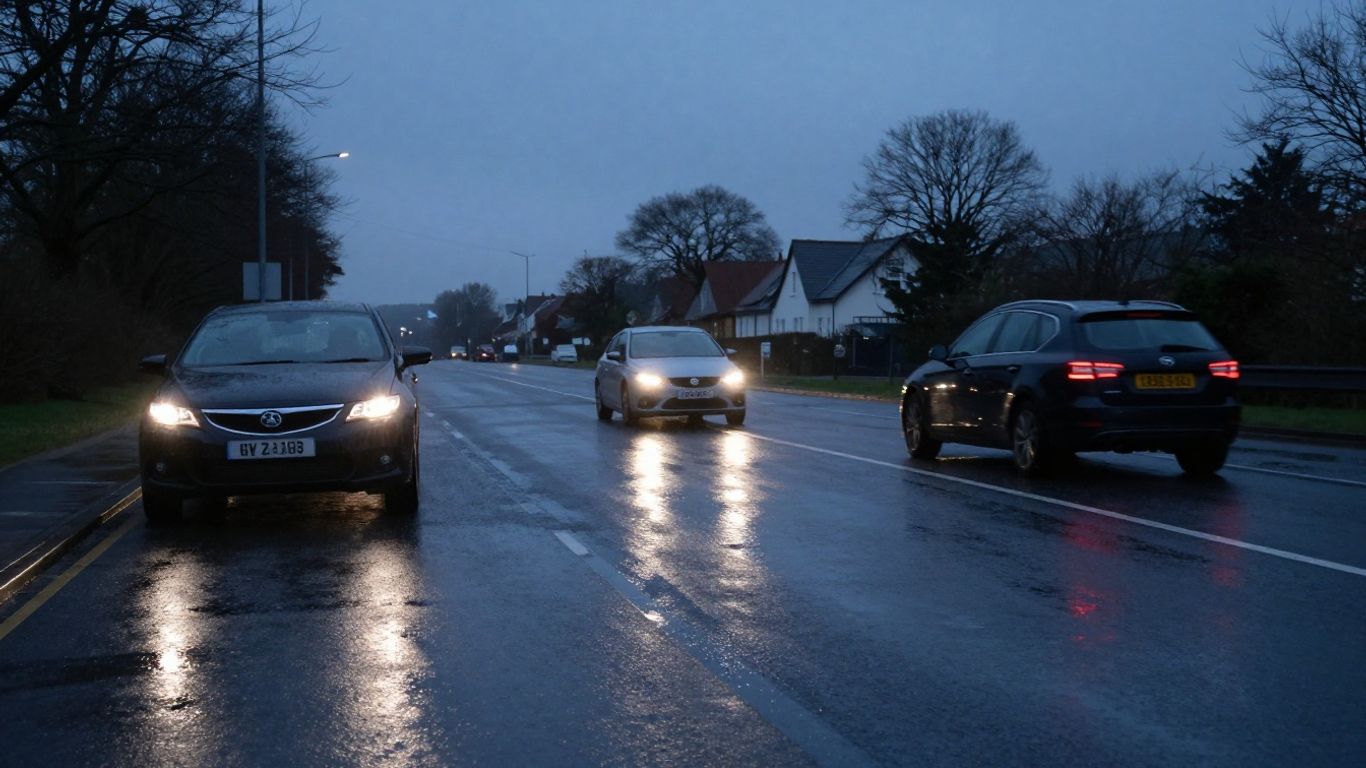
The Highway Code says headlights can be flashed to let other road users know that you are there. It also makes clear that drivers should not use flashing headlights to intimidate or convey a message that could mislead others. That distinction is central: visibility is one thing, while giving an assumed permission to move is another.
When flashing headlights could be misleading or dangerous
A flash can be misunderstood at a junction, particularly when several vehicles are moving or visibility is poor. It may also surprise a pedestrian, cyclist or motorcyclist, or prompt another driver to pull out without checking. Clarity matters more than speed when a signal could change someone else’s decision.
Using headlights without causing dazzle
High-beam flashes can be uncomfortable or temporarily reduce another driver’s vision, especially at night. Do not stare at or repeatedly direct bright beams towards an approaching vehicle, and dip your headlights promptly when required. If ordinary dipped headlights, a horn used lawfully, or a slower approach will do the job, choose the less intrusive option.
Why flashing does not automatically give another driver priority
A flash cannot override traffic lights, signs, road markings or the duty to proceed safely. It also cannot transfer responsibility for a manoeuvre from one driver to another. Anyone receiving the signal should still make their own observations and be prepared to wait.
Situations where another signal is safer
Indicators are clearer for a planned turn or lane change, while brake lights communicate slowing and hazard warning lights can make a stationary obstruction more conspicuous. At night, careful positioning and a reduced speed may communicate caution without adding glare. UK drivers can also compare the general issue with this legal guidance on flashing, remembering that the linked discussion is not UK-specific and should not replace the Highway Code.
Headlight flashing as a communication method
Good communication on the road is rarely one signal in isolation. Drivers read speed, position, indicators, eye contact and available space alongside the lights. A brief flash may start that conversation, but safe driving finishes it through clear, predictable actions.
How to flash without confusing other road users
Use one short flash when you need to attract attention, rather than a prolonged or repeated burst. Keep your speed appropriate and leave enough room to stop while the other person works out what is happening. If the situation remains unclear, pause instead of escalating the exchange with more lights.
Combining a flash with indicators, positioning or hand signals
Supporting signals reduce the chance of a wrong guess. An indicator can show a planned direction, road position can show who is waiting, and a clear hand signal may help at low speeds when both drivers can see each other. None of these signals removes the need to check that the path is clear.
Communicating at junctions, roundabouts and narrow roads
At a junction or roundabout, a flash should never be treated as a substitute for observing the normal rules. On a narrow road, the driver with the clearest space may need to wait, reverse or allow a vulnerable road user through. Take extra care when parked vehicles, bends or poor lighting hide what is approaching.
Responding when another driver flashes you
First ask what the driver could realistically be drawing your attention to. Check the road, mirrors and crossings, then decide for yourself whether it is safe to continue, slow down or proceed. A calm response is often as simple as maintaining course until the message becomes clear.
Avoiding assumptions about what a flash means
A flash is not a contract, a command or proof that another driver has seen everything you have seen. It may even be accidental, caused by a bump in the road or an unfamiliar control. Treat it as a prompt to look again, not as permission to take a risk.
Headlight flashing to warn about hazards
Warnings are most useful when they arrive early enough for another driver to respond. A flash may help alert approaching traffic, but it must be matched with a sensible speed and, where appropriate, a safer warning method. Never let the act of warning others take your attention away from avoiding the danger yourself.
Alerting drivers to collisions, obstructions or debris
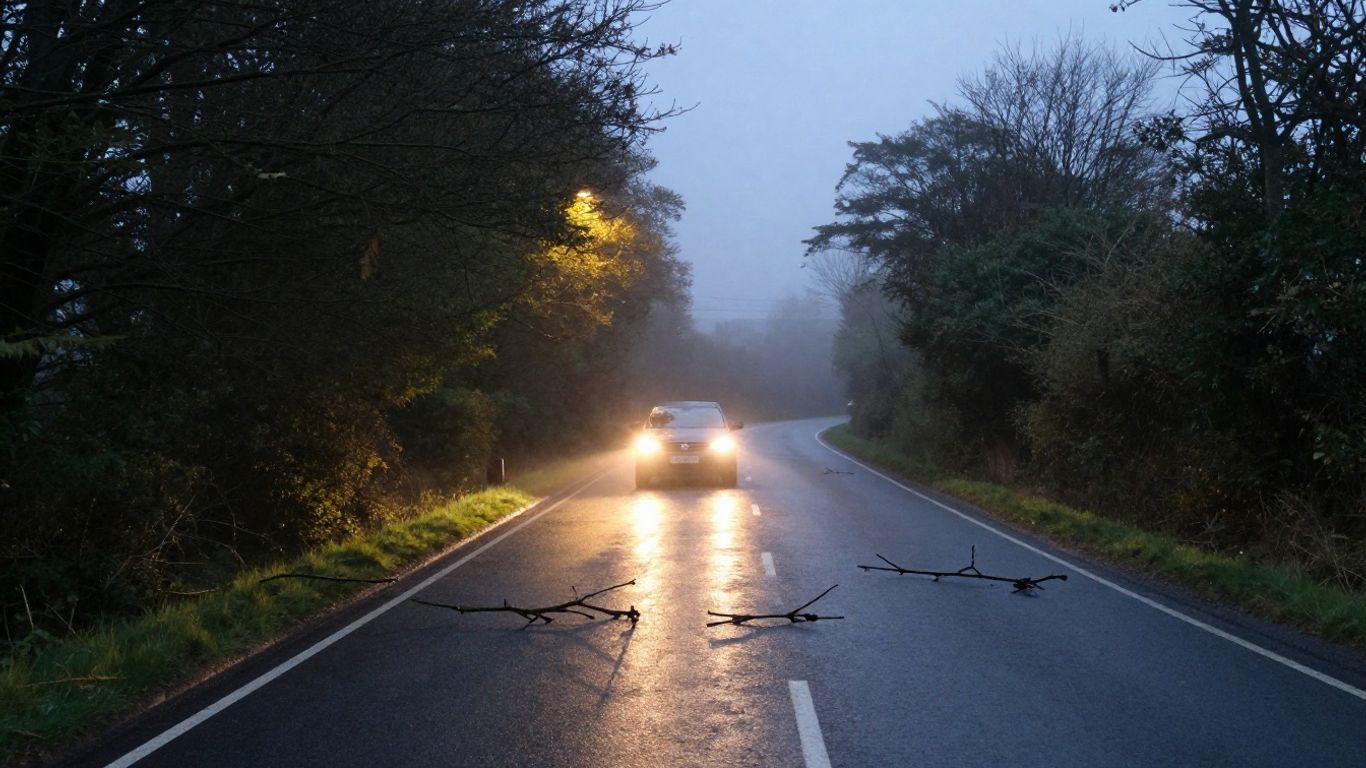
If you have just encountered fallen cargo, a damaged vehicle or debris, a brief flash can make approaching drivers more alert. Reduce speed, create space and avoid stopping in a live lane unless there is no safer alternative. Once clear, report serious obstructions through the appropriate channel rather than relying on a chain of flashes.
Warning about animals, pedestrians or cyclists
A flash may be useful where an animal has entered the road or a pedestrian or cyclist is difficult to see. Dip the beams as necessary and slow down, because startling a person or animal can make movement less predictable. Give vulnerable road users plenty of room and do not assume that a flash means they have understood your intention.
Signalling temporary hazards in poor visibility
Rain, mist, spray and darkness can hide a temporary danger until the last moment. A flash may catch attention, but good visibility also depends on clean lenses, appropriate lights and a speed that matches what you can see. If you cannot identify the road ahead, the right response is to slow down rather than flash more often.
Why hazard lights or other warnings may be more appropriate
Hazard warning lights can be more visible when a vehicle is stationary or causing an obstruction, while a horn may be suitable for an immediate danger when used within the rules. A warning triangle or emergency assistance may be needed after a breakdown, subject to the location and conditions. The best signal is the one that gives clear information without adding confusion.
How to avoid creating a secondary hazard
Do not stop suddenly to deliver a warning, drive alongside another vehicle or repeatedly flash oncoming traffic. These actions can cause braking, swerving or glare at exactly the wrong moment. Leave the road situation orderly, and let other drivers retain enough time and space to react.
Common causes of headlight flickering
Headlight flashing is deliberate; headlight flickering is usually a fault that needs attention. It may affect brightness, beam consistency or the electrical behaviour of other equipment. Even an intermittent problem deserves investigation because lighting can fail at an inconvenient time.
Loose bulbs, connectors or wiring
A bulb that is not seated correctly, a corroded connector or damaged wiring can interrupt the power supply as the vehicle moves. The symptom may appear over bumps or when the steering wheel is turned. Avoid pulling at unfamiliar wiring, particularly on vehicles with complex lighting systems.
Alternator and battery problems
The battery and alternator work together to supply stable electrical power. A weak battery, charging fault or poor earth connection can make lights dim or flicker, sometimes alongside warning lamps or difficult starting. A professional test is more reliable than guessing from the brightness alone.
Faulty switches, relays or control modules
The headlight switch, relay and control module can each cause an intermittent connection or an irregular command. These faults may affect one function or several electrical systems at once. Diagnosis often requires a wiring diagram and test equipment, so replacing parts at random can waste money.
LED and aftermarket lighting issues
Non-standard bulbs, conversion kits and accessories may not suit the vehicle’s wiring or control system. Flicker can result from an incompatible load, poor installation or a failing component. If an issue began after an upgrade, return to the installation and its compliance before assuming the vehicle’s original wiring is at fault.
Vibration, moisture and damaged headlamp housings
Vibration can loosen a mounting or connection, while water entering a damaged housing can corrode contacts. Clouded lenses and cracked covers may also reduce the useful light reaching the road. The cause is not always inside the bulb, so inspect the whole lamp assembly when safe to do so.
For a broader list of possible electrical causes, see this flickering headlights guide. It is a useful starting point, but a persistent fault still needs a proper vehicle-specific diagnosis.
How to diagnose flickering headlights safely
Begin with observation rather than dismantling anything. Note whether the flicker affects dipped beam, main beam or other lights, and whether it appears only at night, over bumps or when accessories are switched on. If the lights are unreliable, arrange assistance rather than testing the problem in traffic.
Checking whether one or both headlights are affected
Ask someone to watch from outside while you operate the lights, or check the reflection safely when the vehicle is stationary. One flickering lamp points towards a local bulb, connector or housing issue, while both lamps may suggest a shared supply or charging fault. Do not stand in a live road to carry out this check.
Identifying whether the problem changes with engine speed
Notice whether the brightness changes when the engine revs rise, the vehicle idles or electrical loads such as the heater blower are used. A pattern linked to engine speed can point towards charging-system behaviour, though it is not proof of a particular failed part. Avoid revving the engine in an enclosed space or while concentrating on the lights near moving traffic.
Inspecting bulbs, fuses and visible connections
With the engine off and lights switched off, look for a loose bulb, heat damage, corrosion, broken insulation or a blown fuse. Replace a fuse only with the correct rating and do not keep fitting replacements if one fails again. If access is awkward or the housing is hot, stop and leave the inspection to a technician.
Testing the battery and charging system
A multimeter or workshop tester can assess battery condition and charging output more accurately than visual checks. The results need to be interpreted alongside the vehicle’s specifications and symptoms. If a battery warning light is showing, treat it as a reason to seek prompt assistance rather than continuing a long journey.
When to stop driving and seek professional assistance
Stop in a safe place if both headlights are fading, the charging warning light appears, electrical smells develop or the vehicle is struggling to run. Use roadside assistance if visibility cannot be maintained safely. If replacing the vehicle becomes more practical after repeated faults, explore flexible vehicle options with the costs and terms checked carefully before committing.
Preventing headlight problems and glare
Small checks can prevent a minor lighting issue becoming a roadside emergency. Good maintenance also helps avoid dazzling people travelling in the opposite direction. Include lights in regular vehicle checks, not just before a longer trip or an MOT test.
Replacing bulbs in matching pairs
Replacing both bulbs together can keep light colour and brightness more consistent, particularly when the existing bulbs have been used for a similar length of time. Fit the correct type and avoid touching suitable halogen glass with bare fingers. After replacement, confirm that the beam pattern remains even.
Keeping lenses clean and correctly aligned
Dirt, haze and moisture reduce the light reaching the road and can scatter it towards other road users. Clean lenses with suitable materials and have alignment checked if the car has suffered a bump, suspension change or lamp replacement. Correct alignment is as much about courtesy as visibility.
Checking headlight operation before driving
Walk around the vehicle when it is safely parked and check dipped beam, main beam, indicators, brake lights and rear lights. Look for a flicker, a noticeably different colour or a lamp that takes time to illuminate. A two-minute check can reveal a problem before the vehicle is used in darkness.
Maintaining the battery and charging system
Keep battery terminals and connections in good condition and respond to warning lights promptly. Regular servicing can identify weak charging performance before it affects the headlights. For drivers comparing running costs after a fault, First Flexi Lease provides flexible car and van leasing solutions; check the specific vehicle terms rather than assuming every offer is the same.
Choosing compliant replacement bulbs and accessories
Use bulbs and lighting accessories that are approved for the vehicle and installed according to the manufacturer’s instructions. Very bright does not necessarily mean safer, particularly if the beam is poorly controlled. The safest upgrade is one that improves usable illumination without producing glare or an electrical fault.
Conclusion
Headlight flashing works best as a restrained prompt to look again, never as a substitute for the Highway Code or careful judgement. Keep signals brief, use the right lights for the situation and treat flickering as a fault worth investigating. Sound maintenance and considerate driving make the road clearer for everyone.
Practical Leasing Support
If a lighting fault has changed your vehicle plans, contact First Flexi Lease to discuss flexible car and van leasing with clear terms and a vehicle suited to your circumstances.
Frequently asked questions
Is headlight flashing legal in the UK?
What does it mean when a driver flashes me?
Does a headlight flash give me priority?
Can I flash my headlights to thank another driver?
Why are my headlights flickering?
Should I drive with flickering headlights?
How can I reduce headlight glare?
Reviewed by
Billy Lang, Director
FCA Registration No: 835008
Keep reading
Related guides
Driving life
Brake Checking
Brake checking is deliberate, unnecessary braking intended to unsettle or endanger a following driver. It is different from braking normally for traffic, hazards or road conditions. Brake checking can cause a serious rear-end collision. A rear driver is not automatically solely responsible for every crash. Deliberate braking, tailgating and road rage may all…
Read guideDriving life
Road Trip Tips for Drivers with Leased Vehicles
A leased car can be a practical choice for a long drive, provided you understand the agreement and prepare properly. Check mileage, travel-area and overseas rules before departure. Calculate the whole journey, including detours and normal driving. Confirm insurance, breakdown assistance and permitted drivers. Prepare the car and protect it from avoidable damage.…
Read guideDriving life
Iconic WWI Vehicles
WWI vehicles changed warfare by bringing engines, armour and industrial production into a conflict still dependent on horses and railways. Tanks were developed to cross trenches, cut through wire and support infantry. Armoured cars worked best on firm roads and open ground. Aircraft became essential for reconnaissance, interception and bombing. Ships, submarines and…
Read guideReady when you are
Put the reading into practice.
A soft credit check via Creditsafe takes minutes. It does not normally affect your credit score the same way as a full lending application — and you get an honest answer either way.
Request a Flexi Quote
Quick form. Tell us which flexi stock you are interested in and we'll call you back the same day.
