
Car Trends of the 80s and 90s
The car trends of the 80s and 90s were shaped by changing tastes as much as by engineering. Buyers wanted cars that were economical enough for daily use, yet distinctive enough to say something about their owners. The result was a…
The defining car trends of the 80s and 90s
The car trends of the 80s and 90s were shaped by changing tastes as much as by engineering. Buyers wanted cars that were economical enough for daily use, yet distinctive enough to say something about their owners. The result was a fascinating mix of practical family models, sharply styled executive cars and surprisingly quick small hatchbacks.
From boxy shapes to smoother styling
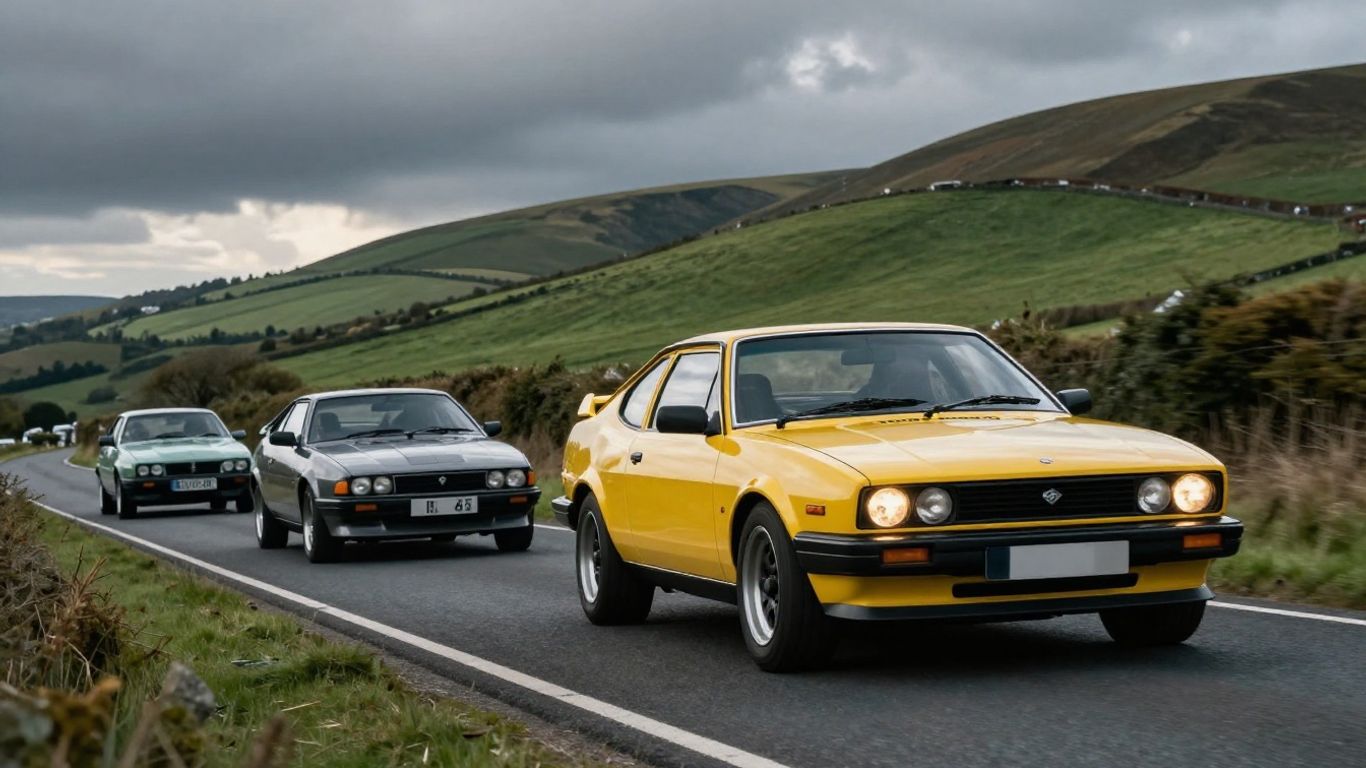
Early-1980s cars often wore crisp lines, flat panels and pronounced corners. The wedge shape looked futuristic, particularly when paired with pop-up headlights and dark trim, but it also made a car feel visually technical rather than soft or friendly. By the 1990s, computer-aided design and greater attention to airflow encouraged rounded bonnets, blended edges and more cohesive silhouettes.
This was not simply a matter of fashion. Smoother surfaces could help reduce aerodynamic drag, improve fuel economy and lower wind noise. The change happened gradually, so many late-80s cars sit between the two eras: still angular in outline, but with curved bumpers and glass that flows more neatly into the body.
The rise of the performance hatchback
The performance hatchback became one of the era’s defining ideas because it combined pace with ordinary usability. A compact body, a lively engine and a practical rear seat made the format attractive to younger drivers and families alike. The Volkswagen Golf GTI helped establish the pattern, while rivals brought their own interpretations to British roads.
These cars were rarely about outright luxury. Their appeal came from light weight, responsive handling and the sense that a normal commute could become entertaining. They also gave manufacturers an accessible way to connect showroom cars with rallying and touring-car competition.
Growing demand for luxury and executive cars
Alongside the hot hatch boom, the 1980s and 1990s saw strong interest in compact executive cars. Models such as the BMW 3 Series and Mercedes-Benz 190 offered a more restrained kind of status, with rear-wheel-drive layouts, carefully finished cabins and a focus on motorway comfort.
Luxury was becoming less about enormous size and more about quality, refinement and technology. Optional telephones, trip computers, electric seats and improved sound systems made the cabin feel increasingly separate from the mechanical world beneath it. The executive car was still a professional tool, but it was also becoming a personal space.
How changing lifestyles influenced car design
Families were looking for flexible transport, while commuters wanted comfort and sensible running costs. That helped estates, five-door hatchbacks and increasingly versatile interiors gain ground. Buyers were also becoming more aware of fuel consumption and safety, so a car’s appeal could no longer rest on styling alone.
The fixed-package approach used by First Flexi Lease reflects a modern version of that practical mindset: drivers can compare live vehicles with pre-set terms, mileage and pricing rather than constructing every part of an agreement from scratch. It is a useful reminder that, then as now, convenience matters as much as appearance.
How 1980s cars changed the automotive industry
The 1980s were a period of rapid transition for car makers. Electronics began appearing in places that had previously relied on mechanical systems, while engineers searched for ways to produce useful power under tighter emissions and efficiency expectations. Some experiments were short-lived, but many became foundations for the modern car.
Turbocharging and the pursuit of performance
Turbochargers gave relatively small engines a way to produce stronger performance without simply increasing capacity. They became closely associated with the decade’s fast road cars, from sporty coupés to rally-inspired hatchbacks. The sensation of waiting for boost, then feeling the engine surge forward, became part of the appeal.
Turbocharging was not always perfectly smooth. Early systems could suffer from noticeable lag and demanded careful cooling and lubrication. Even so, the technology proved that efficiency and performance did not have to be complete opposites, a lesson that remains relevant in modern compact engines.
The impact of front-wheel drive
Front-wheel drive changed the proportions and packaging of many mainstream cars. With the engine and driven wheels concentrated at the front, manufacturers could create more usable passenger space without making the body longer. It also suited small hatchbacks particularly well, giving them predictable traction in everyday conditions.
The arrangement was not perfect for every enthusiast. Hard acceleration could pull at the steering wheel, and enthusiastic cornering exposed the limits of front tyres. Nevertheless, front-wheel drive made compact cars more practical and helped turn the hatchback into the default family format across much of Europe.
Digital dashboards and onboard electronics
Digital dashboards were among the most visible signs of the new electronic age. Bright displays replaced some traditional dials, sometimes showing speed as glowing numerals or presenting fuel and warning information in unfamiliar layouts. They could look wonderfully futuristic, even when their long-term reliability was less impressive.
Behind the dashboard, electronic control units were beginning to monitor and manage engine functions. This allowed more precise fuelling and made it possible to integrate warning systems into the driving experience. The transition was sometimes awkward, but it set the direction for the information-heavy cabins that followed.
The influence of motorsport on road cars
Motorsport gave manufacturers a public laboratory for four-wheel drive, turbocharging, aerodynamic aids and improved suspension. Rallying was particularly influential because spectators could see technology being tested on ordinary-looking cars derived from familiar showroom models.
The road versions did not always copy competition machinery directly. Instead, they borrowed its language: extra lamps, spoilers, bold graphics, firmer suspension and engines with a stronger sense of occasion. A decade of car innovation captures how this blend of engineering and spectacle helped make 1980s cars feel so memorable.
The most influential car designs of the era
Certain cars have survived in the public imagination because they captured more than one trend at once. They might have been practical, fast, beautifully engineered or simply visually unusual. Together, they show how varied the market became during these two decades.
Hot hatches such as the Volkswagen Golf GTI
The Volkswagen Golf GTI made the fast hatchback feel like a coherent product rather than a niche modification. It offered useful space, approachable dimensions and enough performance to reward an enthusiastic driver. Its understated appearance also helped the idea travel beyond the traditional sports-car audience.
The wider hot-hatch formula proved remarkably adaptable. Other manufacturers experimented with front-wheel drive, turbocharged engines, limited-slip differentials and four-wheel drive, but the central promise stayed simple: everyday practicality with a lively edge.
Performance icons including the Toyota Supra and Mazda RX-7
The Toyota Supra and Mazda RX-7 represented a different side of the period’s performance culture. Both were low-slung coupés with strong identities, aimed at drivers who wanted a more focused experience than a family hatchback could provide. Their proportions, engine choices and tuning potential gave them lasting appeal.
They also benefited from a time when manufacturers were willing to pursue distinctive engineering solutions. The RX-7’s rotary engine made it unusual, while the Supra became associated with straight-line pace and increasingly sophisticated performance. Their reputations have grown further through enthusiast culture and popular media.
Luxury models such as the BMW 3 Series and Mercedes-Benz 190
The BMW 3 Series and Mercedes-Benz 190 showed how compact dimensions could coexist with executive ambitions. Both brought a sense of solidity and driver-focused engineering to a more manageable size, making them suitable for urban use as well as long-distance travel.
Their influence can be seen in the modern premium saloon. Clear model identities, disciplined exterior lines and carefully developed driving manners became valuable differentiators. They made the compact executive sector feel like a serious category in its own right.
Practical favourites including the Ford Escort and Vauxhall Astra
The Ford Escort and Vauxhall Astra were everyday reference points for many British drivers. Their success came from broad model ranges, familiar servicing, useful hatchback bodies and versions that could suit first-time drivers, families or company fleets.
They were not necessarily the most exotic cars of the era, but popularity is part of influence. Cars like these normalised the five-door hatchback and made features such as electronic fuel injection, improved heating and better safety equipment increasingly familiar to ordinary buyers.
Technology trends that defined 80s and 90s cars
The period’s technology was not always spectacular from the outside. Some of the most significant changes happened under the bonnet or inside safety systems, where drivers noticed improved starting, smoother running and greater reassurance rather than a dramatic visual transformation. These incremental improvements helped raise expectations across the market.
Electronic fuel injection replacing carburettors
Electronic fuel injection brought more accurate control of the fuel and air mixture than a traditional carburettor could usually provide. It improved cold starting, drivability and emissions performance, while allowing engineers to tune engines more precisely across different conditions.
The change also reduced some of the ritual associated with older cars. Drivers no longer had to manage a choke in the same way, and engines became more consistent from one journey to the next. By the 1990s, injection was increasingly normal even in relatively affordable models.
The spread of anti-lock braking systems
Anti-lock braking systems helped prevent the wheels from locking during heavy braking, allowing the driver to retain steering control in situations where a conventional system might slide. Initially associated with expensive cars, ABS gradually spread into more accessible segments.
It was not a substitute for sensible speed or safe following distances. Its value was as a safety margin, particularly on wet or slippery roads. The technology also marked a broader shift towards cars that actively assisted the driver when conditions became difficult.
Early airbags and improving occupant protection
Airbags began to appear more widely during the late 1980s and 1990s, alongside stronger passenger cells, better seat-belt systems and more carefully designed crumple zones. Safety testing was becoming a stronger influence on the shape and structure of new cars.
These changes affected styling as well as engineering. Bonnet heights, door structures and dashboard layouts increasingly had to accommodate protection requirements. The result was a car designed around its occupants in a more comprehensive way than many earlier vehicles.
In-car entertainment and navigation developments
Cassette players, multi-speaker sound systems and steering-wheel controls made longer journeys more pleasant. Some cars introduced trip computers and early satellite-navigation equipment, although these systems were far less integrated than the displays found in current vehicles.
The cabin was becoming a place for information as well as transport. To see how that appetite for novelty extended beyond familiar mainstream models, forgotten 80s and 90s cars offers a useful reminder that the era produced plenty of unusual experiments too.
A simple comparison helps explain how these features moved from specialist equipment towards everyday expectations:
| Technology | Early impression | Longer-term effect |
|---|---|---|
| Fuel injection | Smoother starting and running | Became standard across much of the market |
| ABS | An expensive safety feature | Developed into a widely expected aid |
| Airbags | A new form of occupant protection | Became part of broader passive-safety systems |
| Trip computers | A futuristic cabin extra | Led towards richer driver information displays |
The important point is not that every early system worked perfectly. It is that the basic expectation changed: a new car was increasingly judged on how intelligently it managed fuel, braking, safety and information.
The shift from 80s to 90s styling
The move from the 1980s into the 1990s did not erase the previous decade overnight. Instead, familiar ideas were softened, simplified and integrated into more cohesive designs. The visual noise of black rubbing strips, sharp creases and add-on accessories gradually gave way to a cleaner appearance.
Aerodynamic shapes replacing sharp angles
Late-80s and early-90s cars increasingly used rounded noses, curved windscreens and tapered rear sections. Aerodynamics became visible in the overall silhouette rather than being treated as a separate performance decoration. The new look often seemed calmer and more efficient.
This change also made cars appear larger and more substantial, even where their dimensions had not grown dramatically. Smooth surfaces reflected light differently from the flat planes of earlier designs, giving family cars a more polished presence.
Body-coloured bumpers and integrated spoilers
Bumpers began to match the bodywork instead of standing out in black plastic, while spoilers and side skirts were shaped as part of the car rather than attached as obvious extras. The effect was cleaner, although it could make minor damage more expensive to repair.
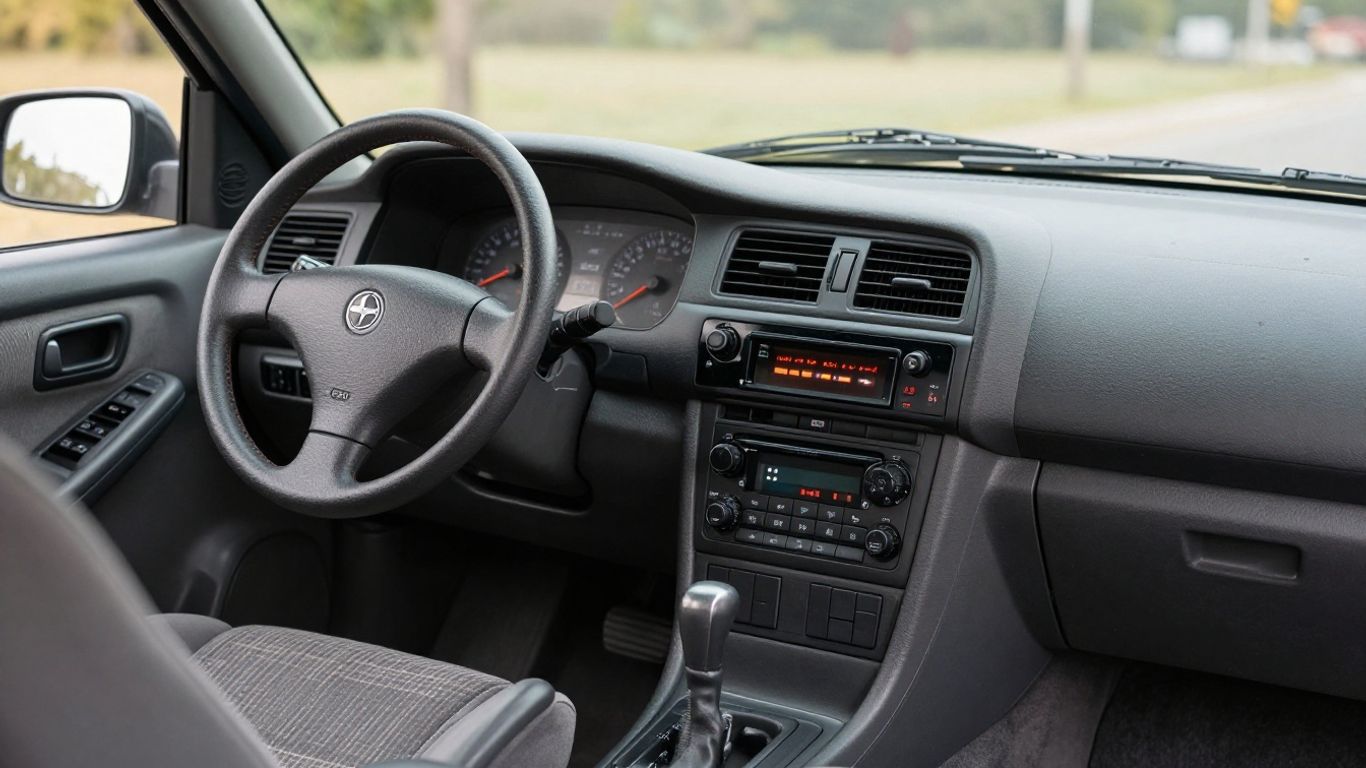
The same integration appeared inside the cabin. Switches, vents and instrument panels were grouped into more consistent layouts. Styling was becoming less about separate visual statements and more about a single uninterrupted design theme.
The growth of compact SUVs and people carriers
People carriers brought a tall roof, flexible seating and a strong focus on family practicality. Compact SUVs also began to attract attention, offering a raised driving position and a more adventurous image without necessarily matching the size of a full off-roader.
These formats anticipated the market’s later appetite for versatile vehicles. They responded to real needs (space, visibility and flexible loading), but also showed how buyers were becoming comfortable with body styles that sat outside the traditional saloon, estate and hatchback categories.
How Japanese manufacturers influenced the market
Japanese manufacturers helped raise expectations around equipment, reliability and consistent build quality. They also introduced designs that could be more adventurous than their conservative reputation suggested, from small coupés to innovative sports cars and compact family models.
Their influence was not limited to styling. Efficient production and carefully specified trim levels put pressure on established European manufacturers to offer more equipment and better value. The resulting competition benefited buyers across the market.
Performance and tuning culture in the 80s and 90s
Performance culture in these decades extended well beyond factory showrooms. Owners swapped advice, read magazines, attended meets and learned how small changes could alter a car’s character. The internet did not yet connect enthusiasts instantly, so knowledge travelled through clubs, workshops and printed pages.
Rally-inspired road cars
Rallying gave road cars a particularly strong visual and mechanical influence. Four-wheel drive, turbocharging, additional lamps and bold bodywork became familiar signals of competition-bred intent. Cars inspired by rally stages could still carry passengers and shopping, which made them especially appealing.
Their reputation rested on more than decoration. Suspension settings, drivetrain layouts and engine responses reflected lessons learned under demanding conditions. Even owners who never competed could enjoy the sense of connection with a much tougher environment.
The popularity of aftermarket modifications
Modification culture allowed owners to personalise cars that might otherwise look identical to hundreds of others. Some changes were subtle and functional, while others were deliberately dramatic. Common routes included:
- Lowered suspension for a firmer stance and altered handling.
- Alloy wheels and wider tyres for a more distinctive appearance.
- Exhaust and intake changes intended to sharpen the engine note.
- Interior upgrades such as sports seats, extra gauges and improved stereos.
These modifications could transform a car’s character, though quality varied considerably. A carefully chosen upgrade might improve a vehicle, while a poorly matched collection of parts could make it uncomfortable or unreliable. The culture encouraged experimentation, but it also rewarded mechanical judgement.
Naturally aspirated engines versus turbocharged power
Naturally aspirated engines delivered a progressive response that many drivers found easy to judge. Turbocharged engines offered the more dramatic rush, particularly when boost arrived decisively in the mid-range. Neither approach was automatically better; each created a different relationship between throttle, speed and road.
The debate helped drivers understand engine behaviour in a more detailed way. Power figures mattered, but so did weight, gearing, traction and the way an engine delivered its performance. That broader understanding still shapes enthusiast conversations.
The role of car magazines, films and video games
Printed magazines introduced readers to new models, tuning ideas and international markets. Films and television gave certain cars an almost mythical presence, while video games allowed people to experience vehicles they could not afford or might never see in person.
Together, these influences made car culture more visual and more shared. A model could become desirable because of its handling, its appearance, its soundtrack or a memorable screen appearance. That mixture of fact and fantasy remains central to automotive nostalgia.
Which 80s and 90s car trends still matter today
The era continues to attract attention because it sits at an appealing point between analogue driving and modern convenience. Cars from the period can feel direct without being completely primitive, and their designs are often recognisable at a glance. They also remind us that useful innovation does not need to arrive fully formed.
Retro-inspired design and modern nostalgia
Manufacturers regularly revisit the shapes and colours of the 1980s and 1990s. Boxy silhouettes, bright accents, circular lamps and squared-off details can now be used deliberately to signal character. The best retro-inspired designs borrow a mood without copying every old proportion.
Nostalgia works because these cars are tied to wider memories: school runs, weekend trips, music, motorsport and the first sense of independence. Even people who never owned one may recognise the visual language.
Why classic hot hatches remain desirable
Classic hot hatches remain attractive because they are small enough to use, quick enough to entertain and simple enough to understand. Their modest dimensions make them enjoyable on ordinary roads, where outright speed is less important than balance and feedback.
They also offer a clear contrast with larger, heavier modern performance cars. The appeal is not only historical. It is the feeling that the driver still has a meaningful role in making the car work well.
The collectability of limited-edition performance cars
Limited-edition performance cars benefit from rarity, but scarcity alone does not create lasting appeal. A desirable example usually combines a strong story, distinctive engineering, motorsport links or a specification that enthusiasts can easily recognise.
Condition has become increasingly important as original parts disappear and careless modifications are reversed. Cars that retain their identity, documentation and period character tend to attract the most interest, although the market can be selective and values are never guaranteed.
Lessons modern manufacturers have taken from the era
Modern manufacturers still use the period’s central lessons: practical cars can be fun, technology should improve everyday use, and distinctive design helps a model stand apart. Compact performance cars, efficient turbocharged engines and flexible interiors all have clear roots in the changes of the 1980s and 1990s.
For drivers choosing a vehicle now, the same balance between character and practicality remains familiar. A modern 1.0-litre turbo engine guide explores that compromise in a current context, while First Flexi Lease offers fixed monthly rentals and flexible terms for drivers who want access to a newer vehicle without a traditional long commitment. The underlying question has barely changed: does the car suit the way you actually live?
The most useful lesson may be restraint. The strongest ideas from the era were not always the loudest ones; they were the features that made cars easier to drive, easier to live with or more enjoyable on an ordinary journey.
Conclusion
The car trends of the 80s and 90s brought together sharp design, emerging electronics, accessible performance and practical body styles in a way that still feels distinctive. Their influence survives in modern safety systems, efficient engines, expressive styling and the continuing affection for cars that put character within everyday reach.
Explore Flexible Vehicle Options
If the appeal of practical, well-equipped cars still matters to you, view flexible options and speak with First Flexi Lease about a vehicle and term suited to your driving needs.
Frequently asked questions
What defined the car trends of the 80s and 90s?
Why were hot hatches so popular?
Were 1980s cars more angular than 1990s cars?
When did turbocharging become popular in road cars?
What technology became common in cars during the 1990s?
Why are Japanese cars from this era still admired?
Are cars from the 80s and 90s good everyday vehicles now?
Reviewed by
Billy Lang, Director
FCA Registration No: 835008
Keep reading
Related guides
Driving life
Brake Checking
Brake checking is deliberate, unnecessary braking intended to unsettle or endanger a following driver. It is different from braking normally for traffic, hazards or road conditions. Brake checking can cause a serious rear-end collision. A rear driver is not automatically solely responsible for every crash. Deliberate braking, tailgating and road rage may all…
Read guideDriving life
Road Trip Tips for Drivers with Leased Vehicles
A leased car can be a practical choice for a long drive, provided you understand the agreement and prepare properly. Check mileage, travel-area and overseas rules before departure. Calculate the whole journey, including detours and normal driving. Confirm insurance, breakdown assistance and permitted drivers. Prepare the car and protect it from avoidable damage.…
Read guideDriving life
Iconic WWI Vehicles
WWI vehicles changed warfare by bringing engines, armour and industrial production into a conflict still dependent on horses and railways. Tanks were developed to cross trenches, cut through wire and support infantry. Armoured cars worked best on firm roads and open ground. Aircraft became essential for reconnaissance, interception and bombing. Ships, submarines and…
Read guideReady when you are
Put the reading into practice.
A soft credit check via Creditsafe takes minutes. It does not normally affect your credit score the same way as a full lending application — and you get an honest answer either way.
Request a Flexi Quote
Quick form. Tell us which flexi stock you are interested in and we'll call you back the same day.
