
Car Exhaust Smoke Types Explained: What They Mean for Your Vehicle
The exhaust is one of the clearest visible signs of what is happening inside an engine. A brief cloud on a cold morning may be harmless, while smoke that continues once the engine is warm deserves closer attention. If you are considering a…
Understanding what exhaust smoke can reveal
The exhaust is one of the clearest visible signs of what is happening inside an engine. A brief cloud on a cold morning may be harmless, while smoke that continues once the engine is warm deserves closer attention. If you are considering a replacement vehicle, First Flexi Lease provides flexible car and van leasing with fixed packages, so understanding warning signs remains useful whether you own, lease or run a vehicle for work.
When smoke is normal and when it signals a fault
A small amount of pale vapour at start-up is normal in many conditions, particularly when the exhaust system is cold. It should reduce as the engine reaches operating temperature. Smoke that remains dense, appears repeatedly or arrives with overheating, poor running or fluid loss is more likely to signal a fault.
Why smoke colour, thickness and duration matter
Colour gives a useful first clue, but it is not a diagnosis on its own. Blue smoke that appears only after acceleration suggests a different pattern from grey smoke that hangs around at idle, and a thin white mist behaves differently from a thick white cloud. The timing of the smoke can be just as revealing as its shade.
How weather and condensation affect exhaust vapour
Cold air makes water vapour in the exhaust easier to see. Moisture collected inside the exhaust can turn into a light, quickly fading mist when the engine starts, especially after the car has been parked overnight. If the vapour clears within a few minutes and there are no other symptoms, condensation is usually the simplest explanation.
Why petrol and diesel engines may produce different symptoms
Petrol and diesel engines use different combustion systems, so the same visible colour can have different likely causes. Diesel vehicles may produce a short puff under load, while persistent black smoke can point towards fuelling, airflow or emissions-system problems. The vehicle’s age, engine design and maintenance history all matter when interpreting what you see.
White exhaust smoke types and their causes
White exhaust smoke ranges from a harmless wispy vapour to a serious, persistent cloud. The key distinctions are whether it disappears quickly, whether it continues after warm-up and whether the engine is losing coolant. A sweet smell, rising temperature or rough running makes the situation more urgent.
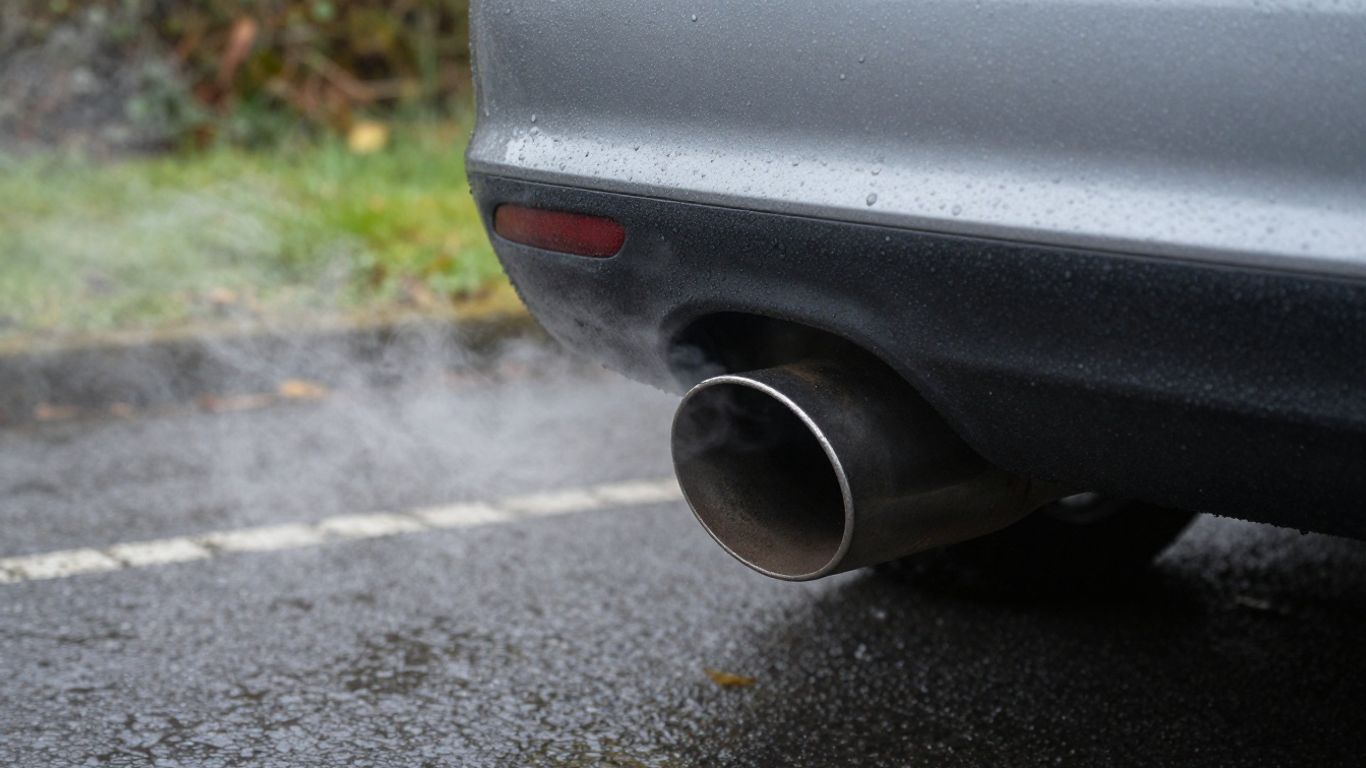
Thin white vapour during cold starts
Thin vapour that appears as the engine starts and then fades is generally caused by condensation. It is especially common during cold or damp weather and may be more visible from a short journey. Watch what happens after the engine warms rather than judging the first few seconds alone.
Thick white smoke from coolant entering the engine
Thick white smoke that continues from a warm engine may mean coolant is entering the combustion chamber and burning with the fuel. You might also notice a sweet odour, a dropping coolant level or signs of overheating. Continuing to run the engine can turn a manageable leak into much more extensive damage.
Possible head gasket and cylinder head problems
A failed head gasket can allow coolant into a cylinder, while a damaged cylinder head or engine block can create a similar symptom. These faults may also cause a misfire, contaminated engine oil or bubbles in the coolant system. Only proper testing can confirm the source, so the smoke should be treated as a warning rather than a diagnosis.
When white smoke requires immediate attention
Stop and seek assistance if the smoke is dense and persistent, the temperature gauge rises, the coolant warning light appears or the engine begins running roughly. Do not remove a hot coolant cap, since the system may be pressurised. A short recovery cost is usually preferable to driving on and risking severe engine damage.
Blue or blue-grey exhaust smoke types
Blue or blue-grey smoke generally means engine oil is being burned inside the combustion process. It may be easiest to see in bright daylight, and there can be a noticeable oily smell. The point at which it appears (on start-up, after idling or under acceleration) can help narrow the possibilities.
Burning engine oil during acceleration
Smoke under acceleration often appears when increased engine load draws oil into the combustion chamber. Check the oil level regularly, but do not assume topping it up fixes the underlying problem. Ongoing oil consumption can foul spark plugs, affect emissions and eventually leave the engine dangerously short of lubrication.
Smoke caused by worn piston rings
Piston rings help seal combustion pressure and control oil on the cylinder walls. When they wear, oil can pass into the combustion chamber, sometimes alongside reduced compression, higher oil use and a loss of performance. Repair may involve substantial engine work, so a compression or leak-down test is useful before committing to parts.
Valve stem seals and smoke after idling
Worn valve stem seals can allow oil to seep into the engine while the car is parked or idling. A puff of blue smoke after a period at idle, followed by clearer exhaust during steady driving, is a pattern that can point in this direction. It still needs professional confirmation because several faults can produce similar behaviour.
Turbocharger faults in turbocharged engines
A turbocharger fault may allow oil into the intake or exhaust side, producing blue-grey smoke and sometimes reduced power or unusual noises. A damaged turbo can worsen quickly, particularly if oil levels fall or debris enters the intake. Avoid hard acceleration until the vehicle has been inspected.
Black exhaust smoke and excessive fuelling
Black smoke usually indicates incomplete combustion, often because the engine is receiving more fuel than the available air can burn. It is more commonly associated with diesel engines, though petrol engines can also run rich. Alongside the visible smoke, drivers may notice sluggish performance, a strong fuel smell or increased consumption.

Too much fuel or not enough air
A rich mixture can result from excessive fuel delivery, restricted airflow or inaccurate information reaching the engine control system. A brief puff under heavy load is not automatically a major failure, but a steady black plume is not normal. It should be investigated before it damages emissions equipment or turns every journey into an expensive one.
Blocked air filters and faulty sensors
A dirty air filter can restrict the oxygen available for combustion, while a faulty airflow, pressure or oxygen sensor can lead the control system towards the wrong mixture. Loose intake hoses and injector faults are also possible. Basic checks are worthwhile, but modern engines often need measured readings rather than guesswork.
Diesel particulate filter and injector-related issues
Diesel injector problems can deliver too much fuel or spray it poorly, creating smoke and uneven combustion. A particulate filter that is blocked or unable to complete regeneration may bring warning lights, reduced power or a restricted operating mode. Do not ignore those warnings, especially if the vehicle is regularly used for short trips.
How black smoke affects fuel economy and emissions
Black smoke is wasted fuel made visible, so it commonly accompanies poorer economy. It also indicates higher particulate and combustion emissions, placing extra strain on the exhaust after-treatment system. If the issue is corrected early, the repair may be simpler than replacing damaged injectors, filters or sensors later.
Grey smoke and less obvious exhaust problems
Grey smoke can be difficult to classify because lighting, background colour and the condition of the exhaust can alter what the driver sees. It may overlap with blue smoke when oil is being burned, or with white smoke when vapour is mixed with other exhaust gases. The smell, timing and associated fluid loss are therefore especially useful.
What grey smoke can indicate
Grey smoke may point to oil consumption, a rich mixture or a problem allowing another fluid into the engine. It is not a distinct diagnosis in the way many quick colour charts suggest. Compare the smoke in daylight, note when it appears and record whether the vehicle is losing oil or coolant.
PCV system and oil vapour faults
The positive crankcase ventilation system controls gases and oil vapour that build up inside the engine. If a valve or hose becomes blocked, pressure can rise and push oil into the intake, where it may burn and create grey or blue-grey smoke. A technician can inspect the system for blockage, leaks and excessive oil contamination.
Transmission fluid entering the engine
On some older or unusual engine designs, a failed seal can allow automatic transmission fluid to reach the engine and burn. This is less common than ordinary oil-control faults, but it remains one reason not to rely on colour alone. The transmission fluid level, smell and vehicle design all need to be considered.
Why grey smoke can be difficult to diagnose
Grey smoke is often intermittent and may be confused with blue smoke in poor light. A short video taken safely from outside the vehicle, together with notes about engine temperature, speed and recent servicing, can help a garage reproduce the symptom. Avoid standing directly behind the exhaust for prolonged periods.
How to diagnose car exhaust smoke types
Diagnosis starts with observation, not replacing parts at random. Record the colour as accurately as you can, how long it lasts and whether it happens at start-up, idle, acceleration or under load. You can also consult this exhaust smoke guide as a starting point, but persistent symptoms still require vehicle-specific testing.
Check when the smoke appears
Ask whether the smoke is present only on a cold start, after idling, during acceleration or continuously. Note the outside temperature and whether the vehicle has just completed a short journey. This pattern can separate condensation from oil burning, fuelling faults and problems that appear only when the engine is under pressure.
Inspect fluid levels and visible leaks
With the engine cold and parked safely, check the engine oil and coolant levels according to the handbook. Look for fresh drips, stained hoses or residue around the expansion tank, but do not assume the absence of a visible leak means there is no internal leak. Never open a hot pressurised cooling system.
Look for warning lights and performance changes
Warning lights, hard starting, misfires, overheating, unusual noises and a loss of power add important context. A smoky exhaust with a flashing engine warning light is more urgent than a brief puff with no other change. Write down when each symptom occurs so the information is useful during an inspection.
Use an emissions test or diagnostic scan
A diagnostic scan can identify stored fault codes and sensor readings, while an emissions test can show whether combustion is outside expected limits. Neither test replaces a mechanical inspection, particularly when coolant or oil may be entering a cylinder. Used together, they can reduce the risk of chasing the wrong repair.
For a quick comparison, the timing and likely clues can be organised like this:
| Smoke pattern | Common possibilities | Useful checks |
|---|---|---|
| Thin white vapour, cold start only | Condensation | Confirm it clears after warm-up |
| Thick white smoke, persistent | Coolant entering combustion | Check coolant, temperature and compression |
| Blue or blue-grey under load | Oil entering combustion | Monitor oil use and test compression |
| Black smoke, especially under load | Excess fuelling or restricted air | Inspect intake, injectors and fault codes |
The table is a guide to the next question, not a substitute for testing. If the smoke does not match one clear pattern, treat the uncertainty as a reason to gather more evidence rather than a reason to dismiss it.
When to seek professional inspection
Arrange an inspection promptly when smoke persists, fluid levels fall, the engine overheats or performance changes. A garage can carry out cooling-system pressure tests, compression checks, intake inspections and emissions measurements that are not practical at home. If the vehicle is leased, keeping service records and following the maintenance terms is also sensible; vehicle return guidance explains why condition and service history matter at the end of a lease.
What to do when your car produces exhaust smoke
The safest response depends on the smoke’s thickness, duration and accompanying symptoms. A small amount of cold-start vapour is usually something to monitor, while heavy coloured smoke should be treated as a mechanical warning. Good records and a prompt inspection can prevent a small fault becoming a costly failure.
Whether it is safe to continue driving
A car producing only brief condensation vapour can normally be driven once visibility and engine behaviour are normal. Persistent white, blue or black smoke is different, particularly when accompanied by warning lights, overheating, misfires or low fluid levels. If visibility is affected or the engine sounds abnormal, stop somewhere safe and arrange recovery.
Immediate steps for thick or persistent smoke
Do not keep revving the engine to see whether the smoke clears. Pull over safely, switch off if temperatures or warning lights indicate a problem, and allow hot components to cool before checking anything. These simple steps are more useful than trying an unverified additive or continuing a long journey.
If you need to make a decision at the roadside, keep the priorities practical:
- Check the temperature gauge and warning lights.
- Look for low oil or coolant only when the engine is cold.
- Avoid driving if smoke is thick, continuous or worsening.
- Arrange a diagnostic inspection or recovery service.
This approach reduces the chance of turning an uncertain symptom into engine damage. It also gives the technician clearer information about what happened before the vehicle was moved.
Repairs commonly associated with each smoke colour
White smoke may lead to cooling-system or head-gasket investigation, blue smoke to oil-control or turbocharger checks, and black smoke to airflow, injector or sensor testing. Grey smoke needs a broader inspection because it can overlap with several causes. The correct repair follows the evidence, not the colour label alone.
Preventing exhaust smoke through routine maintenance
Use the correct oil and service intervals, replace air filters when required and investigate warning lights early. Keep coolant at the specified level and follow the handbook’s guidance for diesel particulate filter use. For leased vehicles, transparent arrangements such as Flexi Lease make it particularly important to understand who handles scheduled maintenance and what condition is expected at return.
Conclusion
Understanding car exhaust smoke types helps you recognise harmless condensation and respond sooner to signs of coolant loss, oil burning or poor fuelling. When you need a replacement vehicle without committing to a traditional long contract, get a quote from First Flexi Lease and discuss a flexible car or van package with the team.
Frequently asked questions
Is white smoke from a car exhaust always serious?
What does blue smoke from an exhaust mean?
Why is my diesel car producing black smoke?
Can condensation look like exhaust smoke?
Is it safe to drive with blue exhaust smoke?
What should I check when my car smokes?
When should exhaust smoke be treated as an emergency?
Reviewed by
Billy Lang, Director
FCA Registration No: 835008
Keep reading
Related guides
Vehicle guides
Are 1.0-litre turbo engines any good?
How three-cylinder 1.0 turbo engines manage the pace of a bigger engine on small-car running costs, where they struggle, and which ones have proven themselves.
Read guideVehicle guides
Audi A1: Perfect First Car
The Audi A1 can make a polished, manageable first car, but the right example matters more than the badge. Think carefully about insurance, servicing, space and the condition of any used model before committing. Compact dimensions make the A1 comfortable in town and easier to park. The premium cabin and technology are appealing,…
Read guideVehicle guides
Are Alfa Romeo Cars Reliable?
Whether Alfa Romeo cars are reliable depends less on the badge alone and more on the model, engine, age and care it has received. Newer Alfa Romeo models can be enjoyable and dependable when serviced correctly. Electrical warnings, battery issues and wear to suspension components are common ownership concerns. A complete service history…
Read guideReady when you are
Put the reading into practice.
A soft credit check via Creditsafe takes minutes. It does not normally affect your credit score the same way as a full lending application — and you get an honest answer either way.
Request a Flexi Quote
Quick form. Tell us which flexi stock you are interested in and we'll call you back the same day.
