
Automatic Gearbox Names
The phrase automatic gearbox names covers two different things: the engineering design inside the transmission and the name a manufacturer gives it. A specification may therefore sound more complicated than it really is. Start by…
What automatic gearbox names actually mean
The phrase automatic gearbox names covers two different things: the engineering design inside the transmission and the name a manufacturer gives it. A specification may therefore sound more complicated than it really is. Start by identifying the broad type, then treat the branded label as additional information. This makes comparisons much less confusing.
Automatic transmission types versus manufacturer names
A torque-converter automatic, dual-clutch transmission, continuously variable transmission and automated manual transmission describe different ways of transferring engine power and changing ratios. They are technical categories, although the wording can vary between markets. A useful automatic transmission guide provides wider context on how these systems fit into the history and development of vehicle transmissions.
The manufacturer name is often a trademark or a marketing label applied to one of those categories. It may also describe a particular family, number of ratios or control programme. The name can be useful, but it should not replace checking the actual transmission type.
Why the same gearbox can have several names
One gearbox may be described differently in a brochure, a dealer advert and a workshop document. A manufacturer might use one name for the transmission family, while a supplier’s name appears in technical data. Different model years can also receive revised software or hardware without an obvious change to the badge.
This is why terms such as DCT, CVT or AMT are often more informative than a short branded name. They tell you which operating principle to investigate, while the precise unit still needs confirming for the individual car.
How gearbox names appear in vehicle specifications
Specifications commonly place the gearbox name beside the engine, fuel type and number of forward ratios. You may see phrases such as “8-speed automatic”, “7-speed DCT”, “CVT” or “automated manual”. Some descriptions combine the broad type with a manufacturer label, which is helpful when the wording is consistent across a model range.
Read the whole line rather than isolating one word. “Automatic” confirms the driving arrangement, but it does not by itself tell you whether the car uses a torque converter, two clutches, a variable-ratio system or an automated manual.
The difference between gearbox names and driving modes
Drive modes are not usually separate gearbox types. Park, reverse, neutral and drive describe the selector’s basic positions, while sport, manual, low or eco may alter throttle response, shift timing or ratio selection. They can appear beside a gearbox name and make the specification look more technical than it is.
For example, a manual mode may let the driver request a change with paddles or selector movements, but the underlying transmission remains the same. The mode changes how the car is controlled; it does not necessarily change the hardware.
Traditional torque-converter automatic gearboxes
The traditional automatic uses a torque converter between the engine and the gearbox instead of the driver-operated clutch found in a manual car. Inside the transmission, a hydraulic control system and sets of gears provide different ratios. Modern versions may have many forward gears, so “traditional” does not mean old-fashioned in everyday use.
This type remains familiar because it tends to move away smoothly and cope well with repeated stopping and starting. Its behaviour depends on the specific calibration, engine and number of ratios, so a name alone cannot predict exactly how it will feel.
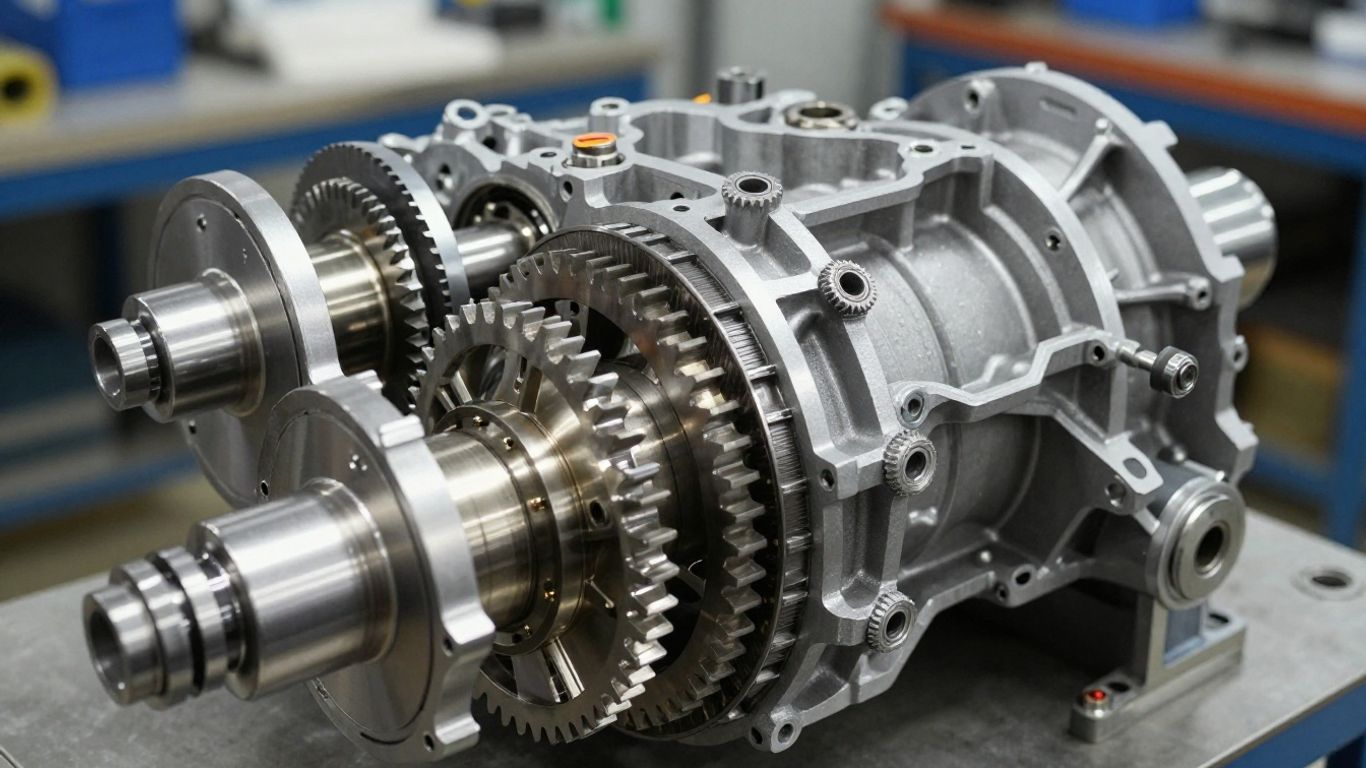
How torque converters deliver automatic gear changes
A torque converter uses transmission fluid to transfer drive from the engine to the gearbox. It allows a degree of slip when the car is stationary or pulling away, which helps the vehicle move without a manual clutch pedal. As speed rises, a lock-up clutch may reduce slip during suitable conditions.
The gearbox itself selects fixed ratios, usually through electronically controlled hydraulic components. The result is a stepped change in engine speed, although careful programming can make those steps feel barely noticeable.
Common names such as Steptronic, Tiptronic and 8HP
Names such as Steptronic and Tiptronic generally refer to a manufacturer’s or supplier’s way of describing an automatic gearbox with some manual control. 8HP is associated with an eight-speed automatic gearbox family. These names are not interchangeable technical definitions, so the vehicle’s full specification still matters.
A selector that offers plus and minus inputs does not automatically make the transmission a manual or dual-clutch unit. It normally indicates that the driver can request ratios while the automatic system continues to manage the gearbox.
Strengths and limitations for everyday driving
Torque-converter automatics are often appreciated for their smooth low-speed response and relaxed operation. They can suit larger vehicles and engines that need a conventional spread of fixed ratios. On the other hand, the converter and hydraulic system add mechanical complexity, and some designs may use more fuel than a comparable alternative.
The balance has improved considerably in newer vehicles. More ratios, lock-up control and careful software can reduce the older feeling of delayed or wasteful changes, though maintenance requirements and repair costs vary between units.
When a torque-converter automatic is the best choice
This gearbox can be a sensible option for drivers who value smooth pull-away behaviour, frequent traffic driving and a familiar automatic feel. It may also be attractive where the vehicle is used for heavier work, although towing limits must always be checked for the exact model.
Before choosing, consider the car as a whole rather than the gearbox label in isolation. Engine torque, weight, service history and the manufacturer’s maintenance schedule all influence whether a particular automatic is suitable.
Dual-clutch automatic gearbox names
Dual-clutch transmissions use two clutches and two gear paths to manage odd and even ratios. One clutch can be engaged while the next ratio is prepared on the other shaft. The arrangement is still an automatic for the driver, despite being related in principle to a manual gearbox.
The family has many names, which is one reason automatic gearbox names can be misleading. The labels are worth recognising, but clutch design, calibration and vehicle application are just as important when assessing a car.
How DCT, DSG, S tronic, PDK and EDC relate to one another
DCT means dual-clutch transmission. DSG, S tronic, PDK and EDC are names used for particular dual-clutch gearbox families or applications, rather than one universal unit. The exact construction, software and service requirements can differ even when the broad principle is similar.
A guide to automatic transmission types can help separate these labels from the mechanisms beneath them. In practice, confirm the transmission fitted to the precise engine and model year instead of assuming that a familiar badge guarantees identical hardware.
Wet-clutch and dry-clutch dual-clutch systems
A wet clutch operates in an oil bath, while a dry clutch does not use that same surrounding oil arrangement. This distinction affects cooling, packaging and servicing. Neither description is automatically a guarantee of better reliability, because usage, calibration and maintenance also matter.
The engine’s torque output and the vehicle’s intended use help determine which design is appropriate. A small car and a heavier, more powerful model may use different solutions despite both being advertised as DCTs.
Why dual-clutch gearboxes can shift quickly
Because the next ratio can be selected before the current one is fully disengaged, a dual-clutch gearbox can make rapid changes under suitable conditions. The control unit coordinates clutch pressure, engine speed and the selected ratio. That can create a direct, responsive feel during acceleration.
Quick changes are not the only measure of quality. Smoothness at parking speeds and sensible decisions on hills or in traffic are equally important, particularly for drivers who spend most of their time away from open roads.
Common low-speed driving and maintenance considerations
Some dual-clutch systems can feel hesitant, abrupt or more deliberate when manoeuvring slowly. Repeated creeping, steep ramps and frequent stop-start conditions place demand on clutch control. The exact experience varies considerably between vehicles.
Owners should follow the specified fluid, filter and inspection intervals where applicable. A complete service history is especially useful when buying a used car, since neglect can turn a sophisticated transmission into an expensive problem.
Continuously variable gearbox names
A continuously variable transmission, or CVT, does not normally move through a fixed set of conventional gear ratios. Instead, it changes the effective ratio progressively, commonly using a belt or chain and variable-diameter pulleys. The engine can therefore remain nearer to a suitable operating speed while road speed changes.
The name can cover more than one design. Conventional CVTs and hybrid e-CVT systems work differently, so it is worth treating the “CVT” label as a starting point rather than a complete technical description.
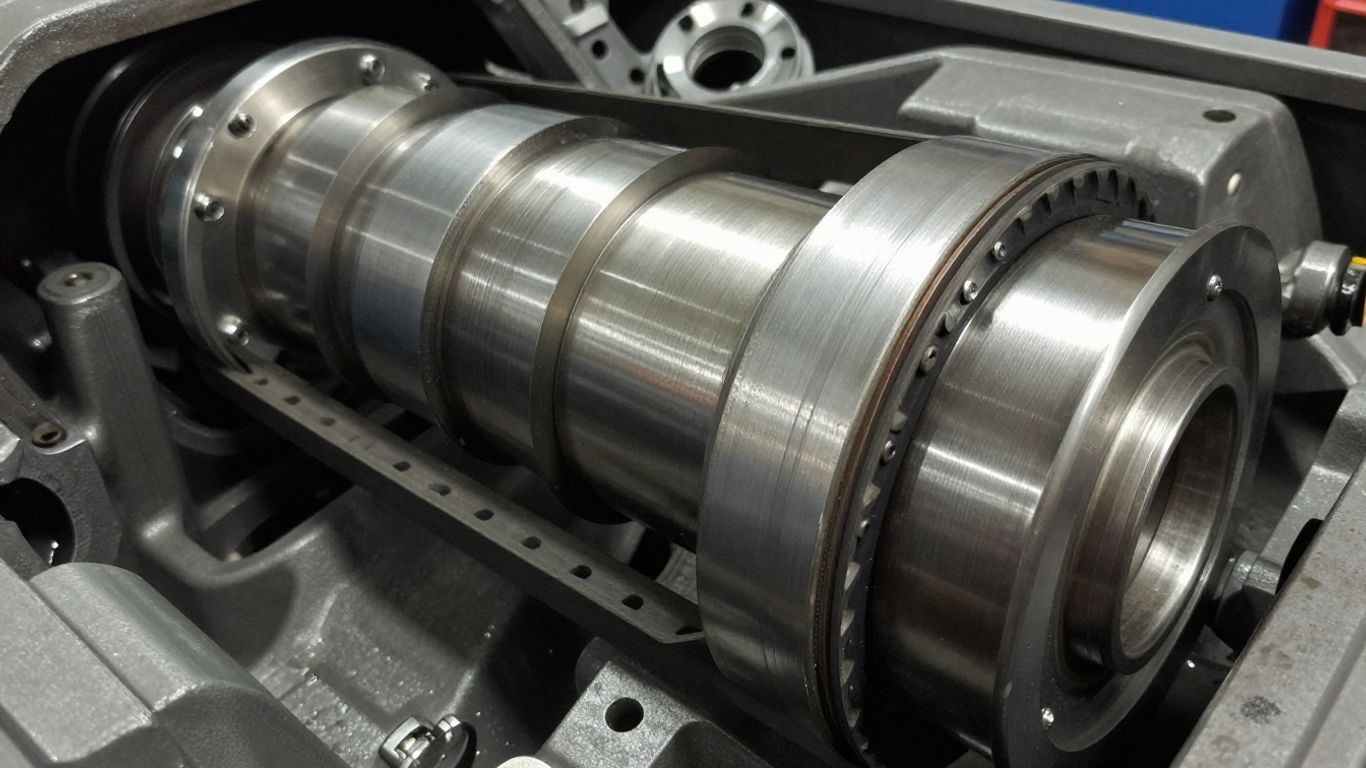
How CVT gearboxes differ from stepped automatics
A stepped automatic selects defined ratios, so the engine note often rises and falls in recognisable stages. A CVT can alter its ratio without those traditional shifts. Under hard acceleration, the engine may hold a relatively high speed while the car continues to gather pace, which some drivers describe as a droning sensation.
The absence of conventional shifts is not a fault by itself. It is a characteristic of the system, although software can simulate steps to make the response feel more familiar.
Common names including Xtronic, Multitronic and Lineartronic
Xtronic, Multitronic and Lineartronic are examples of names associated with CVT applications. They should not be treated as identical products across every vehicle, because design details and control strategies can change. Checking the model-specific handbook remains the dependable approach.
The same caution applies to adverts that simply say “automatic”. That word describes the driver’s experience, not necessarily the internal arrangement of the gearbox.
What e-CVT means in hybrid vehicles
An e-CVT in a hybrid vehicle is not necessarily a belt-and-pulley CVT. The term often describes an electronically managed power-split arrangement in which electric motors and a simple gearset help vary the relationship between engine speed and wheel speed. The exact system depends on the vehicle.
This means the driving sensation may resemble a CVT, while the mechanical layout is different. Hybrid operation, battery state and engine control can all affect what the driver hears and feels.
Advantages and drawbacks of CVT systems
CVTs can provide smooth acceleration and allow the engine to operate efficiently across a broad range of conditions. They can be comfortable in urban traffic, with no traditional upshifts to interrupt progress. Some drivers, however, prefer the more familiar rhythm of fixed gears.
Service requirements must be checked for the individual unit, including the correct fluid specification. Towing suitability, performance expectations and long-term repair costs should also be considered before purchase.
Automated manual gearbox names
An automated manual gearbox starts with a manual-style transmission but uses actuators and electronic controls to operate the clutch and select ratios. The driver does not normally operate a clutch pedal. This arrangement can be lighter or less costly than some other automatic designs, but its behaviour is distinct.
Names vary widely, and the same abbreviation may be used loosely in advertising. The key question is whether the system has one conventional automated clutch or a more complex dual-clutch arrangement.
How AMT, AGS, Easytronic and Dualogic systems work
AMT means automated manual transmission, while AGS, Easytronic and Dualogic are names used for automated manual applications. The control system decides when to disengage the clutch, select another gear and re-engage it. In broad terms, the hardware retains the layout of a manual gearbox while the driver’s clutch and shift actions are automated.
That design should not be confused with a torque converter simply because both systems have two pedals. Their control methods and driving characteristics are different.
Why automated manuals can feel different from other automatics
A single-clutch automated manual usually has to interrupt drive briefly while it changes ratio. The pause may be more noticeable if the driver accelerates hard or lifts off at the wrong moment. Gentle throttle input can often make the sequence feel more settled.
This is not necessarily evidence of a defect. It reflects the mechanism and its programming, although pronounced judder, delays or warning lights deserve professional diagnosis.
Single-clutch and dual-clutch automated manuals compared
A single-clutch automated manual uses one clutch to connect the engine to the selected gear. A dual-clutch system uses two clutches and can prepare another ratio in advance. Both automate gear selection, but the dual-clutch arrangement is generally designed to reduce the interruption between changes.
The distinction matters when reading a listing. “Automated manual” may describe the family broadly, whereas “dual-clutch” identifies a different arrangement with its own maintenance and low-speed considerations.
Typical reliability and servicing considerations
Reliability depends on the vehicle, mileage, driving conditions and service history more than on the abbreviation alone. Clutch wear, actuator operation and calibration are all relevant areas for inspection. A specialist should assess symptoms such as shuddering, difficulty selecting a gear or repeated transmission warnings.
Ask for evidence of the prescribed servicing before buying. A cheaper purchase price can lose its appeal if an unfamiliar transmission has been maintained poorly or if replacement parts are difficult to source.
How to identify the automatic gearbox in a car
The safest identification method combines several sources rather than relying on one badge. A listing may simplify the description, and a selector may show only the available driving positions. When the exact gearbox affects towing, servicing or purchase value, take time to verify it.
This is particularly useful when a model has changed transmission during a facelift or when the same engine has been offered with different drivetrains. Small details such as production date and power output can make a significant difference.
Checking the handbook, specification sheet and vehicle identification number
Begin with the handbook and the original specification sheet. They may state the transmission family, number of ratios or required fluid. The vehicle identification number can help a manufacturer or parts specialist confirm the factory-fitted equipment.
If documents disagree, ask a franchised dealer or qualified transmission specialist to check the VIN. That is more reliable than copying a generic internet listing for the same model name.
Recognising gearbox names on the selector and dashboard
The selector may show P, R, N and D, with additional markings such as S, M, L or plus and minus symbols. These indicate positions or driver controls, not always the transmission type. A badge on the selector can be a useful clue, but it is rarely enough on its own.
Dashboard messages can provide further clues when a fault occurs, though they still need interpretation. Do not infer a CVT, DCT or torque converter solely from the presence of a sport or manual mode.
Using engine, model year and drivetrain details
Search results become more precise when you include the engine size, fuel type, power output, model year and driven wheels. A front-wheel-drive hybrid may use a different transmission arrangement from a similarly named petrol model. Trim level can matter too.
Record the registration number and VIN before contacting a seller or workshop. Those details reduce the risk of ordering the wrong fluid, filter or replacement component.
Confirming the transmission before buying or servicing a car
Before purchase, ask the seller to state the gearbox type in writing and compare it with the handbook. During a service, provide the same information and mention any symptoms, rather than assuming the garage will identify every variation from the model name.
A simple confirmation can prevent expensive misunderstandings. It also helps you compare like with like when reviewing automatic vehicles, including a hybrid MG MG3 lease option whose listing identifies it as an automatic hybrid model.
Choosing between different automatic gearbox types
There is no universally best automatic gearbox. The right choice depends on where the car is driven, how much load it carries and what sort of response the driver prefers. Purchase price is only one part of the calculation; servicing, fuel use and future resale may matter just as much.
For a practical comparison, begin with the regular journey rather than the badge. A transmission that feels ideal on a motorway may be less appealing during tight manoeuvres or long queues.
Which gearbox suits urban driving and traffic
Smooth low-speed control is often the priority in town. Torque converters can feel naturally gentle when pulling away, while CVTs provide uninterrupted ratio changes. Dual-clutch and automated manual systems may also work well, but their creeping behaviour should be assessed in a real test drive.
When comparing vehicles, pay attention to parking, reversing, hill starts and repeated stop-start movement. These moments reveal more about suitability than a short burst of acceleration.
Comparing comfort, fuel economy and performance
Comfort is subjective, so drive each candidate on roads that resemble your normal routes. Stepped automatics offer familiar changes, CVTs can keep the engine at a chosen speed, and dual-clutch units may feel direct during brisk acceleration. The engine and software are as influential as the gearbox family.
Fuel economy also depends on body shape, weight, tyres, traffic and driving style. A transmission label should guide questions, not act as a promise of a particular real-world result.
A short comparison can keep the decision grounded:
| Gearbox type | Typical characteristic | Useful question |
|---|---|---|
| Torque converter | Smooth take-up and stepped ratios | Does it suit traffic and heavier use? |
| Dual clutch | Direct feel and rapid ratio changes | Is low-speed behaviour comfortable? |
| CVT | Progressive ratio changes | Do you like its engine response? |
| Automated manual | Manual-style hardware with automated controls | Is the shift pause acceptable? |
The table is only a starting point. A careful test drive and the correct service information matter more than a broad reputation attached to any one category.
Considering towing, reliability and repair costs
If towing is part of the plan, check the exact vehicle’s permitted trailer weight and the manufacturer’s guidance. Do not assume that every automatic with a similar engine has the same limit. Cooling, clutch design and drivetrain layout can all affect the answer.
For ownership costs, look at the service schedule and obtain an estimate for routine and potential specialist work. The most reliable choice on paper may not be the best fit if the car has a poor history or is used outside its intended conditions.
Matching the gearbox to a petrol, diesel, hybrid or electric vehicle
Powertrain choice changes the gearbox question. Petrol and diesel cars generally use one of the mechanical automatic families described above, while hybrids may use an e-CVT or another hybrid-specific arrangement. A fully electric car commonly uses a single-speed reduction drive rather than a multi-ratio automatic gearbox.
When browsing vehicles, compare the complete powertrain and intended use. For example, the BYD Seal 6 listing identifies a plug-in hybrid automatic saloon with an e-CVT, while the Nissan Qashqai listing identifies an automatic mild-hybrid model with Xtronic. Those labels are useful clues, but the individual specification remains the final reference.
If you are comparing flexible vehicle access as well as mechanical details, you can also view available cars and then check the gearbox description for the exact vehicle. A clear match between the car, transmission and contract terms makes the decision easier.
Conclusion
Understanding automatic gearbox names becomes much simpler once technical types are separated from manufacturer labels, selector modes and sales language. Check the exact specification, test the car in realistic conditions and consider servicing alongside comfort, performance and running costs before committing.
Frequently asked questions
What is the most common type of automatic gearbox?
Is a CVT the same as an automatic gearbox?
What does DCT mean on a car listing?
Are automated manual gearboxes fully automatic?
Do more gears always mean better fuel economy?
How can I check which gearbox a used car has?
Should I service an automatic gearbox?
Reviewed by
Billy Lang, Director
FCA Registration No: 835008
Keep reading
Related guides
Vehicle guides
Are 1.0-litre turbo engines any good?
How three-cylinder 1.0 turbo engines manage the pace of a bigger engine on small-car running costs, where they struggle, and which ones have proven themselves.
Read guideVehicle guides
Audi A1: Perfect First Car
The Audi A1 can make a polished, manageable first car, but the right example matters more than the badge. Think carefully about insurance, servicing, space and the condition of any used model before committing. Compact dimensions make the A1 comfortable in town and easier to park. The premium cabin and technology are appealing,…
Read guideVehicle guides
Are Alfa Romeo Cars Reliable?
Whether Alfa Romeo cars are reliable depends less on the badge alone and more on the model, engine, age and care it has received. Newer Alfa Romeo models can be enjoyable and dependable when serviced correctly. Electrical warnings, battery issues and wear to suspension components are common ownership concerns. A complete service history…
Read guideReady when you are
Put the reading into practice.
A soft credit check via Creditsafe takes minutes. It does not normally affect your credit score the same way as a full lending application — and you get an honest answer either way.
Request a Flexi Quote
Quick form. Tell us which flexi stock you are interested in and we'll call you back the same day.
