
25 Best Driving Films of All Time
Peter Yates’s Bullitt is still the film most people mean when they talk about the great American car chase. Steve McQueen’s detective moves through San Francisco with an unshowy coolness, and the film trusts the streets, the cars and the…
1. Bullitt: the gold standard for cinematic car chases
Peter Yates’s Bullitt is still the film most people mean when they talk about the great American car chase. Steve McQueen’s detective moves through San Francisco with an unshowy coolness, and the film trusts the streets, the cars and the editing to create their own excitement. It feels fast without behaving like a modern action film.
The famous pursuit between McQueen’s Ford Mustang and the Dodge Charger is thrilling because it has weight. Cars crest hills, lose traction and plunge into corners with a physicality that makes every change of direction matter. There is no constant musical instruction telling us what to feel; the engines and the geography do the work.
More than half a century later, Bullitt remains a touchstone because it understands restraint. The chase is not simply an interruption to the detective story. It grows out of the world of the film, turning a pursuit through the city into a portrait of a man who prefers control, speed and silence.
2. The French Connection: gritty street driving at full speed
William Friedkin’s The French Connection is dirty, tense and aggressively urban. Gene Hackman’s Popeye Doyle is a difficult man to like, but his dogged pursuit of a drug smuggling operation gives the film a nervous momentum. New York is not a backdrop here; it is a crowded, hostile maze that keeps getting in the way.
The elevated-train chase is the centrepiece, and its rough edges are part of its power. Doyle drives beneath the tracks while a train races above him, swerving through traffic with the kind of reckless urgency that makes the sequence uncomfortable as well as exhilarating. It feels less choreographed than barely contained.
The film’s brilliance lies in that discomfort. Driving is not presented as a glamorous display of skill, but as an expression of obsession and bad judgement. For viewers exploring the classic car films that shaped the genre, this remains one of the grimmest and most influential examples.
3. Drive: cool, controlled and atmospheric night driving
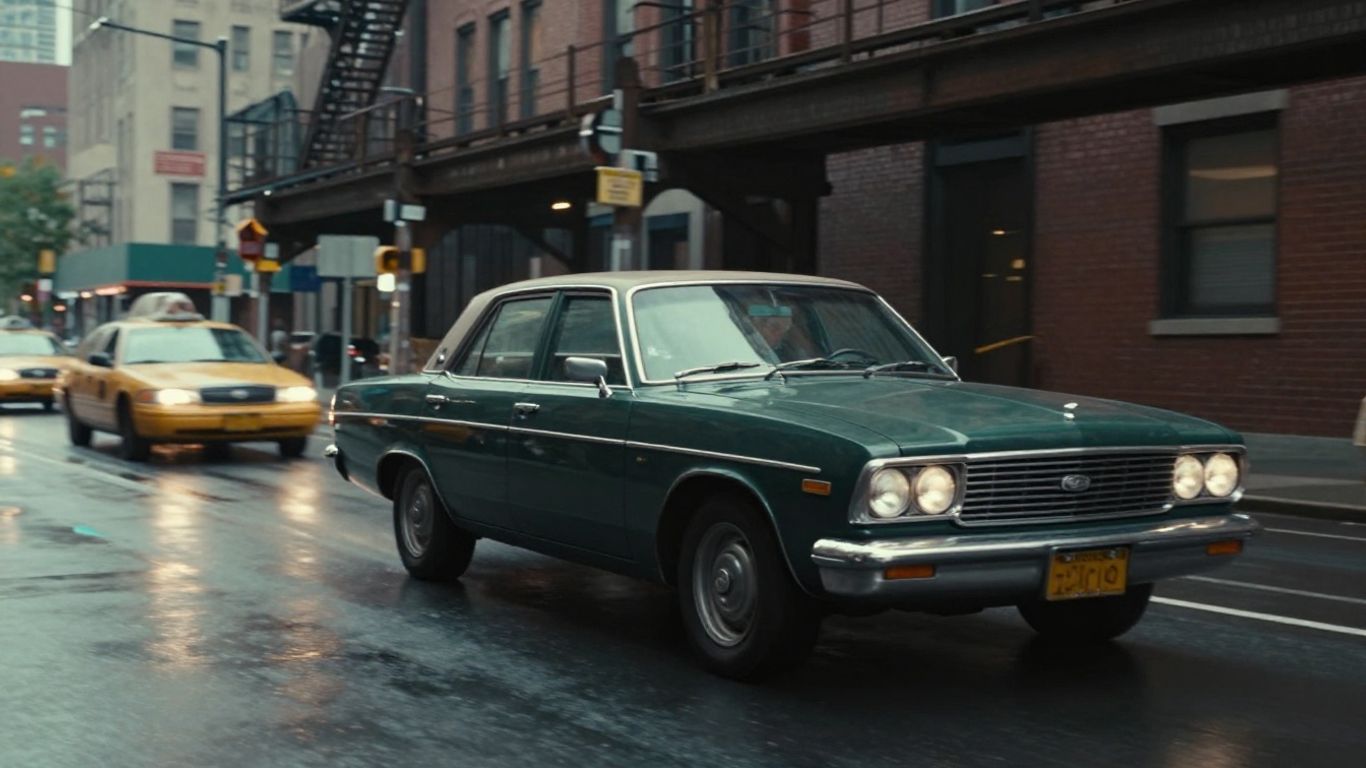
Nicolas Winding Refn’s Drive turns Los Angeles into a nocturnal dream of empty motorways, sodium lights and sudden violence. Ryan Gosling’s unnamed Driver says very little, yet his habits behind the wheel reveal a precise, observant personality. The film is as interested in pauses as it is in acceleration.
Its opening getaway is a small masterclass in tension. The Driver listens to police scanners, judges the timing of a basketball game and slips through the city without drawing attention. He does not need to drive furiously to seem capable; his confidence comes from knowing exactly when not to move.
That contrast gives Drive its distinctive rhythm. The car becomes a private room where the Driver can think, wait and protect himself from the world outside. It is stylish, certainly, but the style works because it gives the film a clear emotional temperature: lonely, controlled and always close to breaking point.
4. Mad Max: Fury Road: spectacular vehicular action
Mad Max: Fury Road is one of the rare blockbusters in which the vehicles feel like characters. George Miller fills the screen with war rigs, motorcycles, lorries and improvised machines, then sends them charging across a blinding desert. The result is huge, strange and remarkably easy to follow.
The action has a clean physical logic. Characters climb, fall, swing between vehicles and fight for control of moving machines, while the camera preserves the direction of the chase. Even at its loudest, the film understands where everyone is and what each person is trying to achieve.
Its spectacle also carries a strong sense of purpose. Furiosa’s convoy is not racing towards an abstract finish line; it is trying to escape a violent system and find somewhere safer. That gives the explosions and crashes an emotional charge that many action films struggle to achieve.
5. Vanishing Point: an existential road film
Richard C. Sarafian’s Vanishing Point follows Kowalski, a delivery driver who accepts a wager to take a white Dodge Challenger across the United States. The premise is simple, almost bare, but the journey gradually becomes a meditation on freedom, identity and the desire to keep moving. It is a road film with a stubbornly inward gaze.
The landscape gives the film its peculiar calm. Long stretches of road, desert light and distant radio voices create a drifting, hypnotic atmosphere. The Challenger is powerful, but Kowalski’s driving never feels like a victory over the country; it feels like a way of disappearing into it.
That ambiguity is why the film continues to attract devoted viewers. It can be enjoyed as a beautifully photographed chase, but it also leaves room for questions about what the driver is running from. Among the best driving films, it is one of the most openly philosophical.
6. The Driver: precision driving and minimalist crime drama
Walter Hill’s The Driver pares the crime film down to its essential parts. Ryan O’Neal plays a professional getaway driver whose skill is matched only by his reluctance to explain himself. Dialogue is sparse, faces are guarded and the city seems to exist mainly as a set of routes, barriers and opportunities.
The driving is similarly disciplined. The Driver uses alleys, car parks and narrow streets with a cool understanding of momentum, finding lines that other people miss. The sequences are not overloaded with decoration, so the viewer notices the decisions: when he brakes, when he changes direction and when he commits to a dangerous gap.
The film’s minimalism makes it feel almost like a sketch of a larger criminal world. That is part of its appeal. It is less interested in backstory than in professional behaviour, and its stripped-back approach later became an important reference point for films about anonymous, highly capable drivers.
7. Ronin: technically brilliant European car chases
John Frankenheimer’s Ronin is a cold, intricate thriller in which loyalties shift as quickly as the cars. Set across France and Ireland, it gives its characters complicated missions and gives its vehicles roads that can punish a moment’s hesitation. The film’s tension comes from uncertainty, but its chases are wonderfully concrete.
The pursuit through Nice and the later sequence on the Paris streets are models of spatial clarity. Cars enter and leave the frame with purpose, and the camera stays close enough to make speed feel dangerous without turning the action into visual mush. Traffic, tunnels and oncoming vehicles become active parts of the problem.
There is also a pleasing lack of sentimentality. These people are professionals, and the cars are tools, not mascots. Ronin understands that a brilliant chase is built from preparation, judgement and consequence rather than from noise alone.
8. Baby Driver: driving choreographed to music
Edgar Wright’s Baby Driver makes music part of the machinery of its action. Baby, played by Ansel Elgort, uses headphones to manage the tinnitus that has followed him since childhood, and the soundtrack becomes a private metronome for his work as a getaway driver. Every gear change seems to arrive on a beat.
The opening escape introduces the idea perfectly. Baby glides through Atlanta while the camera and choreography follow the song, then the film shifts from measured cruising to sharp manoeuvres when the robbery goes wrong. The pleasure comes from the meeting of two systems: musical timing and driving technique.
Yet the film is not only a stylish exercise. Baby wants to leave the criminal world and build a quieter life, so the precision behind the wheel is also a trap. The more impressive his driving becomes, the harder it is for him to escape the people who depend on it.
9. Duel: terror on the open road
Steven Spielberg’s Duel takes an ordinary motorway journey and makes it feel like a nightmare. Dennis Weaver plays David Mann, a salesman pursued by an anonymous lorry whose driver is never properly seen. The lack of explanation turns a traffic incident into something primitive and deeply unsettling.
The lorry’s size does much of the acting. It appears in mirrors, fills the road and waits at the edge of the frame, transforming familiar driving situations into threats. Mann’s car is small and exposed, while the truck seems to possess endless patience.
What makes the film so effective is its discipline. Spielberg does not need a complicated mythology for the danger. A road, a vehicle and a frightened driver are enough. Duel remains a lesson in how sound, distance and anticipation can create more fear than a visible monster.
10. Thelma & Louise: freedom, friendship and a final drive
Ridley Scott’s Thelma & Louise begins as a weekend away and becomes a flight from the lives its heroines can no longer return to. Susan Sarandon and Geena Davis give the journey warmth, humour and growing determination, even as the consequences of their decisions close in around them. The car carries both their friendship and their dwindling choices.
The open road initially promises a kind of release. They can talk without interruption, change direction and imagine a different future. But the film steadily complicates that freedom, showing how quickly a journey can become a chase when women refuse to be returned to the roles expected of them.
Its ending is famous because it is both devastating and strangely affirmative. The final drive is not a triumph in any conventional sense, yet the two women make the decision together. The car becomes a symbol of their bond, and the road ahead matters less than the fact that they face it side by side.
11. Two-Lane Blacktop: the stripped-back road movie
Monte Hellman’s Two-Lane Blacktop is a road film reduced to movement, machines and fragments of conversation. A Driver and a Mechanic travel across America in a grey 1955 Chevrolet, challenging strangers to races and existing almost entirely in the present. Their emotional reserve is as striking as their mechanical knowledge.
The film refuses the usual promise that a journey will lead to self-discovery. The men keep moving because stopping would require a different kind of decision. Warren Oates’s travelling stranger brings restless talk and comic vanity into their quiet world, but even he cannot make the road feel like a destination.
Its patience will not suit everyone, yet that patience is precisely the point. The engine, tyres and changing landscape become a form of cinema in themselves. Two-Lane Blacktop is not about winning a race so much as about the strange emptiness that can remain after the race has begun.
12. Smokey and the Bandit: outlaw driving with comic flair
Smokey and the Bandit is lighter and louder than most films on this list. Burt Reynolds plays Bandit, who distracts the authorities while a truck carries an illegal shipment across state lines. The plot is a simple excuse for banter, pursuit and the deep visual pleasure of a black Pontiac Trans Am in motion.
The film’s comic energy comes from its characters as much as its driving. Jackie Gleason’s Sheriff Buford T. Justice turns the chase into a one-man tantrum, while Bandit treats the police pursuit as a game he has already started to enjoy. Sally Field’s presence gives the journey a loose, companionable warmth.
It is not trying to make driving existential or terrifying. Instead, it celebrates the pleasure of being good at something slightly foolish. The stunts have an appealing roughness, and the film’s grin remains infectious because it never mistakes its own nonsense for seriousness.
13. Gone in 60 Seconds: classic car theft and high-speed pursuit
The original Gone in 60 Seconds is a wonderfully direct piece of exploitation cinema. H.B. Halicki wrote, directed and starred in the story of a car thief required to steal a long list of vehicles, with a yellow 1973 Ford Mustang at the centre of the final pursuit. The film is built around the promise of seeing cars taken and driven hard.
Its extended chase is famous for its sheer persistence. Damage accumulates, streets blur and the Mustang keeps going through an astonishing sequence of collisions and near misses. The rough production style gives the film a documentary-like texture, as if the camera happened to catch a real criminal operation spiralling out of control.
That rawness separates it from more polished heist films. The pleasure is not in elegant planning but in watching a machine and a driver endure punishment. For anyone drawn to the physical craft of stunt work, Gone in 60 Seconds remains an unusually revealing and energetic watch.
14. To Live and Die in L.A.: one of cinema’s most nerve-shredding escapes
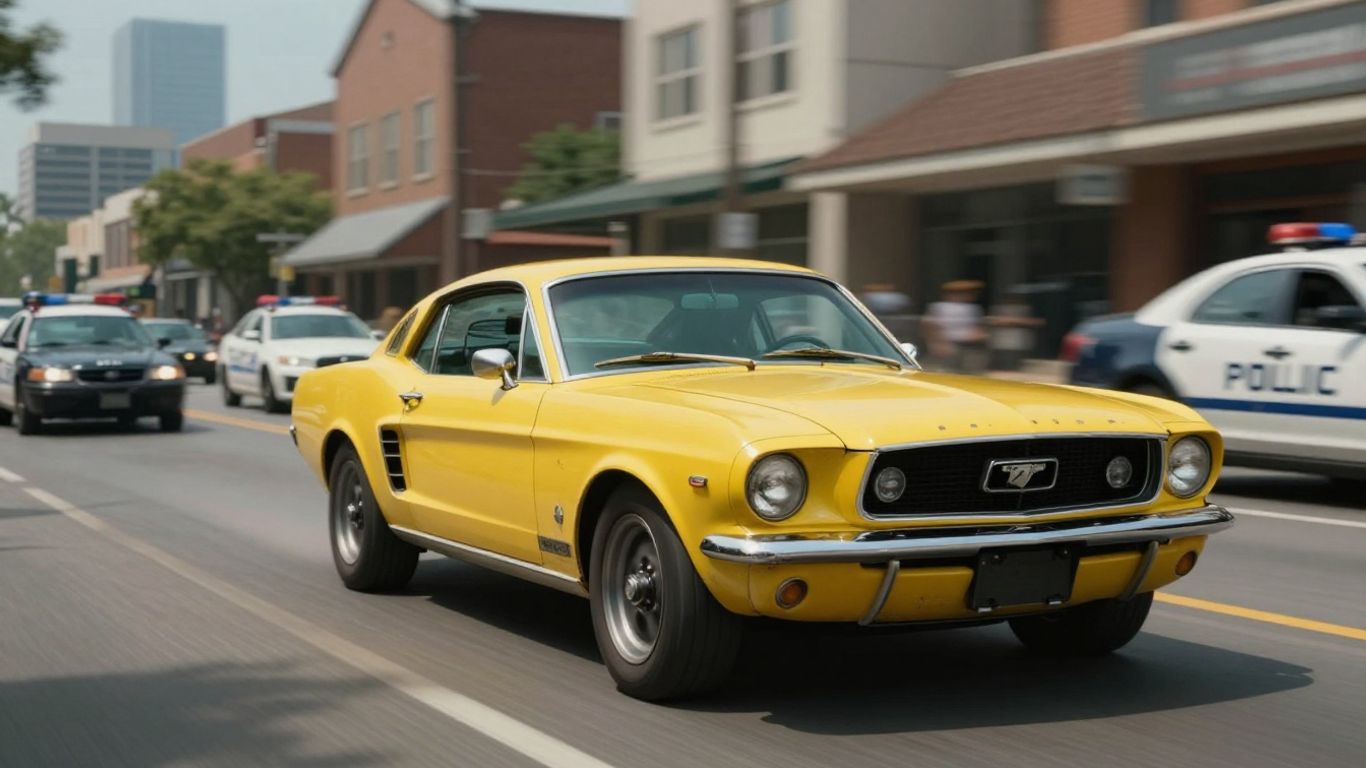
William Friedkin returned to the world of reckless pursuit with To Live and Die in L.A., a sharp-edged thriller about Secret Service agents and a counterfeiter. Los Angeles is bright, dry and morally slippery, and the film gives its characters very little room to remain clean. Driving becomes another expression of professional pride and personal obsession.
The wrong-way freeway escape is the film’s great set piece. Cars hurtle into traffic, drivers react a fraction too late and the camera stays close to the danger. It is frightening because the route is not a clean line from trouble to safety; it is a succession of impossible choices.
The sequence also reflects the film’s larger mood. Nobody is fully in control, even when they appear supremely competent. The result is a chase with genuine moral anxiety, where speed does not solve the problem but simply carries everyone further into it.
15. Death Proof: stunt driving and grindhouse thrills
Quentin Tarantino’s Death Proof divides its time between talk-heavy hangouts and two brutally focused driving sequences. Kurt Russell plays Stuntman Mike, a killer who uses a reinforced car to turn road culture into a weapon. The film’s exploitation surface hides a careful interest in how women read danger and reclaim control.
The second half changes the balance. A group of women find themselves in a muscle car with Stuntman Mike nearby, and the film builds towards a long, physically demanding pursuit. The stunt work is deliberately exposed: bodies are thrown around, tyres lose grip and the car feels as dangerous to its passengers as to anyone outside it.
Its final reversal is both funny and satisfying. The women do not simply survive the chase; they turn it into a display of skill, nerve and collective confidence. Death Proof is uneven by design, but its driving scenes have a visceral honesty that lingers.
16. The Italian Job: stylish Mini Cooper getaway driving
The original The Italian Job combines a playful heist with some of the most memorable small-car driving in cinema. Michael Caine leads a gang into Turin, where the escape depends on traffic, timing and a fleet of red, white and blue Mini Coopers. The cars are compact, nimble and perfectly suited to the film’s cheeky tone.
The getaway works because it keeps changing scale. The Minis squeeze through streets, climb staircases, leap between rooftops and turn urban infrastructure into a playground. The sequence feels carefully designed, but never stiff; each new route brings another bit of visual mischief.
Its charm is inseparable from the sense of teamwork. No single driver wins the day alone, and the cars operate almost like members of the crew. That combination of caper humour and agile stunt work explains why the film remains a favourite in discussions of racing film favourites, even though its central event is a robbery rather than a race.
17. The Wages of Fear: suspense built around a dangerous journey
Henri-Georges Clouzot’s The Wages of Fear is one of the most sustained exercises in film suspense. Four desperate men are hired to transport nitroglycerine across rough roads to an oilfield fire. The journey is slow, hazardous and financially necessary, which makes every bump feel like a possible death sentence.
The vehicles are not glamorous. They are ageing trucks carrying unstable cargo, and the drivers must negotiate steep gradients, broken surfaces and narrow turns. Clouzot makes the audience study the road ahead, waiting for the exact moment when an apparently manageable obstacle becomes fatal.
The film’s tension comes from the gap between courage and desperation. These men are not chasing glory; they are accepting a terrible risk because poverty has left them few alternatives. The road is therefore both physical challenge and moral test, with no easy relief when the trucks finally move.
18. Le Mans: immersive endurance racing
Lee H. Katzin’s Le Mans is less a conventional drama than an attempt to place the viewer inside a 24-hour race. Steve McQueen plays an emotionally restrained driver, but the film’s real subject is concentration: the repeated preparation, acceleration and correction required to keep a racing car moving at the limit.
Its sound design is essential. Engines rise and fall, tyres protest and the track seems to stretch endlessly beneath the cars. Rather than explaining every part of the competition, the film lets the rhythm of racing carry the experience, which makes it unusually absorbing for viewers willing to settle into its pace.
A simple comparison helps explain its particular flavour. Different films use racing to create different kinds of drama:
| Film | Driving focus | Emotional effect |
|---|---|---|
| Le Mans | Endurance and concentration | Immersion |
| Rush | Rivalry and risk | Adrenaline |
| Ford v Ferrari | Engineering and teamwork | Momentum |
| Senna | Character and public pressure | Emotion |
That distinction matters. Le Mans is not trying to deliver the neatly shaped rise and fall of a biopic; it offers the texture of competition itself, and its quiet stretches are part of the experience.
19. Rush: the rivalry between James Hunt and Niki Lauda
Ron Howard’s Rush builds its drama around the rivalry between James Hunt and Niki Lauda during Formula One’s dangerous 1970s. Chris Hemsworth and Daniel Brühl play them as opposites in temperament and method: Hunt is instinctive and flamboyant, while Lauda is analytical, exacting and fiercely self-aware.
The racing scenes are effective because they remain tied to the men. A wet track is not merely a beautiful hazard; it becomes a question about judgement, courage and the cost of continuing. When Lauda suffers a devastating crash, the film refuses to treat recovery as a simple inspirational chapter.
What stays with the viewer is the mutual respect beneath the antagonism. Hunt and Lauda need each other as rivals because each exposes the other’s limits. Rush understands that sporting drama is strongest when competition changes both people involved.
20. Ford v Ferrari: engineering, ambition and racing drama
Ford v Ferrari follows Carroll Shelby and Ken Miles as they attempt to build a car capable of beating Ferrari at Le Mans. The film gives engineering nearly as much attention as racing, showing the arguments, testing and compromises behind a machine that must survive at extreme speed.
Matt Damon and Christian Bale provide the film’s human engine. Shelby is managing corporate expectations and personal history, while Miles wants to drive without interference. Their friendship is lively but not sentimental, and the film allows professional pride to create genuine friction between them.
The racing is presented as a contest between preparation and chaos. A carefully built car can still fail, a team can still make the wrong call and a driver can still be asked to sacrifice something. That balance gives the spectacle its weight and keeps the film engaging even away from the track.
21. Senna: the human story behind Formula One greatness
Asif Kapadia’s Senna tells Ayrton Senna’s story largely through archival footage, letting the driver’s own voice and public presence shape the film. It is a portrait of extraordinary talent, but also of faith, politics and the pressure placed on a champion who became a national hero.
The rivalry with Alain Prost gives the documentary a compelling structure. Their battles are sporting, personal and institutional at once, with Formula One governance becoming part of the conflict. Senna’s driving looks astonishing on screen, yet the film is equally interested in what competition does to a person off the circuit.
Its emotional force comes from intimacy rather than reconstruction. Cameras capture concentration, frustration, tenderness and fear in moments that could not have been recreated. The result is not simply a racing documentary, but a moving study of a public figure trying to live according to his own principles.
22. Grand Prix: a landmark in racing-film realism
John Frankenheimer’s Grand Prix brought an unusual level of technical ambition to the Formula One film. Its fictional drivers compete across several European circuits, and the production uses cameras mounted close to the cars to create a vivid sense of speed and exposure. The racing feels immediate without losing its visual elegance.
The split-screen editing gives the film a distinctive identity. Different drivers, cars and pressures can occupy the frame at once, allowing a race to feel like several dramas happening simultaneously. It is a formal choice that reflects the complexity of the sport rather than simplifying it.
The personal stories are more traditional than the technique, but they provide useful shape around the racing. Relationships, injuries and professional ambition turn the circuits into places where private decisions become public consequences. Its influence can still be felt in the most ambitious motor-racing films.
23. Taxi Driver: alienation on the streets of New York
Martin Scorsese’s Taxi Driver is not a car film in the usual sense, but driving is central to its portrait of Travis Bickle. His taxi carries him through a New York that he experiences as corrupt, filthy and morally diseased. The streets become a moving observation post for a man increasingly detached from ordinary life.
The cab gives Travis a strange form of invisibility. He is present everywhere but belongs nowhere, watching passengers and pedestrians while working through his own fantasies. Night driving becomes repetitive and isolating, a routine that allows resentment to harden in private.
There is no glamour in this mobility. The taxi does not offer freedom; it traps Travis inside a cycle of observation, sleeplessness and grievance. That is what makes the film such a powerful companion to more exhilarating driving pictures: it shows how a vehicle can become a shelter for alienation.
24. Drive My Car: driving as grief, connection and self-discovery
Ryusuke Hamaguchi’s Drive My Car uses long journeys to create space for grief and conversation. Yusuke Kafuku, a theatre director, travels to Hiroshima to stage Uncle Vanya, where he is assigned a young chauffeur named Misaki. Their early silences gradually become a quiet, careful relationship.
The red Saab is more than a means of transport. Inside it, Yusuke listens to a recording of his late wife reading the play, while Misaki learns the contours of his moods and routines. Driving creates a boundary around difficult thoughts, allowing conversation to arrive slowly rather than through forced confession.
The film is patient about connection. Neither character is transformed by a single revelation, and neither journey offers a neat cure for sorrow. For a fuller sense of why the film has travelled so widely beyond specialist cinema, this Drive My Car discussion offers a useful companion to its themes of performance, memory and listening.
25. Cars: an animated celebration of racing and motoring culture
Pixar’s Cars brings the road film into a bright, playful world where vehicles have faces, personalities and communities of their own. Lightning McQueen begins as a gifted but selfish racer, stranded in the small town of Radiator Springs after treating the journey between races as an inconvenience. The detour becomes the story.
Its racing scenes are energetic, but the film’s deeper pleasure comes from its affection for motoring culture. Classic shapes, dusty roads, garages and old-fashioned local pride sit alongside the polished spectacle of professional racing. The world feels designed by people who understand why cars can carry memories as well as passengers.
The lesson is familiar but well judged: speed and success are not enough if they leave a person unable to see anyone else. That makes Cars a gentle introduction to the values running through many of the best driving films: skill, patience, friendship and the importance of knowing where the road has taken you.
For readers thinking about real-world motoring as well as cinema, explore flexible options can be a useful next step. First Flexi Lease provides flexible vehicle leasing solutions for cars and vans, with contracts ranging from 6 to 48 months.
Conclusion
The finest driving films use roads and vehicles to reveal something human, whether that is courage, loneliness, loyalty, recklessness or the wish to escape. Some achieve it through spectacular chases, others through a quiet car journey, but all understand that movement is never merely movement on screen.
Frequently asked questions
What makes a driving film memorable?
Which film has the greatest car chase?
Are road films and racing films the same thing?
What is a good driving film for beginners?
Why are older car films still influential?
Which driving film is the most atmospheric?
Do driving films need spectacular stunts?
Reviewed by
Billy Lang, Director
FCA Registration No: 835008
Keep reading
Related guides
Driving life
Brake Checking
Brake checking is deliberate, unnecessary braking intended to unsettle or endanger a following driver. It is different from braking normally for traffic, hazards or road conditions. Brake checking can cause a serious rear-end collision. A rear driver is not automatically solely responsible for every crash. Deliberate braking, tailgating and road rage may all…
Read guideDriving life
Road Trip Tips for Drivers with Leased Vehicles
A leased car can be a practical choice for a long drive, provided you understand the agreement and prepare properly. Check mileage, travel-area and overseas rules before departure. Calculate the whole journey, including detours and normal driving. Confirm insurance, breakdown assistance and permitted drivers. Prepare the car and protect it from avoidable damage.…
Read guideDriving life
Iconic WWI Vehicles
WWI vehicles changed warfare by bringing engines, armour and industrial production into a conflict still dependent on horses and railways. Tanks were developed to cross trenches, cut through wire and support infantry. Armoured cars worked best on firm roads and open ground. Aircraft became essential for reconnaissance, interception and bombing. Ships, submarines and…
Read guideReady when you are
Put the reading into practice.
A soft credit check via Creditsafe takes minutes. It does not normally affect your credit score the same way as a full lending application — and you get an honest answer either way.
Request a Flexi Quote
Quick form. Tell us which flexi stock you are interested in and we'll call you back the same day.
