
Capital Allowances on Electric Vans Explained
Capital allowances are a form of tax relief for qualifying business assets. Rather than deducting the whole purchase price as an ordinary day-to-day expense, a business claims the cost under a capital allowance regime. For anyone…
What capital allowances are and how they apply to electric vans
Capital allowances are a form of tax relief for qualifying business assets. Rather than deducting the whole purchase price as an ordinary day-to-day expense, a business claims the cost under a capital allowance regime. For anyone researching capital allowances electric vans, the key questions are whether the vehicle is a qualifying commercial vehicle, when it was acquired and how it is used.
The rules can look similar to the rules for cars, but the distinction matters. An electric van may sit outside the special car restrictions, while a vehicle that looks like a van may still be treated as a car for tax if it is mainly designed for private use. The safest approach is to establish the classification from the vehicle’s construction and tax documentation before making a claim.
How capital allowances reduce taxable profits
A capital allowance reduces the taxable profit on which income tax or corporation tax is calculated. It is not normally a cash payment from HMRC, so its value depends on the business’s tax rate and whether it has taxable profits to offset.
For example, a £30,000 qualifying claim could reduce taxable profits by £30,000 if the relevant allowance is 100%. The tax saving would then be calculated using the business’s applicable rate. If the allowance is spread over several years, the tax relief arrives more gradually.
The difference between a van, car and commercial vehicle for tax
Tax treatment is not determined solely by the badge on the vehicle or by how the seller describes it. A car is generally a vehicle suitable for private use and not built mainly to transport goods, whereas vans, lorries and trucks are treated differently for several capital allowance purposes.
That difference can be valuable because cars are excluded from the Annual Investment Allowance, while qualifying vans and other commercial vehicles may be eligible. If the vehicle has substantial passenger accommodation or can readily be used as a private car, the classification deserves particular care. A written specification and the purchase invoice are useful evidence.
Why electric vans can receive accelerated tax relief
Electric vans produce no tailpipe emissions, and tax policy has at times provided accelerated relief for new, unused zero-emission vehicles. The precise availability and end date of a first-year allowance must be checked for the acquisition date, because capital allowance policy changes over time.
A new electric van may therefore produce relief much sooner than a conventional commercial vehicle. That does not mean every electric van automatically receives 100% relief: ownership, newness, qualifying use and the legislation applying in the accounting period all need to line up.
Capital allowances compared with ordinary business expenses
Fuel, electricity, servicing, insurance and repairs are usually considered as running costs, subject to the normal rules and any restriction for private use. The van itself is a capital asset, so its cost is dealt with through capital allowances rather than deducted immediately as a normal trading expense.
This distinction helps avoid double counting. A business might claim an allowance on the qualifying cost of the van while separately deducting allowable electricity and maintenance costs. A practical explanation of the wider vehicle distinction is available in this guide to capital allowances on business cars, although vans can have different treatment.
Which electric vans qualify for capital allowances
Not every vehicle marketed as electric will qualify in the same way. The business must consider whether it is acquiring a van rather than a car, whether it is new or used, and whether it is used for the trade. The evidence should describe the vehicle clearly enough for the classification and price to be checked later.
The purchase date is equally significant. Rules applying to zero-emission vehicles and charging equipment have changed, with some reliefs extended only to specified dates. Do not rely on an old quotation, article or spreadsheet without checking the current position.
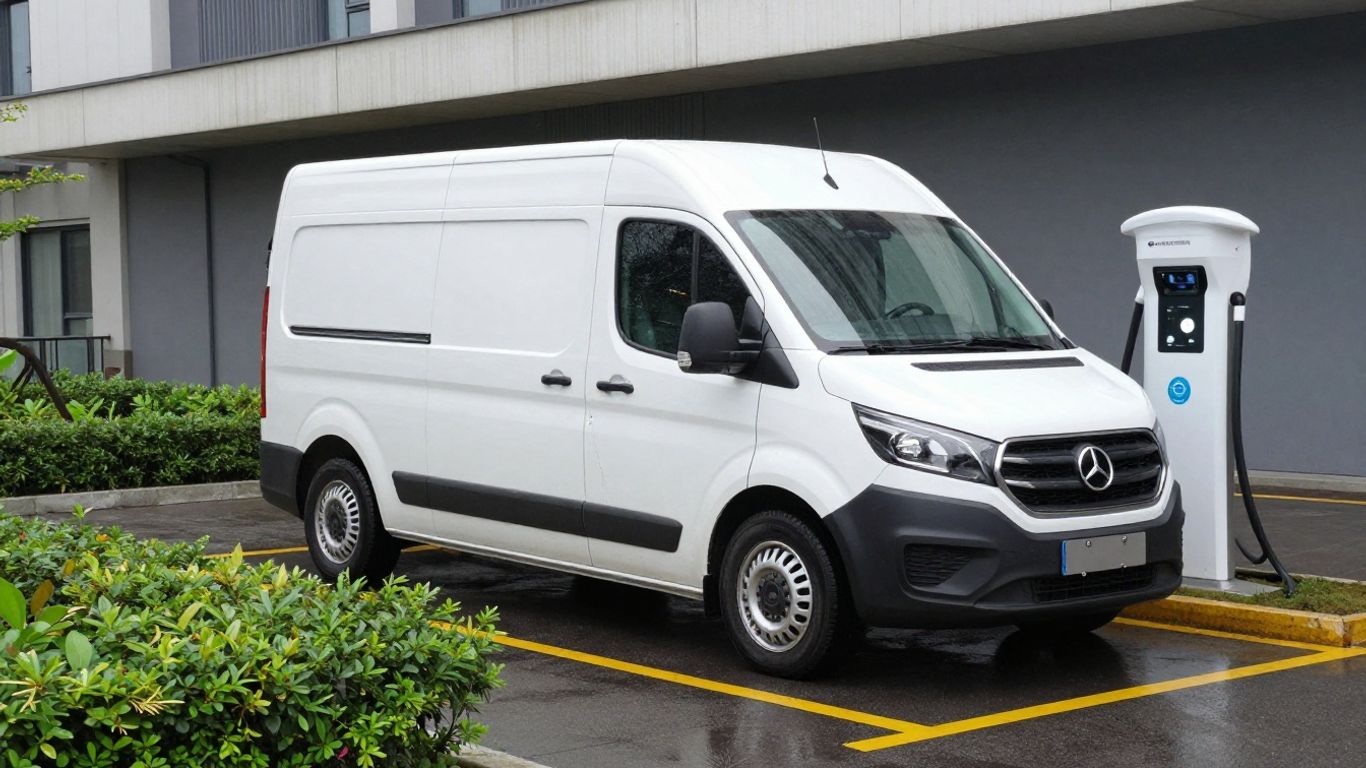
A useful first step is to separate the vehicle cost from related items. The van, a fixed charging installation and portable equipment may each have different treatment, so keeping them as separate invoice lines makes the claim easier to review.
New and unused zero-emission vans
A new and unused zero-emission van is the strongest candidate for accelerated relief where the relevant first-year allowance is available. “New and unused” is a real condition: a van that has already been registered, demonstrated or owned by another party may not meet it, even if it has very low mileage.
Check the invoice, registration details and supplier confirmation. The business should also retain evidence that the van was acquired for qualifying business purposes and that the claim falls within the applicable date window.
Second-hand electric vans and eligibility limits
A second-hand electric van can still be a qualifying business asset, but it may not qualify for every enhanced allowance available to a new vehicle. Depending on the rules and the date, it may instead be claimed through the Annual Investment Allowance or a writing-down allowance pool.
The price paid is normally the starting point for the capital calculation, not the vehicle’s original list price. A purchase from a connected party or an unusual price may require additional review, particularly where the transaction is not clearly at market value.
Electric vans used partly for private journeys
Private use does not necessarily prevent a business from claiming capital allowances. It can, however, restrict the amount that is properly attributable to the trade for an unincorporated business, and it may create a benefit-in-kind issue where a company provides the van to an employee or director.
Keep a sensible record of business and private journeys, especially where the van is taken home. The exact calculation depends on the business structure and the nature of the private availability, so a simple percentage should not be assumed without supporting evidence.
Battery, charging equipment and vehicle accessories
A battery included in the purchase price normally forms part of the vehicle asset. A separate chargepoint may be a distinct item of plant or equipment, while removable tools, racking and other accessories need to be considered according to their ownership, permanence and business purpose.
Separate invoices make this analysis much cleaner. They also help where a grant covers the chargepoint or where an accessory is later removed, sold or transferred to another vehicle. The qualifying cost should be based on the amount the business actually incurred, after relevant adjustments.
The main capital allowance options available
There is no single allowance that applies to every electric van. The available route can depend on whether the van is new, the date of purchase, the business’s accounting period and whether the asset is acquired outright or through finance. A claim should be matched to the legislation in force rather than selected simply because it produces the fastest result.
The broad choices are an immediate allowance, a specific first-year allowance or relief spread through a pool. The table below provides a working comparison, but it is not a substitute for checking the detailed conditions.
Annual Investment Allowance for qualifying vans
The Annual Investment Allowance, or AIA, can provide immediate relief for qualifying plant and machinery, including many vans. Unlike the car rules, qualifying vans and commercial vehicles are not generally excluded merely because they are road vehicles. The annual limit and connected-business rules still matter.
AIA is often useful where the van is second-hand or where a special zero-emission first-year allowance is unavailable. It may also be relevant where the business wants a straightforward claim against the period’s taxable profits.
| Route | Typical asset position | Timing of relief | Main point to check |
|---|---|---|---|
| AIA | Qualifying van or plant | Immediate, if conditions are met | Annual limit and connected parties |
| First-year allowance | Specified new, unused vehicle | Immediate in the qualifying period | Zero-emission and date conditions |
| Main pool | Assets not receiving faster relief | Spread through writing-down allowances | Correct pool and rate |
| Special rate pool | Certain qualifying higher-rate assets | Spread at the relevant special rate | Asset classification |
The table shows why the same purchase price can lead to different tax timing. It is the correct route, rather than the vehicle’s electric badge alone, that determines the claim.
First-year allowances for new electric vehicles
A first-year allowance can give 100% relief where a new and unused zero-emission vehicle meets the statutory conditions and is acquired within the relevant period. The availability of this relief has been extended and amended at different times, so the acquisition date must be tested carefully.
This treatment can be particularly valuable to a profitable company because it brings the deduction into the period in which the van is bought. It may be less immediately useful to a business with losses, although the wider loss and tax planning consequences should be discussed with an adviser.
Writing-down allowances when faster relief is unavailable
Where AIA or a first-year allowance cannot be used, the van may enter the appropriate capital allowance pool. Writing-down allowances then provide relief over time, based on the tax rules and the pool’s remaining balance.
The rate is not fixed forever. Recent and planned policy changes mean that the rate applying to a particular accounting period may differ from an older guide. Maintain a pool schedule showing additions, allowances, disposals and the closing balance.
How tax rates and policy changes affect the claim
Capital allowance rates are linked to dates set in legislation, and a company’s accounting period may straddle a rate change. A sole trader’s tax year and a company’s accounting period also create different practical deadlines and calculations.
Before committing to a vehicle, check the current rules for first-year allowances, AIA limits, writing-down rates and any forthcoming changes. The capital allowance policy update is a useful starting point for identifying changes, but the final claim should use the rules applicable to the business’s own period.
How much tax relief an electric van can provide
The tax benefit is not the same as the van’s price. It is the qualifying expenditure multiplied, in effect, by the allowance available and the business’s tax rate. A 100% allowance may accelerate relief, but it does not create a tax saving greater than the tax that would otherwise be payable on the relevant profit.
The examples below use rounded figures to explain the mechanics. They leave out VAT, finance interest, private-use adjustments and other complications, all of which can change the final answer.
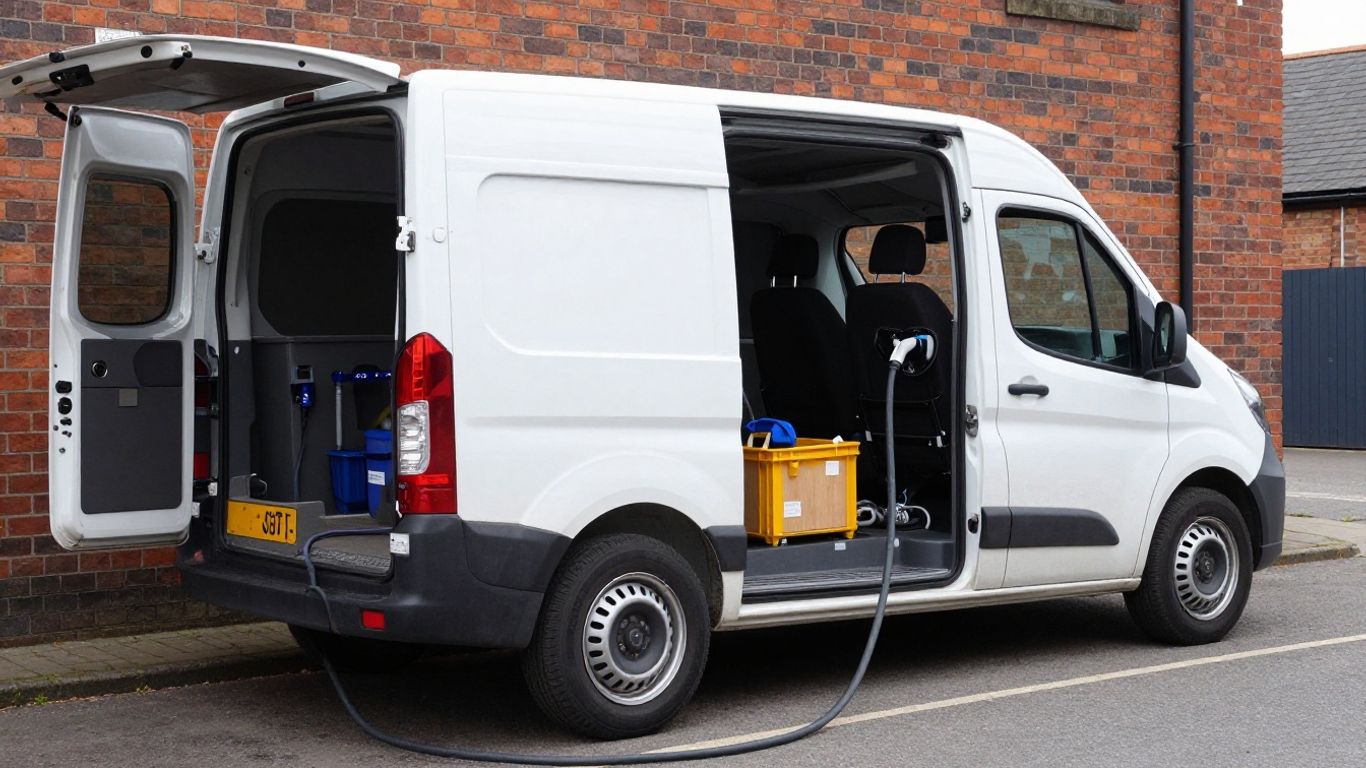
Use the examples as a planning aid, not as a quotation of the saving available to a particular business. The company’s tax rate, profitability and exact vehicle classification should be confirmed before a purchase decision is made.
Worked example using a corporation tax business
Suppose a company buys a new and unused qualifying electric van for £32,000 excluding recoverable VAT. If a 100% first-year allowance applies, the company claims £32,000 in the relevant period. Its taxable profits fall by that amount.
At a hypothetical corporation tax rate of 25%, the reduction in tax would be £8,000, assuming the company has enough taxable profit and no other adjustment changes the calculation. The van has not become free; the relief has simply reduced the tax otherwise due on the qualifying profit.
Worked example for a sole trader or partnership
A sole trader buys a qualifying electric van for £28,000 and uses it 80% for the business. If the applicable allowance is 100%, the business-use amount might be £22,400, subject to the precise rules and evidence. At a hypothetical income tax rate of 40%, that would correspond to a potential £8,960 reduction in tax before considering National Insurance, losses and other factors.
A partnership would need to allocate the result between partners under its partnership arrangements. Private use should be measured reasonably rather than guessed, particularly where the van is shared between work and home journeys.
Comparing 100% relief with pool-based allowances
The difference is mainly one of timing. A 100% allowance gives the full qualifying deduction in the relevant period, whereas pool-based allowances spread deductions over later periods and leave a tax written-down value.
For a business expecting stable profits, immediate relief may improve near-term cash flow. For a business with little or no taxable profit, the slower route can sometimes be less wasteful in practical terms, although losses and carry-forward rules need professional review.
The effect of disposal proceeds and balancing adjustments
Selling or part-exchanging the van does not simply end the tax history. Disposal proceeds are brought into the capital allowance calculation, and the result may create a balancing allowance or balancing charge, depending on the pool and the amount previously relieved.
Where 100% relief was claimed, a later sale can produce a taxable adjustment based on the proceeds. Keep the sale invoice, part-exchange valuation and transfer date. A disposal made shortly after purchase deserves especially careful documentation.
Buying, leasing or financing an electric van
The way a business obtains a van is central to the tax treatment. An outright purchase creates a capital asset, while a lease usually creates periodic rental payments instead. Finance arrangements sit between those ideas and must be read carefully rather than judged by the size of the monthly payment.
Cash flow, ownership, flexibility and tax timing all deserve consideration. A helpful comparison of the practical issues appears in this guide to leasing or buying a van, which also highlights the importance of business patterns and upfront costs.
Capital allowances when the business buys the van outright
When a business buys the van outright, it normally records the qualifying capital cost and considers AIA, a first-year allowance or pool-based relief. The claim belongs to the business that incurred the expenditure and uses the vehicle for its trade, subject to the normal restrictions.
The date the business acquires the asset and brings it into use should be recorded. A deposit, delivery date and invoice date can help establish the timeline where the purchase crosses the end of an accounting period.
Hire purchase and the timing of the claim
With hire purchase, the business may be treated as acquiring the asset for capital allowance purposes when the agreement meets the relevant conditions, even though payments continue. The capital claim is based on the qualifying cash price, while interest is considered separately under the applicable finance rules.
Do not treat the total of every monthly instalment as the capital cost. Retain the hire-purchase agreement, cash price, interest schedule and VAT invoice so the capital and financing elements can be separated.
Operating leases and why treatment differs
An operating lease generally leaves the lessor as the owner of the vehicle for capital allowance purposes. The customer instead considers the lease rentals as business costs, subject to the rules for private use and any restrictions that apply to the arrangement.
That can mean no capital allowance claim for the customer on the van itself. The trade-off may be more predictable payments and less exposure to resale value, but the agreement needs to be classified correctly.
Contract hire, rentals and disallowed capital claims
Contract hire is usually assessed through its rental payments rather than by claiming capital allowances on the underlying vehicle. The treatment can vary with the legal form of the agreement, so the contract should be checked rather than relying on sales language.
First Flexi Lease describes contract hire agreements with fixed costs and VAT reclaimable on monthly payments, where the VAT conditions are met. That is a leasing feature, not a capital allowance claim on the van, and the distinction should remain clear in the accounts.
Capital allowances and other electric van tax considerations
Capital allowances are only one part of the cost picture. A company-provided van can create benefit-in-kind tax, while VAT recovery depends on use and the type of supply. Electricity, maintenance, grants and charging infrastructure also need to be considered separately.
These issues can make a leasing decision look different from a purchase decision. First Flexi Lease offers fixed monthly rentals covering road tax and maintenance in its stated package, which can help with budgeting, but it does not replace advice on the customer’s own tax position.
Benefit-in-kind tax for company electric vans
A company van made available for private use can create a benefit-in-kind charge for the employee and reporting obligations for the employer. Electric vans may have favourable treatment compared with some conventional vans, but the applicable percentage and conditions can change.
Private availability is not the same as occasional private use. Keep records of the arrangement, restrictions and actual use, then check the rates for the tax year concerned. A company should also consider whether charging at home creates a separate reimbursement or payroll issue.
VAT recovery on the van and charging costs
VAT recovery depends on VAT registration, the type of purchase or lease and the extent of business use. A van used exclusively for business may be treated differently from one available for private journeys, while lease rentals and maintenance may have their own rules.
Electricity used for business journeys and electricity supplied at home should be documented sensibly. Keep VAT invoices and a mileage record, and do not assume that every charging cost is recoverable simply because the vehicle is electric.
Running costs, electricity and maintenance deductions
Electricity, servicing, repairs, insurance and other running costs are generally considered separately from the capital cost of the van. The business purpose and any private element remain relevant, particularly for an unincorporated business.
A monthly record of charging, mileage and maintenance is more useful than trying to reconstruct everything at year-end. Where a leasing package includes maintenance, identify what is included and avoid claiming the same cost again as a separate expense.
Grants, subsidies and their effect on qualifying expenditure
A grant or subsidy connected with the vehicle or its chargepoint can affect the amount treated as qualifying expenditure. The accounting and tax treatment depends on the nature of the grant, when it is received and what it funds.
Keep the grant approval, payment record and supplier invoice together. This makes it possible to determine whether the grant reduces the asset cost or is dealt with elsewhere, rather than claiming relief on expenditure the business did not ultimately bear.
How to claim and keep evidence for electric van allowances
A good claim begins before the tax return is prepared. Decide which business acquired the van, establish the correct tax period and separate the vehicle cost from VAT, finance and related equipment. Then record the allowance in the capital allowance schedule and reconcile it to the accounts.
The process is much easier when the evidence is organised from the start. It also gives the business a clearer answer when the van is sold, transferred or replaced later.
Identifying the correct tax period
The relevant period is usually linked to when the business acquired the asset and the accounting period in which the expenditure falls. For a company, a short accounting period or a period spanning a rate change may need a split calculation.
Record the order date, delivery date, invoice date, payment date and date first used. These dates may not be identical, and the agreement and surrounding facts should support the date used in the claim.
Records HMRC may expect to see
HMRC may ask for evidence that the asset exists, was acquired by the business and was used for qualifying purposes. The records should make the calculation reproducible without relying on memory.
Useful records include:
- The supplier invoice and vehicle specification.
- Registration, delivery and finance documents.
- VAT invoices and grant correspondence.
- Mileage logs and private-use calculations.
- Capital allowance schedules and disposal paperwork.
After assembling these records, cross-check the totals against the accounts and bank or finance statements. A tidy evidence trail does not guarantee agreement with HMRC, but it makes an honest, well-supported claim much easier to explain.
Handling business and private use calculations
Business and private use should be assessed using a consistent method that reflects the actual arrangement. For an unincorporated business, apportioning the relevant cost may be necessary; for a company van, private availability may instead be dealt with through benefit-in-kind rules.
Keep the mileage basis, dates and assumptions in writing. If the pattern changes during the year, update the calculation rather than carrying forward an old percentage automatically.
Reviewing the claim when the van is sold or replaced
When the van is sold, part-exchanged or replaced, update the capital allowance pool and record the proceeds. Check whether the disposal creates a balancing adjustment and whether any private-use restriction changes the result.
The replacement vehicle should be assessed independently. A new electric van might qualify for a different allowance from the vehicle it replaces, while a lease may create rental deductions rather than a capital claim. For practical budgeting, businesses can also get a quote after confirming the tax assumptions with their accountant.
Explore Flexible Leasing
If buying an electric van is not the right fit, First Flexi Lease provides flexible car and van leasing with contracts from six to 48 months, fixed monthly rentals, road tax and maintenance included, and no hidden admin fees. Its soft credit check at quote stage lets a business explore an option without treating a lease payment as a capital allowance claim.
Conclusion
Electric vans can offer valuable tax relief, particularly where a new, unused zero-emission vehicle qualifies for accelerated treatment, but the result depends on classification, ownership, use and timing. Match the allowance to the evidence, keep private use and VAT separate, and compare the tax outcome with the cash-flow advantages of leasing before committing.
Frequently asked questions
Can a business claim capital allowances on an electric van?
Do second-hand electric vans qualify for 100% relief?
Is a van treated like an electric car for tax?
Does private use stop a capital allowance claim?
Can leased electric vans receive capital allowances?
Can charging equipment qualify for tax relief?
What happens when an electric van is sold?
Reviewed by
Billy Lang, Director
FCA Registration No: 835008
Keep reading
Related guides
Money & tax
What does road tax actually pay for in the UK?
Where Vehicle Excise Duty really goes, what changed for electric cars, and why road tax is one bill you never see on a Flexi Lease. Plain-English guide.
Read guideMoney & tax
How Vehicle Depreciation Affects Your Lease Payments
Vehicle depreciation is the part of a lease payment that reflects the value a vehicle loses during the agreement. Understanding residual value, mileage and the full contract cost makes it easier to compare offers fairly. A lease payment usually reflects the vehicle’s expected loss in value, plus other agreement costs. Residual value, mileage…
Read guideMoney & tax
What Does Road Tax Pay For in the UK?
“Road tax” usually means Vehicle Excise Duty (VED), but it is not a direct payment for repairing the road outside your home. The wider road network is funded through several taxes, charges and government budgets. VED is a tax on keeping most vehicles on public roads. VED receipts go into central government funds…
Read guideReady when you are
Put the reading into practice.
A soft credit check via Creditsafe takes minutes. It does not normally affect your credit score the same way as a full lending application — and you get an honest answer either way.
Request a Flexi Quote
Quick form. Tell us which flexi stock you are interested in and we'll call you back the same day.
